Harjaya | A medicinal plant in the Akhdar encyclopedia
The plant *Dalkhia* is used as an expectorant and is beneficial in treating coughs and respiratory tract infections, urinary tract infections (bladder and prostate infections), and as a mild laxative in cases of constipation. It possesses hemolytic properties and helps eliminate chloride compounds…
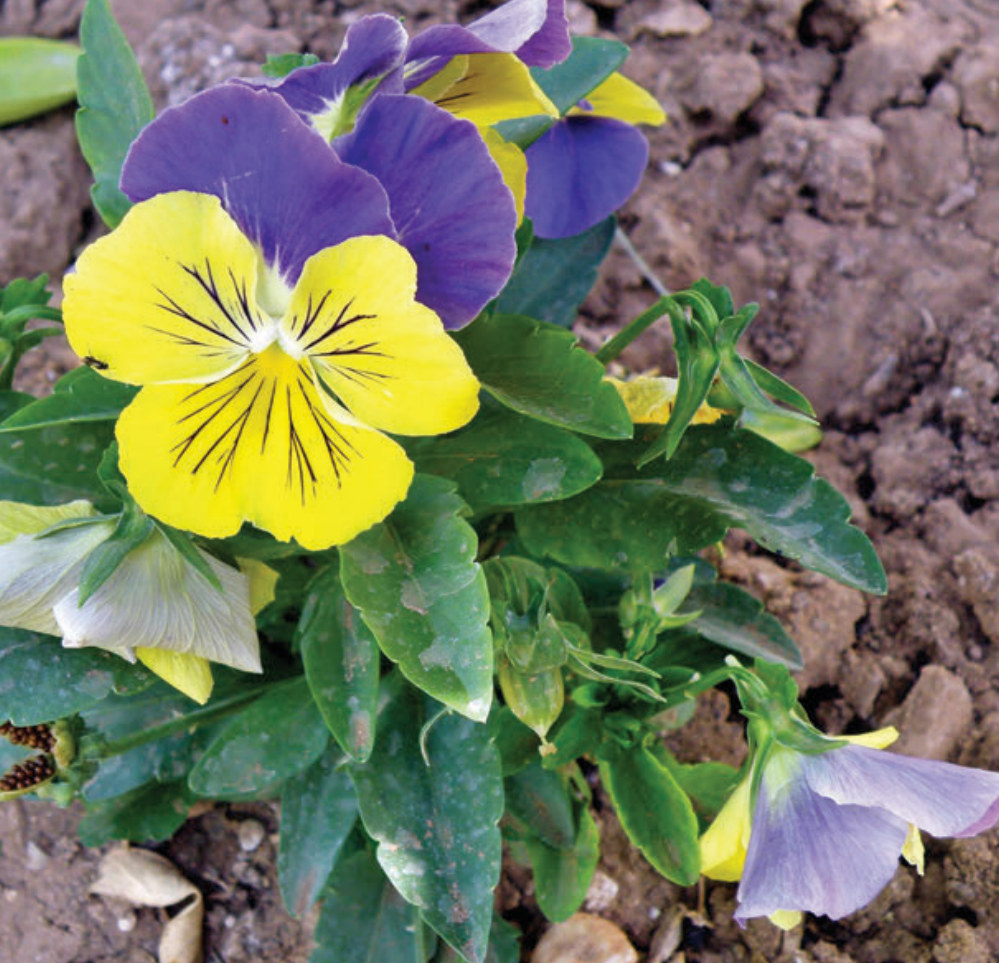
Plant name
Harjaya
Latin name
Viola tricolor L
Common names
Wild pansy, tricolor violet
foreign names
Eng. Heartsease, Fr. Tricolored Pansy, Wild Pansy
The group
Violet
Habitat and Geographic Distribution
It grows in Europe and even Siberia, and its cultivation has spread widely in many countries as an ornamental plant.
Botanical description
The stem is erect, angularly simple or branched.
The leaves are alternate, ovate or oblong, 40 cm long.
It is a perennial herb, with widely spaced crests.
The stipules are large, leaf-like, long-stemmed, with a rounded base and a rounded or blunt-toothed apex.
The flowers are solitary, with long pedicels, often tertiary in color, 4 cm in diameter, lobed, with equal sepals, oblong.
The pedicel is slightly stiff and bears two very small, opposite bracts.
The calyx has two stipules at its base.
The corolla has five petals, four of which are erect, and one is broad.
The dimensions are 5-3 x 2.2-1.2 cm.
The petals are drooping and have a short spur.
The lateral and anterior petals are tertiary in color.
The male has five stamens, alternating with the petals, with short filaments.
The female has three carpels, and the ovary is superior, glabrous, with a single stone.
mm, 12 - The fruit is a capsule, glabrous, elliptical, with valves, and numerous seeds. It opens via inflorescence from April to September.
Used part
Dry flowering plant. Latin name: Viola tricolor L
chemical components
Luteolin, scoparin, saponarine, violaquercitrin (23%), rutin (0.2-0.4%), valphenoids, vitexin, vicinein, violanthin (5%), tannins (10%), mucilage (0.3-0.6%), mucilaginous substances (vitamin, violutin, 0.6-0.3%), phenolic acids (including salicylic acid), triterpene saponins, tertiary saponins, umbelliferone (including umbelliferone), hydroxycoumarins, gypsogenine (derived from
Properties and medical uses
The plant *Violet* is used as an expectorant and is beneficial in treating coughs and respiratory tract infections, urinary tract infections (bladder and prostate infections), and as a mild laxative for constipation.
It possesses hemolytic properties and helps eliminate chloride compounds from the urine.
The rutin compound found in violet flowers is used to treat glaucoma and regulate intraocular pressure.
The whole plant is used topically to treat inflammations and skin diseases.
Saponins are present in violet and are used to treat eczema, psoriasis, rashes, and acne, and also helps in wound healing.
These results indicate that violet has an anti-inflammatory effect against ultraviolet radiation, as it maintains a temperature below 25°C.
The aqueous extract of the plant inhibits the proliferation of activated lymphocytes in an IL-2-dependent manner.
Herbal preparations of violet are used in the treatment of disorders related to overactivity of the immune system.
Precautions for use are recommended.
Avoid consuming large doses of the plant, as it can cause nausea due to its saponin content. The plant should only be used when dry.
Side effects and precautions
It is recommended to avoid consuming large doses of the plant, as it can cause nausea due to its saponin content. The plant should only be used when dry.
the environment
The plant prefers cool, moist soils rich in humus, is relatively shade-tolerant, but should be protected from wind. It tolerates a pH of 6.5 and high acidity.
Agriculture and productivity
The plant is propagated by seeds, and can also be propagated vegetatively by division.
Balanites aegyptiaca (L.) Del. Ximenia aegyptiaca L., Agialid aegyptiaca )L.(Kuntze)
History and Heritage
The scientific name for the genus is the altinyl toxin, meaning tricolor. The species name is tricolor.
Medical note
This information is for educational purposes only and does not constitute medical advice.
Poisonous or potent plants should only be used under the supervision of a qualified physician or pharmacist.
Related images


