Wild mint | Medicinal plant in the Akhdar encyclopedia
The essential oil of peppermint contains the compound pulegone, which has antimicrobial and anti-inflammatory properties. Peppermint oil is used topically as a skin antiseptic. It is traditionally used to treat digestive disorders (stimulating the secretion of digestive juices) and is sometimes use…
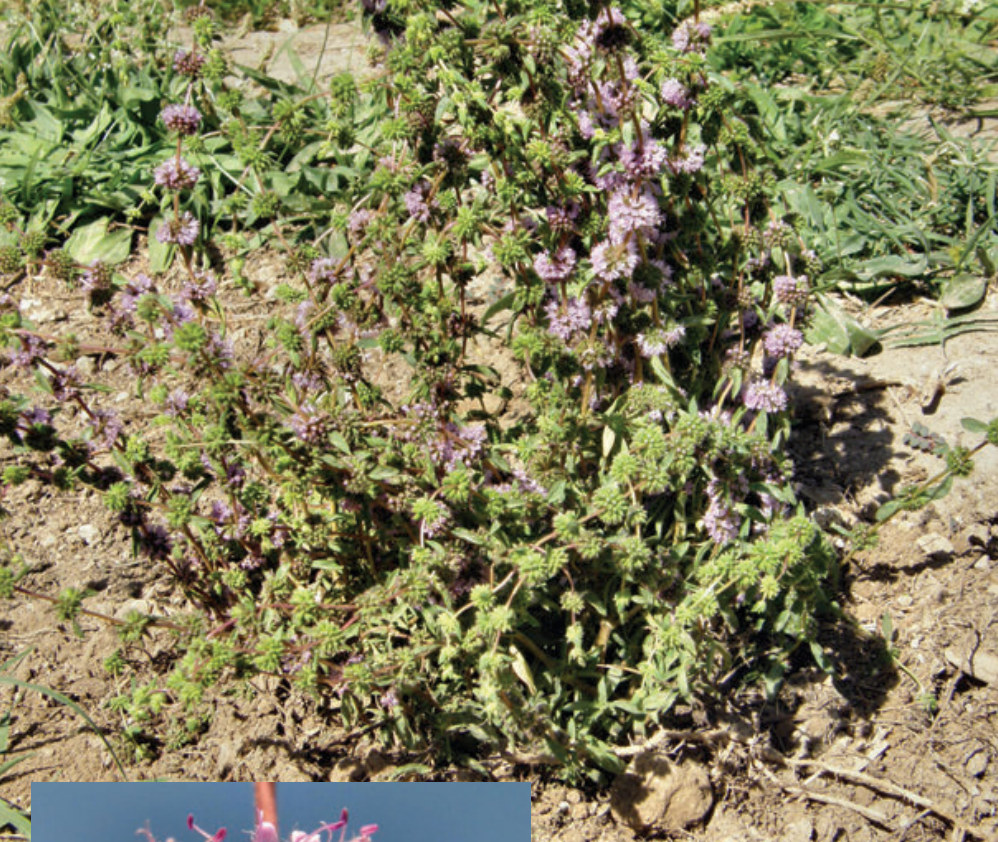
Plant name
wild mint
Latin name
Mentha pulegium L
Common names
Wild mint, spearmint, wild footing
foreign names
Eng. Pennyroyal, Fr. Menthe pouilot
The group
oral
Habitat and Geographic Distribution
European-Siberian, Mediterranean, and western Iranian-Turanian. It is cultivated worldwide.
Botanical description
A perennial herb, bearing melanocytes, with an aromatic, slightly poisonous scent, and varyingly hairy.
The stems are vigorous, prostrate or ascending, and often purplish.
The leaves are oblong to oblong, with short petioles, ovate-elliptic, finely and subtly toothed.
The flowering leaves resemble the stem leaves and usually extend beyond the flowering carpels.
The flowers are hermaphroditic, clustered in cymes, forming widely spaced carpels.
They are tubular, lobed, and hairy, with an aperture about 3 cm long.
Brachii are absent.
The calyx is about 1.5 cm long and spherical, with nearly equal diameters.
The corolla is funnel-shaped, ending in four nearly equal lobes, pinkish-purple or pale purple.
The teeth are squamous, ovate, and smooth.
The stamens are nearly equal in length, protruding from the corolla and widely spaced.
The fruit consists of four males or bears fine galls. Flowering occurs from June to September.
Used part
Flowering tops, essential oil extracted from the tender plant
chemical components
10% - isomerone, 20-10% methone, 90-60% pulegone (its main components are pulegone, 2% volatile oil), limonene, neoisomethyl acetate, piperitone, rosmaric acid (tannins, including rosmarinic acid), and some bitter compounds, hesperidin, and diosmin (valvoxyl compounds, including diosmin).
Properties and medical uses
The essential oil of peppermint contains the compound pulegone, which has antimicrobial and anti-inflammatory properties.
Peppermint oil is used topically as a skin antiseptic.
It is traditionally used to treat digestive disorders (stimulating the secretion of digestive juices) and is sometimes used to treat intestinal worms and amenorrhea by strongly stimulating the uterine muscles and inducing menstruation.
Side effects and precautions
Overdoses can cause vomiting, high blood pressure, coma, and then death due to respiratory collapse, and its use has been banned in many countries.
Extreme caution should be exercised when using dalkhya oil due to its high toxicity, particularly to the liver, because it contains the compound pulegone. It should not be used by pregnant women, as it can cause miscarriage.
the environment
The plant thrives in humid conditions and is highly susceptible to drought; it prefers slightly acidic soils.
Its essential oil production increases in sunny locations, but it can tolerate some shade.
Agriculture and productivity
The plant is propagated by seeds sown in spring in a nursery or greenhouse; germination occurs quickly.
Seedlings are transplanted into pots when they reach a suitable height, and then planted out in their permanent location in the summer. The resulting plants are not identical.
History and Heritage
It was mentioned in the previous type.
Medical note
This information is for educational purposes only and does not constitute medical advice.
Poisonous or potent plants should only be used under the supervision of a qualified physician or pharmacist.
Related images


