Creeping grass | Medicinal plant in the Akhdar Encyclopedia
The rhizomes are used as a diuretic, in treating urinary tract infections, and in eliminating kidney and bladder stones. A decoction of the rhizomes is popularly used for its laxative properties (mucus-producing compounds) in treating coughs, laryngitis, constipation, and enlarged and inflamed blad…
Plant name
creeping grass
Latin name
Elytrigia repens (L.) Desv. ex Nevski
Common names
Creeping genus, medicinal genus, genus, genus, wheatgrass, genus
foreign names
Eng. Couch grass, Fr. Couch grass
The group
kidney
Habitat and Geographic Distribution
worldwide
Botanical description
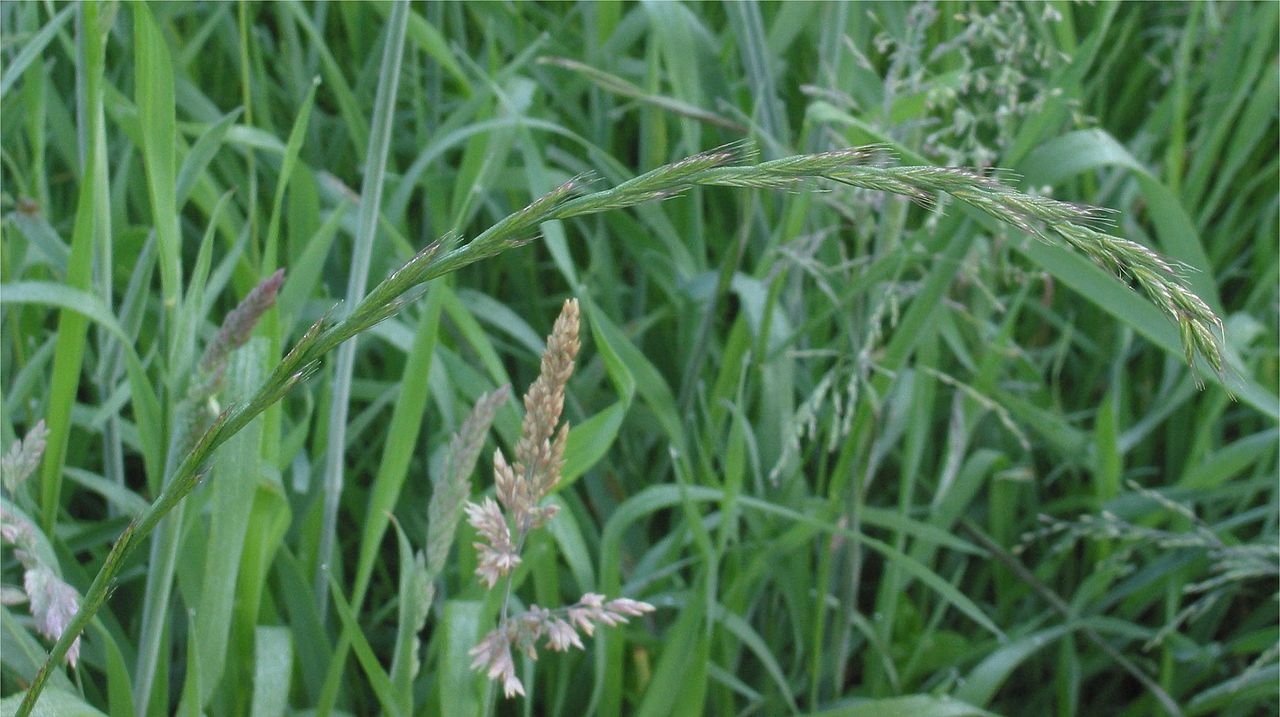
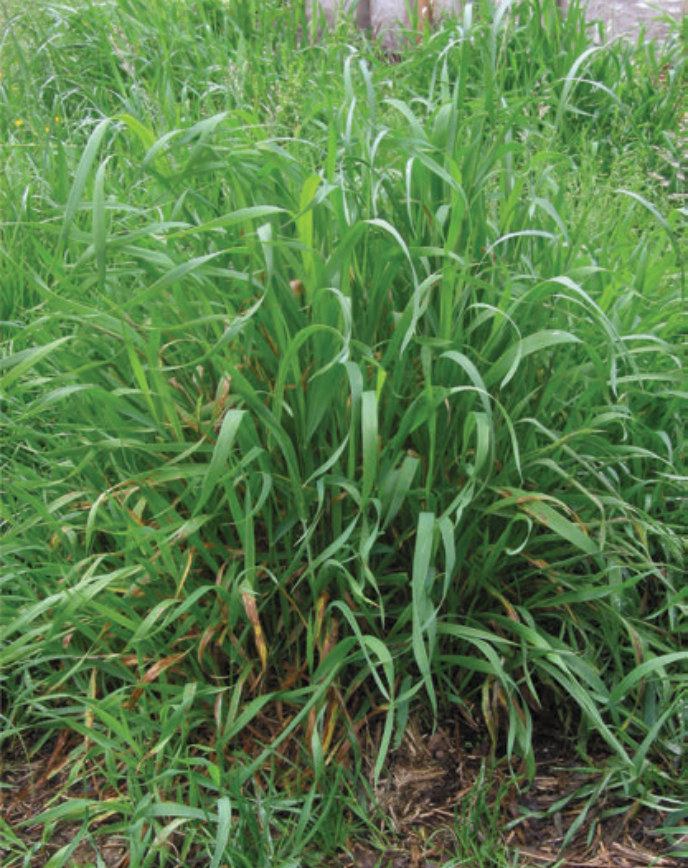
A vigorous perennial herb propagated by creeping, long, slender, yellowish-white, leathery rhizomes, growing at the nodes up to 1 cm long.
The leaves are linear, 150 cm long, and have thin roots.
The stem is rigid, hollow, glabrous, erect or ascending, and 1 mm long.
The leaf sheath is glabrous and smooth.
The ligule is almost absent and consists of a very short ring.
The blade is 10 cm long, rough, pinnate, flat, with a smooth, glabrous upper surface and a rough underside above the veins.
The flowers are clustered in a female spikelet, 1 cm long.
The spikelet is compressed, ovate, 15 cm long, which in turn forms terminal spikelets with long, straight petioles.
The two stamens are nearly equal in length, half to two-thirds the length of the spikelet, with a membranous margin.
The larvae are female, leathery, and terminate in a tuft (rarely with a tuft). The fruit is an oblong to ovoid drupe.
Used part
The peeled rhizomes (yellow in color, sweet-tasting), seeds, and the herb kama.
chemical components
The rhizomes contain 2% calcium salts and 11% mucilage, composed of 5-8% terpene, harmanin, mannitol, saponins, and 8% polyfructose triticin.
These are inulin-like substances, including agropyrone and salicylic acid, as well as sugar alcohols (inositol and mannitol), traces of volatile oil, and vitamins A, B, and C.
Medicinal Properties and Uses: The rhizomes are used as a diuretic, in the treatment of urinary tract infections, and to eliminate kidney and bladder stones.
A decoction of the rhizomes is used traditionally for its laxative properties (mucilage compounds) in the treatment of coughs and inflammation.
It is used for throat and constipation relief, and for treating enlarged and inflamed bladder and prostate.
It helps alleviate the pain of rheumatism and gout, and is beneficial in treating jaundice.
An infusion of the plant (polyfructose) can be used as a sweetener for diabetic patients.
A decoction of the seeds is used topically as a cleansing and soothing compress to treat skin inflammations, wounds, and hemorrhoids.
A decoction of the seeds is used topically for skin rashes, and the juice of the leaves is used to treat gallstones.
Properties and medical uses
The rhizomes are used as a diuretic, in treating urinary tract infections, and in eliminating kidney and bladder stones.
A decoction of the rhizomes is popularly used for its laxative properties (mucus-producing compounds) in treating coughs, laryngitis, constipation, and enlarged and inflamed bladder and prostate.
It helps relieve the pain of rheumatism and gout, and is beneficial in treating jaundice.
An infusion can be used as a sweetener (polyfructose) for diabetics.
A decoction is used topically in the form of antiseptic and soothing compresses to treat skin inflammations, wounds, and hemorrhoids.
Side effects and precautions
Allergic reactions or drug interactions may occur; self-use should be avoided by pregnant and breastfeeding women, children, and patients with chronic diseases.
the environment
It grows in semi-arid regions, spreading across cultivated lands, gardens, and mountains up to a high elevation of humid and moist areas.
It tolerates significant temperature variations.
It is drought-tolerant and can be cultivated in arid regions where an annual rainfall of [amount missing] mm is available.
It grows in all soil types, but prefers fertile, well-drained, yellow soils. It thrives in mixed soils and is not suitable for sandy or alkaline soils.
Agriculture and productivity
It is propagated by seeds and rhizomes in the same way as most perennial grasses.
The plant grows quickly and vigorously, and its rhizomes spread beneath the soil surface in all directions.
It is cultivated as a winter or spring crop depending on the region and requires irrigation, especially in the spring, and fertilization.
It flowers at the end of spring, and the ears ripen at the end of summer.
The rhizomes are collected in the spring or autumn after harvesting, cleaned, and the lateral roots are removed.
The scales are then washed and air-dried for use as required.
Avena sativa L.
Avena dispermis Mill., Avena fatua var.
sativa (L.) Hausskn., Avena fatua subsp. sativa (L.) Thell., Avena sativa convar. patula Alef
History and Heritage
The scientific name agrios is derived from the Greek words meaning wheat, pyros meaning wild, and repens meaning creeping.
Thus, the species name is creeping wheatgrass. Dioscorides mentioned its benefits in treating diseases of the urinary system.
Medical note
This information is for educational purposes only and does not constitute medical advice.
Poisonous or potent plants should only be used under the supervision of a qualified physician or pharmacist.
Related images