Lemon balm | A medicinal plant in the Akhdar encyclopedia
Lemon balm leaves and their essential oil are among the best remedies for calming the nervous system and relieving spasms associated with anxiety and insomnia. They also possess antioxidant properties. The essential oil is used to treat inflammation of the mucous membranes lining the respiratory an…
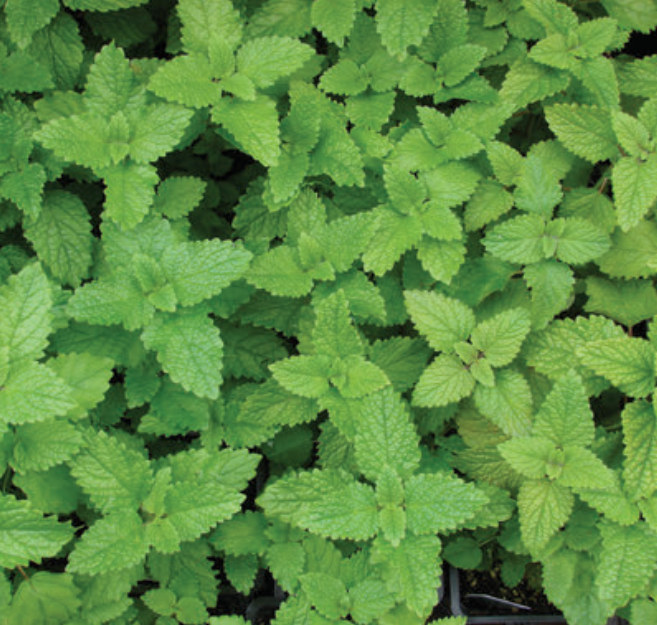
Plant name
Melissa
Latin name
Melissa officinalis L.
Common names
Lemon balm, balm, bee herb, citronella
foreign names
Eng. Lemon balm, Fr. Melisse
The group
oral
Habitat and Geographic Distribution
Mediterranean and Iranian-Turanian. It is cultivated in many countries.
Botanical description
100 cm - A perennial herb, its length covered with bristles or down, with a lemon scent.
The stem is square-cross-sectioned, erect, branching into strong, rigid bundles.
The leaves are opposite, petiolate, ovate, dull-tipped, heart-shaped at the base, toothed to 6 cm - cristulate-margined, usually exceeding the length of the flowering leaves.
The flowering cyme consists of flowers, forming a spike or sub-raccoon.
The bracts are elliptical to ovate.
The peduncle is fairly long.
The calyx is covered with bristles and bears a network of nerves, drooping at maturity, two mm long, white to pale purple.
The corolla (yellowish in the fourth century) is twice the length of the calyx.
The tube is included under the upper lip.
The fruit is prominent.
The stamens are small, ovate, and smooth. Flowering occurs from May to September.
Used part
The market and leaves have a lemony aroma and are harvested just before flowering.
chemical components
20-25% citral =) neral, 30-35% geranial aldehyde.
Its most important component: geranial aldehyde.
0.8-0.02% volatile oil, which is one of the components of the oil and to which the distinctive flavor is attributed.
75- These compounds constitute what is between 3% citronellal, eugenol, citronellol, geraniol, geraniol, linalol of the plant.
Mono-artic phenols of linalool.
Germacren, caryophyllene, be-ocimene, geranylactetate, methyl citronellal, caryophyllene oxide, eugenol glycosides.
Alcoholic or phenolic compounds found in the volatile oil, for example, eugenol glycoside.
Caffeic acid (café acid), labiatic a.
= (rosmaric acid): the most important of which are 4.7% caffeic acid derivatives and others.
Cinnaroside, cosmosiin, rhamnocitrin, quercitrin: These are valphenoids, among others.
Ursolic acid, oleanolic acid: These are triterpene acids that, along with other triterpene compounds, contribute to the plant's antibacterial and antiviral activity. 4% (catechin tannins) (polyphenols)
Properties and medical uses
Lemon balm leaves and their essential oil are among the best remedies for calming the nervous system and relieving spasms associated with anxiety and insomnia.
They also possess antioxidant properties.
The essential oil is used to treat inflammation of the mucous membranes lining the respiratory and digestive systems, and it has antibacterial, antiviral, and antiparasitic properties.
A decoction of the plant's leaves is traditionally used for general weakness, chronic asthma, nervous exhaustion, high blood pressure, digestive disorders of nervous origin, to expel gas and stimulate the secretion of digestive juices, and for menstrual irregularities.
Lemon balm oil is used topically in the form of compresses to treat rheumatism and neuralgia.
Side effects and precautions
Allergic reactions or drug interactions may occur; self-use should be avoided by pregnant and breastfeeding women, children, and patients with chronic diseases.
the environment
It is very sensitive to dampness.
It is a light-loving species, and its production is weak and the percentage of its active ingredient decreases in shady areas.
It thrives in semi-arid and dry environments with moderate temperatures.
The plant needs moderate humidity; a deficiency leads to stunted growth, yellowing, and leaf drop, while excessive humidity combined with low temperatures can kill the plant.
It grows well in soils rich in organic matter and can be cultivated in various soil types with a pH of 4.5 or higher, except for saline soils. It also tolerates acidity.
Agriculture and productivity
The plant is propagated by seeds sown in a nursery in early spring.
Germination occurs after 20-25 days at a temperature of 10-12°C.
The seedlings are then transplanted to their permanent location.
The plant can also be propagated by offsets sown in autumn.
It responds well to fertilization with essential nutrients.
(Mentha piperita L., Mentha aquatica var.
piperita (L.) Alef., Mentha aquatica f. piperita (L.) G.Mey., Mentha glomerata var. piperita (L.) Gray, Lamiaceae)
History and Heritage
The scientific name of the genus Melissa is derived from Greek and means "honeybee," while the species name officinalis means "medicinal" or "medicinal." People have associated lemon balm with bees since ancient times.
Lemon balm possesses therapeutic and tonic properties similar to those of honey.
The plant has been known for over 2000 years, and was recognized by the Greeks, Romans, and Arabs.
Lemon balm was a favorite herb in the Middle Ages for preparing what was called the "elixir of youth," and even in the 18th century it was believed that lemon balm "rejuvenated the youth" and that it "comforted the heart and dispelled sorrows." The parts used are the stems and leaves (they have a lemony aroma and are harvested just before flowering).
Medical note
This information is for educational purposes only and does not constitute medical advice.
Poisonous or potent plants should only be used under the supervision of a qualified physician or pharmacist.
Related images


