Marjoram | A medicinal plant in the Akhdar encyclopedia
Marjoram essential oil (phenolic compounds) possesses antibacterial, antifungal, and antiviral properties. Marjoram extract, containing phenolic compounds and flavonoids, has antioxidant and immune-stimulating properties. The product is rich in essential oils that exhibit antimicrobial, anti-inflam…
Plant name
Marjoram
Latin name
Origanum syriacum L
Common names
Marjoram, oregano, wild thyme, wild thyme, wild basil, sweet basil
foreign names
Eng. Syrian marjoram, Fr. Syrian marjoram
The group
oral
Habitat and Geographic Distribution
Mediterranean countries: Within the meadows and on stony hills.
It grows wild in southern Türkiye, Syria, Lebanon, Palestine, and rarely in Cyprus. It is cultivated in many countries worldwide.
Botanical description
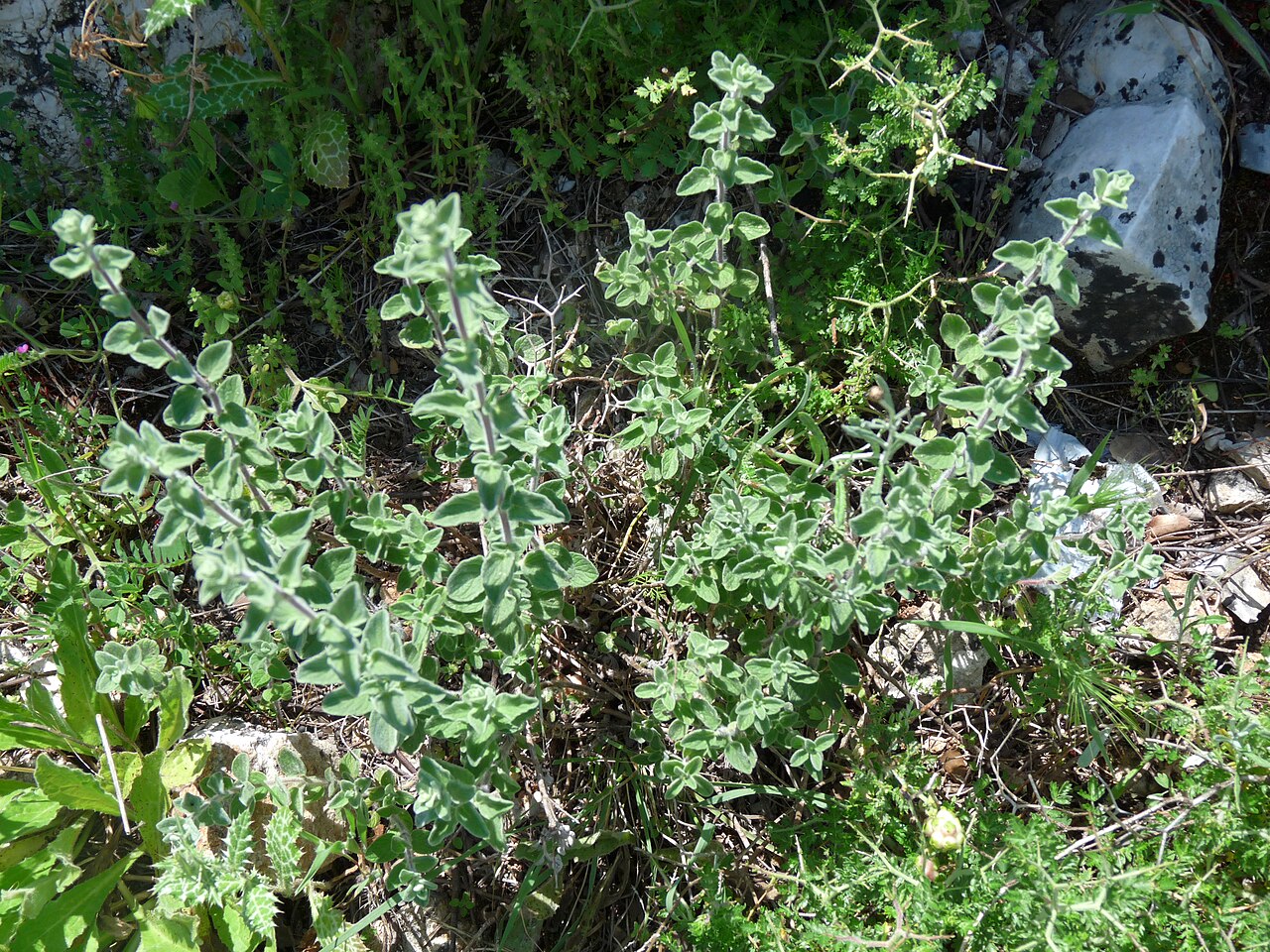
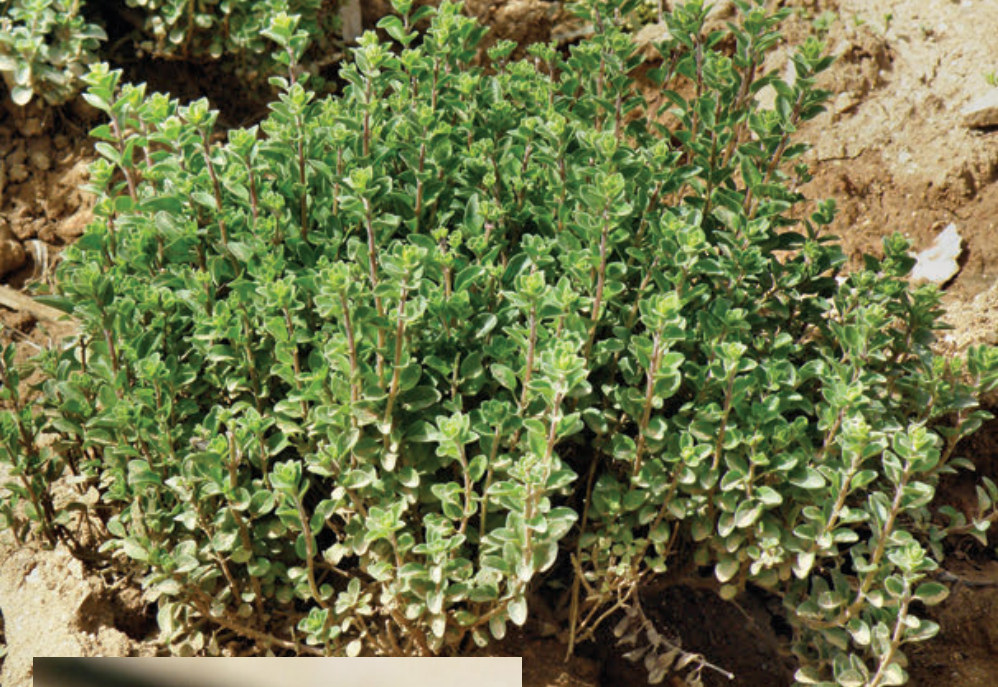
cm, covered with downy hairs.
50 - a small shrub, grayish in length: in addition to glandular hairs on the stem.
- The stem is erect, rigid, and branched in a raceme.
The leaves are simple, short-petioled, entire, ovate, dull-tipped, slightly thick, with prominent lower surface veins.
The flowers are accompanied by leaves that are obovate to rounded, compound, and equal in length to the calyx.
The inflorescence is cymose, with short spikelets, gathered into an oblong spikelet, the sepals of which fuse in 2.5 years.
The calyx is a very short tube that soon splits from the outside to form a toothed plate.
The corolla is white, mm long, bilipped, with the tube protruding from the calyx.
The stamens are squamous, prominent, and diverge from the base.
The ovary is bicarpeled, containing smooth ovules, 4 in length. The fruit consists of 4. mm1 towards flowering from April to September
Used part
The flowering plant; the essential oil extracted from the flowering plant. Latin name: Origanum syriacum L. Majorana syriaca (L.) Rafin., O. maru L
chemical components
16% thymol, 44% carvacrol (phenolic nature), volatile oil.
4% g-terpinene, gamma terpinene.
30% p-cymene: monoterpenes, monoterpene compounds, phenolic acids of which 8% are tannins.
2% beta-caryophyllene: sesquiterpene compounds. Quercetin (rosemary acid), flavonoids including quercetin.
Properties and medical uses
Marjoram essential oil (phenolic compounds) possesses antibacterial, antifungal, and antiviral properties.
Marjoram extract, with its phenolic and flavonoid compounds, exhibits antioxidant and immune-stimulating properties.
The drug is rich in essential oils that demonstrate antimicrobial, anti-inflammatory, antioxidant, and antitumor activity.
It may be beneficial in treating various diseases such as cancer, neurodegenerative disorders, and peptic ulcers, thus giving it significant pharmaceutical value.
Medicinal uses: A decoction of the aerial parts is used bronchially for its expectorant, carminative, digestive, and antispasmodic properties, and to treat inflammation of the mucous membranes of the digestive and respiratory systems (spastic cough, bronchitis, sinusitis, and laryngitis), and urinary tract infections.
The essential oil is used topically to treat skin inflammations, wounds, burns, arthritis, and rheumatic pains.
Culinary uses: Hebron thyme is in high demand in the countries of the Eastern Mediterranean, where the population is keen to secure its needs.
It is collected or purchased for food and medicinal purposes.
Thyme leaves are a spice that enhances flavor and aroma, and are used in the preparation of many foods, pastries, and sweets.
The leaves are the main ingredient in the famous thyme blend found throughout the Levant.
Side effects and precautions
Allergic reactions or drug interactions may occur; self-use should be avoided by pregnant and breastfeeding women, children, and patients with chronic diseases.
Other uses
Research has shown the effectiveness of marjoram essential oil as an alternative to chemical pesticides used to control the reproduction of the nematode Origanum vulgare (carvacrol, thymol, linalool).
The oil contains compounds such as carvacrol, thymol, and linalool, which have been shown to have a clear effect in preventing the hatching of nematode eggs.
Experiments have also demonstrated the oil's effectiveness in treating Varroa mites, which infect honeybees.
the environment
Marjoram grows on mountain slopes in semi-humid and semi-arid environments.
It is a long-day plant and requires high temperatures during the summer months.
It tolerates low temperatures in winter but cannot withstand prolonged frost.
It thrives in most soil types, preferring loamy, slightly acidic, and calcareous soils, and it is drought-tolerant.
Agriculture and productivity
It is propagated by seed.
Seeds are sown in special nurseries at a rate of 100-150g to obtain enough seedlings to plant one hectare.
The seedlings are then transplanted to the permanent field when they reach the fourth or fifth true leaf stage at the beginning of spring.
It can also be propagated vegetatively by dividing the mother plant and planting it directly in the permanent field.
Various cultivation practices are then carried out.
Branching is encouraged in the first year, and flowering is prevented by removing the flower buds before they appear.
The first harvest yields 1.25-1 ton of dried leaves per hectare, which in turn produces 20-25 kg of essential oil.
Another species is Origanum vulgare L., a type similar to wild thyme, which is widespread in some Mediterranean countries (France, Italy, Spain).
This plant contains a volatile oil rich in phenolic compounds, including carvacrol (64%), thymol (4%), tannins, rosmarinic acid, resins, and flavonoids.
History and Heritage
Origanon and origanos are the scientific names for the genus, derived from the Greek words ganos (mountain) and oros (shining), signifying a beautiful plant that embodies the beauty of mountains. The name is derived from the Greek words syriacum (Syrian).
Medical note
This information is for educational purposes only and does not constitute medical advice.
Poisonous or potent plants should only be used under the supervision of a qualified physician or pharmacist.
Related images