Maidenhair fern | Medicinal plant in the Akhdar encyclopedia
A decoction of coriander is used traditionally as an expectorant, to treat acute coughs, chronic bronchitis, asthma, chest pains, and as an emmenagogue and urinary stimulant. It is also used to dissolve kidney and bladder stones, as an antidote, astringent, antiseptic, emetic, diaphoretic, and stim…
Plant name
Well coriander
Latin name
Adiantum capillus – veneris L
Common names
Well coriander, ghoul's hair, Venus's hair, genie's hair, water herb, perchaughan
foreign names
Maidenhair Fern, Capillaire de Montpellier
The group
Pomegranate (Punicaceae)
Habitat and Geographic Distribution
It is found in Europe and the southern United States, growing spontaneously in humid areas, and is also present in Syria.
Its native range is the southern half of the United States, from California to the Atlantic coast, through Mexico and Central America, and into South America.
Botanical description
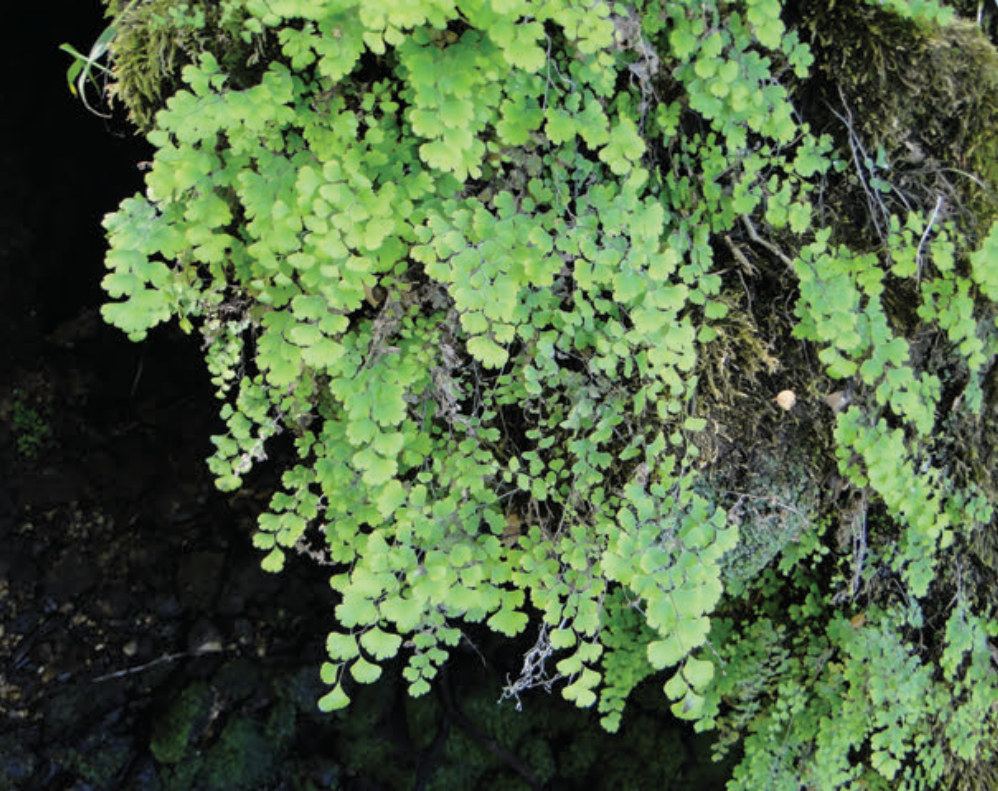
A perennial rhizome propagated by creeping rhizomes that spread horizontally beneath the surface of the order and produce leaves: large, called phlox, 1 cm long, with long, slender, black, hairy petioles; the leaf blade is glabrous, divided two to three times into 5-30 lobes; fan-shaped, alternate lobes with irregularly lobed margins; very slender, hair-like petioles; sporangia cluster near the upper margin of the leaflets and are covered by a fold that forms at their tip, turning dark brown when fully mature.
Used part
Leaves, rhizomes, and dried roots
chemical components
The dried herb contains isoquercetin and rutin; valvular compounds including rutin; proanthocyanidins; hydroxycinnamic acid ester; anthocyanin compounds; tannins; and gelatinous compounds.
Properties and medical uses
A decoction of coriander is used traditionally as an expectorant, to treat acute coughs, chronic bronchitis, asthma, chest pains, and as an emmenagogue and urinary stimulant.
It is also used to dissolve kidney and bladder stones, as an antidote, astringent, antiseptic, emetic, diaphoretic, and tonic.
The plant was formerly used in the form of coriander ash to strengthen and lengthen hair.
Fresh and dried leaves are used as a laxative, to treat snakebites, and to relieve headaches.
Externally, it is used to treat snakebites and bee stings.
It was also used as an antidiabetic, anti-inflammatory, cholesterol-lowering, antibacterial, anti-thyroid, and antifungal agent.
Side effects and precautions
Allergic reactions or drug interactions may occur; self-use should be avoided by pregnant and breastfeeding women, children, and patients with chronic diseases.
the environment
It lives near flowing water and in damp, shady places such as well walls, caves, and grottos.
It tolerates cold but cannot withstand prolonged frost.
It requires high humidity in the soil and air, and well-drained soil.
It prefers locations that receive good light but cannot tolerate direct sunlight.
Agriculture and productivity
The plant is propagated by division, and by means of pustules and spores.
The divided plants are planted with their rhizomes in moist soil rich in humus, in a shady location, and are buried shallowly in the soil, then watered by misting.
The pustules containing the spores are scattered on the surface of moist, humus-rich soil in a semi-shaded location at the beginning of spring.
The surface is then covered with plastic sheeting (black is preferred), and the area is watered thoroughly in summer and the soil kept moist in winter.
Germination occurs after 6 weeks.
Good drainage of excess irrigation water is essential.
The young plants are transplanted to their permanent location after they have reached at least one year of age.
(Punica granatum L., Rhoea punica St.-Lag., Granatum punicum) St.-Lag., Punica florida Salisb., Punica granatum var. acidula Risso, Punica granatum var. alba risso
History and Heritage
The scientific name for the genus Adiantum is derived from the Greek "adianthos," meaning "not wet," referring to the fact that its leaves do not absorb water.
The descriptive name for the species Capillus means "hair." It is called "well-spring" because it grows near wells and on their walls, and "Venus' hair" due to the softness of its leaf blades and the distinctive way it grows in pots.
The plant has a long history of medicinal use; it was used in ancient times to strengthen hair follicles, and Dioscorides described it for asthma.
The Arabs used it to treat respiratory ailments, and made a cough syrup from its leaves, known as Capillaire, which was used until the 19th century.
It is used medicinally by Native Americans; the Mahuna people use the plant to treat rheumatism, and the Navajo people of Keynta, Arizona, use it as a wash for bee stings. The Navajo people also use it to treat mental illnesses.
Medical note
This information is for educational purposes only and does not constitute medical advice.
Poisonous or potent plants should only be used under the supervision of a qualified physician or pharmacist.
Related images


