Khat | A medicinal plant in the Akhdar encyclopedia
This stimulates physiological effects in the body. The alkaloid cathinone, released during the chewing of the leaves, activates the central nervous system, resulting in a general feeling of euphoria, increased alertness, and heightened mental and physical activity. This is accompanied by loss of ap…
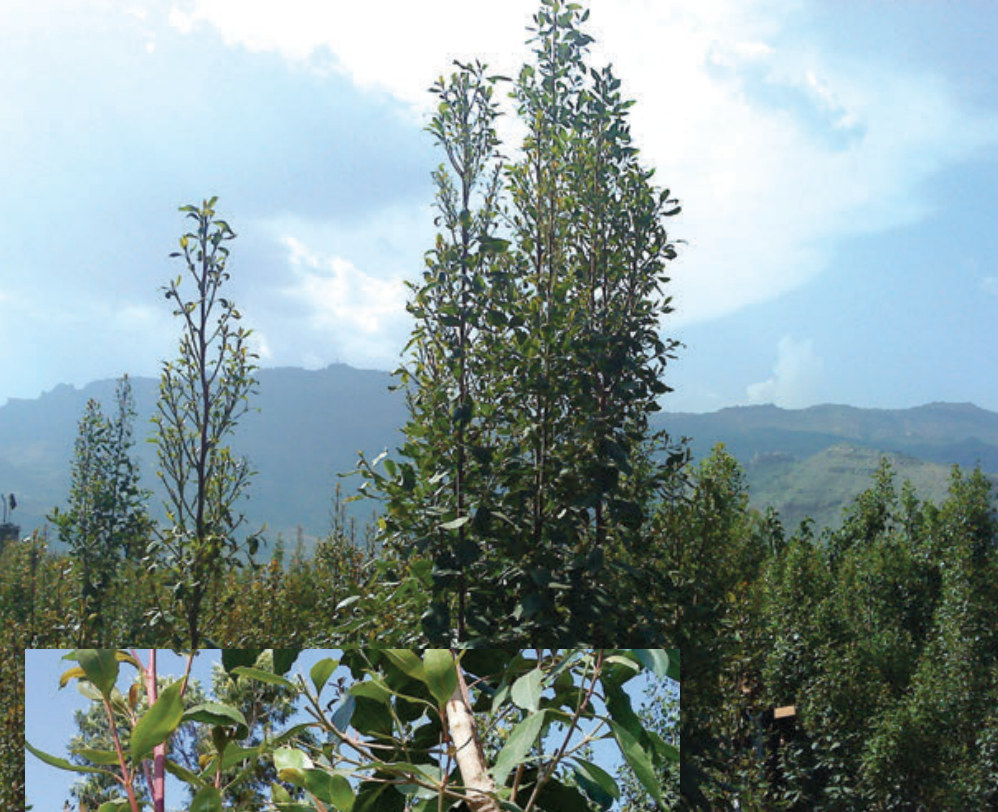
Plant name
Qat
Latin name
Catha edulis (Vahl) Forssk
Common names
Khat, Arabic tea, Somali tea
foreign names
Eng. Arabian tea, Fr. Khat
The group
Not specified in the current record
Habitat and Geographic Distribution
Its original homeland is Ethiopia, and its spread extended to the Arabian Peninsula, particularly Yemen.
Botanical description
An evergreen shrub, usually 1.5 m tall (in Yemen it can reach 6 m - 1.5 m).
The trunk is straight, with smooth, brown, and brittle bark.
The leaves are simple, matrilineal, finely toothed, leathery, 1 cm long, 1 cm wide, and about 12 cm thick.
They are reddish-yellow, laterally greenish-yellow.
The flowers are small, free, white or reddish-brown, resembling the flowers of the *Cerastes cercariae*, and are gathered in cymose inflorescences.
The calyx is five-lobed.
The petals are slit-like, 1 cm long, with free stamens.
The ovary is superior.
The fruit is a capsule, about 5 mm long.
The male *Euonymus* is a coral plant, with a pinnate base.
It contains seeds. The seed is reddish-brown, about 3 cm long, and each stone contains a
Used part
The leaves have a distinctive aromatic scent and a sweet, astringent taste. (Harvested)
chemical components
C.
Young leaves contain catechin tannins (astringent properties), volatile oil, and a vitamin, the most important of which is cathinone.
The main active compound is the alkaloid cathinone (phenyl alkylamines), present at 0.3-0.9%.
This alkaloid is unstable and quickly transforms in older or aging leaves into the alkaloid cathinone.
It also contains another cathinone-like alkaloid called norpseudoephedrine (also known as cathinone).
This means it has a similar structure and effect to sympathomimetic amphetamine.
(These compounds have properties that mimic sympathomimetic to norephedrine.) The quality of khat leaves depends on the percentage of cathinone alkaloid it produces, and its effect is equivalent to that of amphetamine.
A.
Weakened Cathinone Effect: As mentioned previously, cathinone is a non-essential compound.
Its content is stable, decreasing in the few days following the harvesting of the leaves, which shows the importance of using fresh leaves.
Generally, the concentration of alkaloids in old or aged leaves is much lower than in young, tender leaves.
Properties and medical uses
Chewing the leaves of khat stimulates physiological effects in the body.
The alkaloid cathinone activates the central nervous system, resulting in a general feeling of euphoria, increased alertness, and heightened mental and physical activity.
This is accompanied by loss of appetite, emaciation, and elevated blood pressure, body temperature, and decreased urine output.
It can also lead to obesity because the serotonin hormone suppresses appetite and inhibits sensation.
Khat is used for weight loss and to treat hunger. It is also used to alleviate asthma symptoms because it opens the airways.
Side effects and precautions
Its effect on the digestive system: Khat is a major cause of loss of appetite, emaciation, and indigestion.
The tannins it contains, with their astringent effect, cause gastritis, pharyngitis, and chronic constipation, leading to hemorrhoids and malnutrition.
It also causes chronic ulcers in the mouth, gums, and tongue.
Its effect on the heart and circulatory system: The chemical compounds in khat increase heart rate and constrict blood vessels, and raise blood pressure.
Its effect on the urinary and reproductive systems: It causes difficulty urinating and involuntary seminal emission after urination, due to khat's effect on the prostate and seminal vesicles, causing congestion and contraction, which contributes to prostate enlargement and sexual weakness.
Its neurological and psychological effects: Khat chewers exhibit a tendency towards mental lethargy a few hours after ingestion, followed by feelings of anxiety accompanied by irritability, nervousness, and depression.
Khat and Diabetes: Khat addiction leads to increased blood sugar levels, making users more susceptible to developing diabetes.
Chewing khat during pregnancy leads to low birth weight, and it has been observed that khat is excreted in the mother's urine.
Prolonged khat use disrupts the body's biological clock, causing digestive and intestinal ulcers, and damaging the liver and kidneys.
the environment
Khat grows wild in the highlands of some regions of Ethiopia, Yemen, and Somalia.
The khat tree is cultivated in mountainous areas, typically at altitudes of 1500-1500 meters, within a wide range of annual rainfall from 800 meters to plateaus reaching heights of approximately [insert height here].
It is often grown mixed with other shrubs.
Khat trees prefer dark red, well-drained soils rich in minerals and organic matter.
[The following appears to be a separate, unrelated sentence fragment: pH 8.2-6 (mineral and organic matter content, acidity level:]
Agriculture and productivity
Productivity requires khat cultivation in well-drained, non-rocky soil.
The land is prepared during the dry season and before the rains, and necessary fertilizers are added.
Vegetative propagation of khat is preferred, and planting with other plants is not recommended.
History and Heritage
(1978) From Latin and means edible.
Al-Shihabi mentioned edulis from Arabic qat and the species Catha.
He believes that the genus name was transferred with that Tchat.
He did not find the word qat in the vocabulary and in the dictionaries, and he believes that it is of Ethiopian origin, the shrub that grows naturally in Ethiopia.
Medical note
This information is for educational purposes only and does not constitute medical advice.
Poisonous or potent plants should only be used under the supervision of a qualified physician or pharmacist.
Related images


