Kutila | Medicinal plant in the Akhdar Encyclopedia
It is rarely used in modern herbal medicine due to its unpleasant taste. The plant possesses stimulating properties, relieves spasms and digestive disorders, and stimulates bile secretion. It is also a sedative and nerve tonic, and is used to treat vomiting of nervous origin, anxiety, tension, depr…
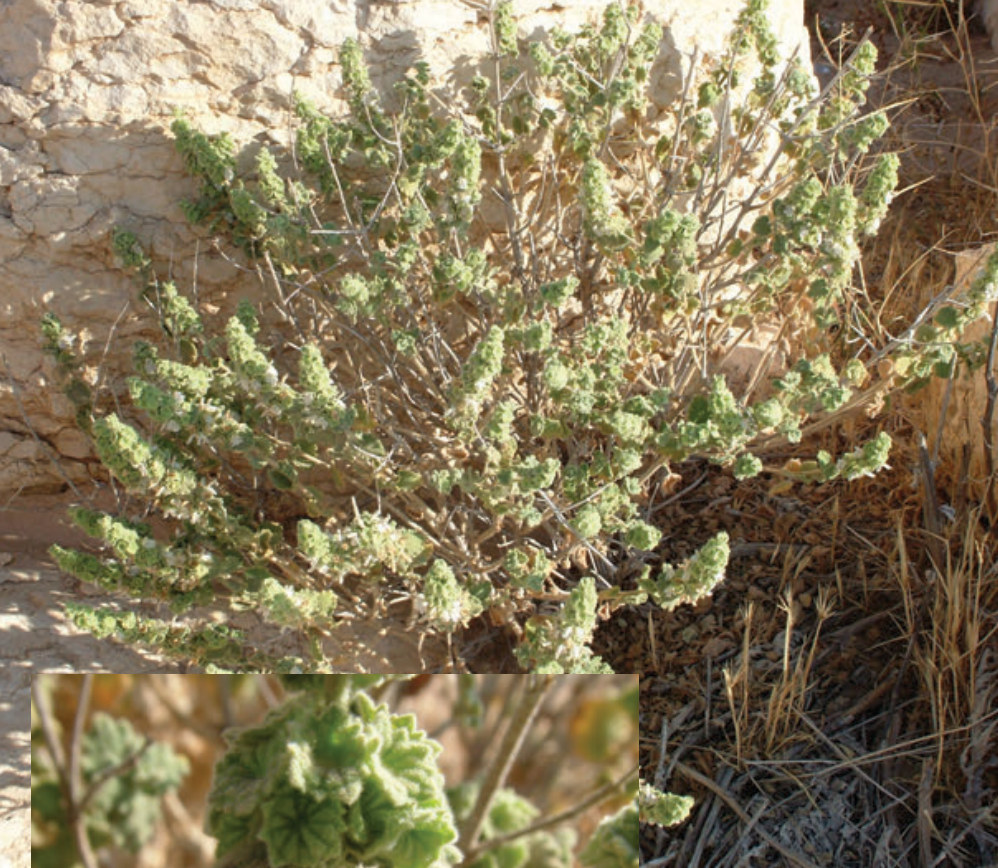
Plant name
Katila
Latin name
Ballota undulata (Sieb. ex Fresen.) Benth
Common names
Katila, Sharma
foreign names
Common ballota, Fr. Ondulate ballota
The group
oral
Habitat and Geographic Distribution
Turanian and Arabian desert volcanic activity. - Mediterranean activity, extending into western Iranian regions.
Botanical description
80 cm - A perennial herb of reddish-brown color, with numerous stems, yellow, covered with glandular hairs and simple or striated flat hairs.
The stems are erect or ascending, four-lobed and lobed.
The lower leaves are rapidly deciduous, heart-shaped or cleft-based, cristate-shaped.
The middle stem leaves are petiolate, rounded or kidney-shaped, the outermost ones wavy-edged, with deeply veined (curly).
The flowering leaves are flatter than the inflorescences, except for the lower ones.
The flowers are gathered in numerous inflorescences, the lower ones being widely spaced, the upper ones closely packed, consisting of a tube bearing about 12 - petiolates or reddish-brown, stiff and hairy.
The calyx is 4 mm long, linear.
The bracts are 15 mm long, with 15 veins.
They are ribbed, initially narrow, then widening from the middle to form broad blades.
The margin is 18 mm long, with a crescent and irregularly toothed edge.
The teeth are truncated or terminate in squamous apices.
The corolla is longitudinal, white, and its tertiaries are fused into a tube that is embedded in the calyx and soon splits into two lips.
The stamens are ovoid and smooth, and are located below the upper lip. The fruit is an oblong nut. Flowering occurs from April to October.
Used part
flowering peaks
chemical components
Lactone diterpenes (bitter principles): marrubene, alpha-acetoxymarrubene-7, ballonigrin, ballotinon, ballotenol, α-acetoxymarrubene-7.
Phenolic acids: caffeic acids, ferulic acid, chlorogenic acid, and their derivatives.
Tannins.
A volatile oil with an unpleasant odor, rich in mono- and sesquiterpene compounds (sesquiterpenes), the most important of which is germacrene-D.
Found in essential oils isolated from fresh aerobic parts.
33 Components of the oil, with the most abundant components being phytol, germacrene D, and caryophyllene.
Phenylpropanoid glycoside and ballotetroside were isolated from the aerobic parts.
Properties and medical uses
It is rarely used in modern herbal medicine due to its unpleasant taste.
The plant possesses stimulating properties, relieves spasms and digestive disorders, and stimulates bile secretion.
It is also a sedative and nerve tonic, and is used to treat vomiting of nervous origin, anxiety, tension, depression, insomnia, and rapid heartbeat.
It is also used to treat whooping cough in children.
The plant extract is used in the form of suppositories and enemas to expel worms and parasites from the body.
The plant is used internally or externally as a decoction, extract, alcoholic tincture, or suppository.
The use of plant extracts leads to a significant decrease in blood glucose, total cholesterol levels, and serum creatine kinase (CK) levels.
Results have shown that plant extracts have blood sugar-lowering, insulin-releasing, and cholesterol-lowering effects in mice.
Side effects and precautions
Allergic reactions or drug interactions may occur; self-use should be avoided by pregnant and breastfeeding women, children, and patients with chronic diseases.
the environment
It grows on sunny hillsides with semi-dry, stony, calcareous soils, indicating soil degradation and erosion.
The plant prefers moderately moist, well-drained, slightly acidic to neutral sandy and loamy soils. It tolerates temperatures as low as -10°C.
Agriculture and productivity
The plant is propagated by seeds sown in spring or autumn in a nursery or greenhouse.
The seeds germinate within 3-6 weeks at a temperature of 15°C.
The seedlings are transplanted to their permanent location the following autumn.
The plant can also be propagated by division.
Large divisions are planted directly in their permanent location, or they are planted in plastic bags and kept in the nursery for a year.
(Ballota undulata) ex Fresen.) Benth. Pseudodictamnus undulatus (Sieber ex Fresen.) Salmaki & Siadati
History and Heritage
The scientific name of the genus Ballota is derived from the Greek word ballôté, the name given to this plant in Greece, the origin of which is unknown.
The descriptive name for the species nigra means "black." The plant was historically used primarily to treat respiratory disorders and vomiting.
Dioscorides mentioned that a paste made from the plant's leaves and salt was used to treat dog bites, and a paste made from dried leaves and honey was used to treat infected wounds.
Medical note
This information is for educational purposes only and does not constitute medical advice.
Poisonous or potent plants should only be used under the supervision of a qualified physician or pharmacist.
Related images


