Windwood | A medicinal plant in the Akhdar encyclopedia
The roots possess properties that stimulate the circulatory and cardiovascular systems, promote bile flow, stimulate intestinal motility, and are antipyretic, antibacterial, and antifungal. They are also used in the treatment of morphine addiction. Traditionally, they are used to treat liver diseas…
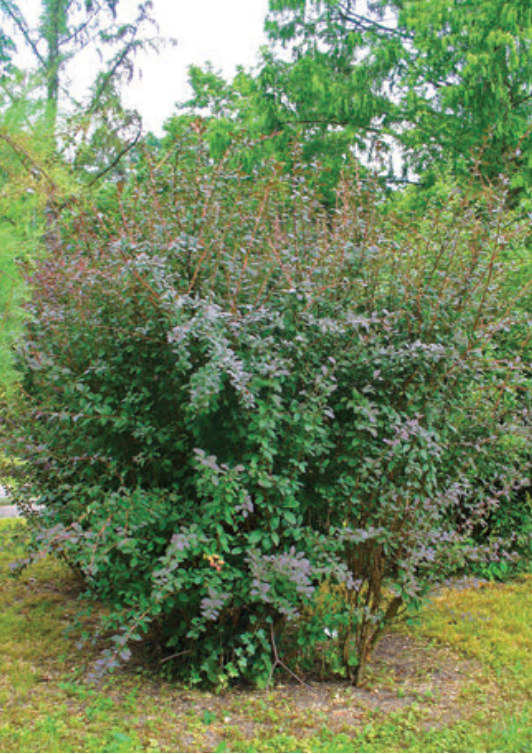
Plant name
The wind's return
Latin name
Berberis vulgaris L
Common names
Windwood, common barberry, common barberry, its thorns, knot
foreign names
Eng. Common barberry, Fr. Epine vinette Latin name: Berberis vulgaris L.
The group
The rabberis
Habitat and Geographic Distribution
The genus Berberis includes about 500 species, and grows commonly in Europe, North Africa, parts of America, Central and South Asia, and some northern regions of Pakistan and Iran.
Botanical description
The branches are highly branched, reaching up to a length of woody, erect, thorny, angular, initially grayish-yellowish-brown, then turning white.
The thorns are simple, dichotomous, or tertiary, 2 cm long, and are horizontally arranged.
They are strong, yellow, and lengthwise along the branches.
The leaves are simple, leathery, 4 cm long, obovate to elliptical, 4 cm long, with a blade that narrows to form petioles, toothed at the margin, some of which develop into thorns.
The flowers are gathered in short, drooping racemes, 1 cm long.
The sepals are six, yellow.
The stamens are seven, and the ovary is superior, 6, and orange.
The male is surmounted by a flat stigma, which is fused with the fruit.
The fruit is a pink, oblong-cylindrical berry, 1 mm long, with a husk 1 cm thick, about 12 cm in length, leathery in texture, containing a membranous seed. 3-2
Used part
Fruits and root bark
chemical components
Berbamin, the most important of which is berberine (3%) - The root bark contains isoquinoline alkaloids.
Additionally, it contains jatrorrhizin, magnoflorine, and berbamunin, as well as tannins, resins, and organic pigments.
Properties and medical uses
The roots possess properties that stimulate the circulatory and cardiovascular systems, promote bile flow, stimulate intestinal motility, and have antipyretic, antibacterial, and antifungal effects.
They are also used in the treatment of morphine addiction.
Traditionally, they are used to treat liver diseases (jaundice), gallstones, and septic gastrointestinal infections.
Additionally, they are used to treat diarrhea and digestive disorders, as well as kidney diseases (kidney stones and gravel).
They are also used to treat malaria and leishmaniasis.
Furthermore, they help treat chronic skin diseases such as eczema and psoriasis.
A decoction of the roots makes a gentle and effective wash for treating conjunctivitis and blepharitis due to its ribberine content, a compound that treats eye inflammation and chronic conjunctival allergies.
Side effects and precautions
Barberry should only be used under medical supervision, and should not be used during pregnancy.
Other uses
Barberry fruits are consumed fresh and dried, and are used in the production of various beverages, sweets, and fruit juices. Furthermore, they are used
the environment
The plant grows in sunny wooded areas and along the edges of streams and fields. It prefers acidic and neutral soils, and light sandy loamy soils.
Agriculture and productivity
The plant is propagated by seeds, or vegetatively by stem cuttings, and by tender root cuttings 10 cm long, which are planted at the end of summer and kept in soft sand with plastic covering to induce root formation and planting at the beginning of spring.
It is planted in a soil mixture of sand, soil, and compost (111).
Planting is done at a distance of 1.25 m.
If the soil is highly acidic, lime is added at a rate of 1 kg per plant.
Bongardia chrysogonum (L.) Griseb.
Leontice chrysogonum L., Bongardia rawolfia C.A.Mey., Bongardia olivieri C.A.Mey
History and Heritage
Fournier (1961, in Nahal, 2009) suggests that the word Berberis derives from the local Arabic name in North Africa for the fruit of this shrub, while vulgaris means "common." Berberis was known to the ancient Indians and Babylonians, and is mentioned on Assyrian clay tablets dating back to 650 BC.
Native Americans used it in ivory.
The plant's roots have long been used in folk medicine to relieve spasms.
The roots, bark, leaves, and fruit have been used in traditional Indian, Iranian, and Chinese medicine for at least 3,000 years.
Medical note
This information is for educational purposes only and does not constitute medical advice.
Poisonous or potent plants should only be used under the supervision of a qualified physician or pharmacist.
Related images


