Dandelion | Medicinal plant in the Akhdar Encyclopedia
The root possesses diuretic and digestive properties, increasing digestive secretions in the upper digestive tract. It is used to treat chronic colitis. The plant is also used for loss of appetite, indigestion, bloating, and flatulence. It is used for liver and gallbladder problems, and in the trea…
Plant name
Taraxacum of my storehouse
Latin name
Taraxacum officinale web
Common names
Dandelion, wild chicory, chicory
foreign names
Eng. andelion, Fr. Pissenlit
The group
Star
Habitat and Geographic Distribution
European Siberian.
Widespread throughout the world, and cultivated in many countries such as Japan, India, and America.
Botanical description
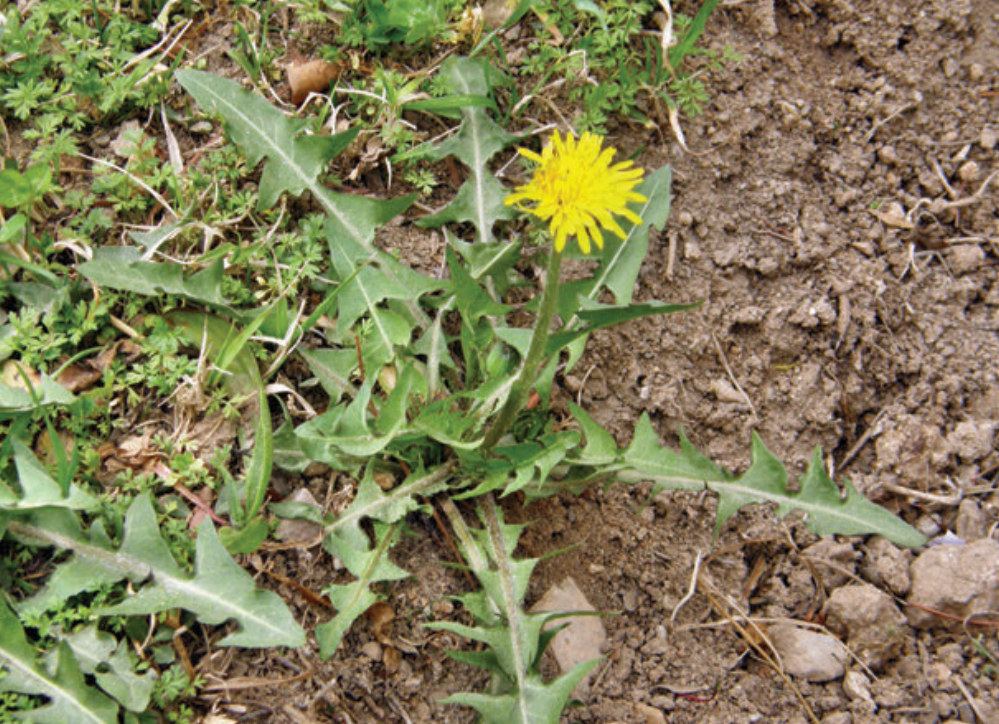
A small, perennial herb with no stem and a thick, strong taproot.
The leaves are all basal and arranged on the surface of the stem, forming a rosette-like structure, deeply lobed into uterine lobes.
A leafless stalk (or peduncle) about 1 cm long emerges from the center of the leaves, terminating in a single head inflorescence.
The inflorescence is uniformly floretal, bearing only ligulate, yellow flowers.
The bracts are arranged in several rows, unequal in length, the outer ones curving backward during and after flowering.
The calyx consists of a cluster of hairs surrounding the base of the corolla, whose petals fuse to form a small tube that soon splits to form a ligule ending in five teeth.
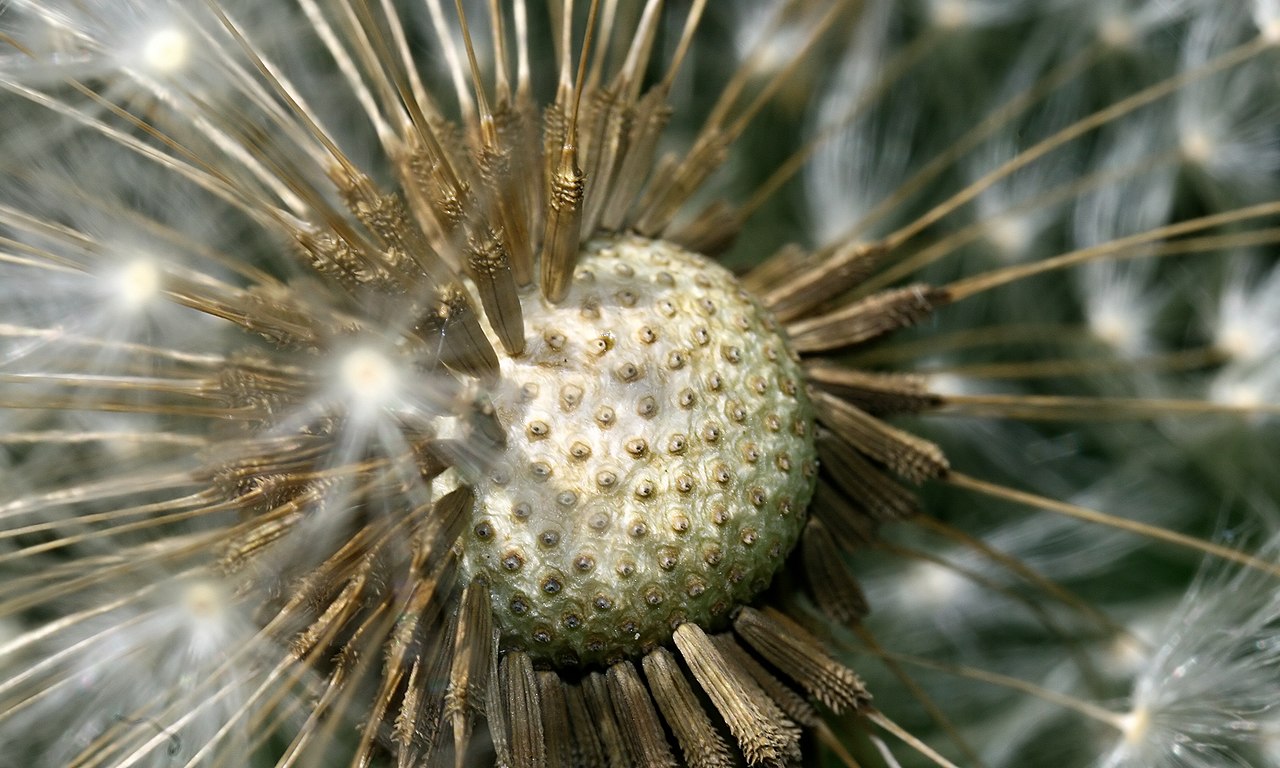
The fruit is a drupe, striped, spiny at the top, ending in a slender beak, brown to reddish-brown (not reddish-brown), topped with a funnel-shaped layer of white silky hairs that aid in the dispersal of the fruit by the wind.
This species exhibits considerable morphological diversity in its leaves, fruits, and main inflorescence bracts, allowing for the differentiation of numerous subspecies and varieties. Flowering occurs from November to May.
Used part
The roots (which are uprooted in autumn), like the plant itself, are collected just before flowering.
(The chemical constituents of the roots include mono- and sesquiterpene lactones, including the glycoside taeraxinic acid; triterpene compounds such as campesterol, cycloartenol, sitosterol, and stigmasterol; flavonoides such as the glycoside apigenin; vitamins, especially vitamin C, tocopherol, B vitamins, and beta-carotene.)
chemical components
The roots contain: taeraxinic acid (a glycoside), sesquiterpene lactones (such as sitosterol), cycloartenol, campesterol (such as campesteriol), triterpenes (such as stigmasterol and stigma citriol), apigenin (such as apigenin glycoside), flavonoids (especially beta-carotene), vitamins (such as tocopherol and vitamin C, particularly vitamin B1 in green leaves), proteins (such as glutaminic acid), amino acids, carbohydrates, oxalic acid, and parahydroxy acids (such as potassium, sodium, phosphorus, calcium, iron, zinc, magnesium, and chloride).
They also contain minerals (their concentration increases in autumn).
The leaves also contain 40-2% inulin, mucilage, acetic acid, mucilage, and minerals, primarily potassium and manganese, as well as carotenoids and vitamins A, B, and C.
Properties and medical uses
The root possesses diuretic and digestive properties, increasing digestive secretions in the upper digestive tract.
It is used to treat chronic colitis.
The plant is also used for loss of appetite, indigestion, bloating, and flatulence.
It is used for liver and gallbladder problems, and in the treatment of viral hepatitis.
It is also used to treat urinary tract infections.
The roots are traditionally used to treat constipation, indigestion, fluid retention due to premenstrual syndrome, heart failure, and high blood pressure.
They are also used to stimulate bile production and treat gallbladder problems and liver disorders.
The leaves have a cleansing effect.
The milky sap extracted from the leaves and stems of the plant is used topically to treat warts.
pharmaceutical forms
Preparations of the plant are available in the form of capsules, extracts, and teas. They are sold under names such as Dandelion.
Side effects and precautions
This plant is not prescribed for bile duct obstruction, pyothorax (chest abscess), or intestinal obstruction.
Its use may cause heartburn due to its content of compounds that stimulate digestive juices.
Other uses
Some people roast the roots of the dandelion and use the ground powder as a coffee substitute, and they also make musk from its flowers, or add the leaves to soups and salads. (Scnapps is a Dutch word for a heavy coffee bean.)
the environment
The plant is light-loving, growing in abandoned places, along roadsides, in thickets, and in fields.
It tolerates moderate to slightly acidic temperatures and pH levels, and thrives in humid, humus-rich soils with low temperatures up to slightly acidic.
Agriculture and productivity
It is propagated by seeds scattered uniformly in small beds in the spring and covered with a thin layer of soil.
The surface is then watered after planting. Nitrogen and phosphorus mineral fertilization increases the yield. It matures
History and Heritage
The name Tarakhshakon is an ancient Arabicized form of the Persian word meaning "bitter purslane." Some believe the scientific name for the genus Tarakhshakon is derived from the Greek word "aakeomai," meaning "eye disease," while others believe it comes from the Greek "Tharakhchakon," meaning "I treat" or "I heal." Dioscorides mentioned it in his writings, and Arab physicians used it in folk medicine to treat liver ailments and cleanse the kidneys of deposits.
A surgeon who lived in the 15th century described the plant's leaves as resembling the teeth of a lion.
The English name for the plant is "dandelion." In France, the leaves and roots are used to treat liver diseases.
In Russia, the plant has been considered a "life-giving herb" since ancient times and has been widely used in folk medicine to treat digestive disorders and jaundice.
In Chinese medicine, the plant is used to counteract the effects of poisons and to promote lactation.
Medical note
This information is for educational purposes only and does not constitute medical advice.
Poisonous or potent plants should only be used under the supervision of a qualified physician or pharmacist.
Related images