White willow | Medicinal plant in the Akhdar encyclopedia
The bark extract is used to treat rheumatism, neuralgia (especially headaches), joint pain, and diarrhea. It is also used as an astringent, tonic, and fever reducer. The drug's effectiveness is primarily due to its salicylic acid content. After the acyl residue of the salicylic glycoside, responsib…
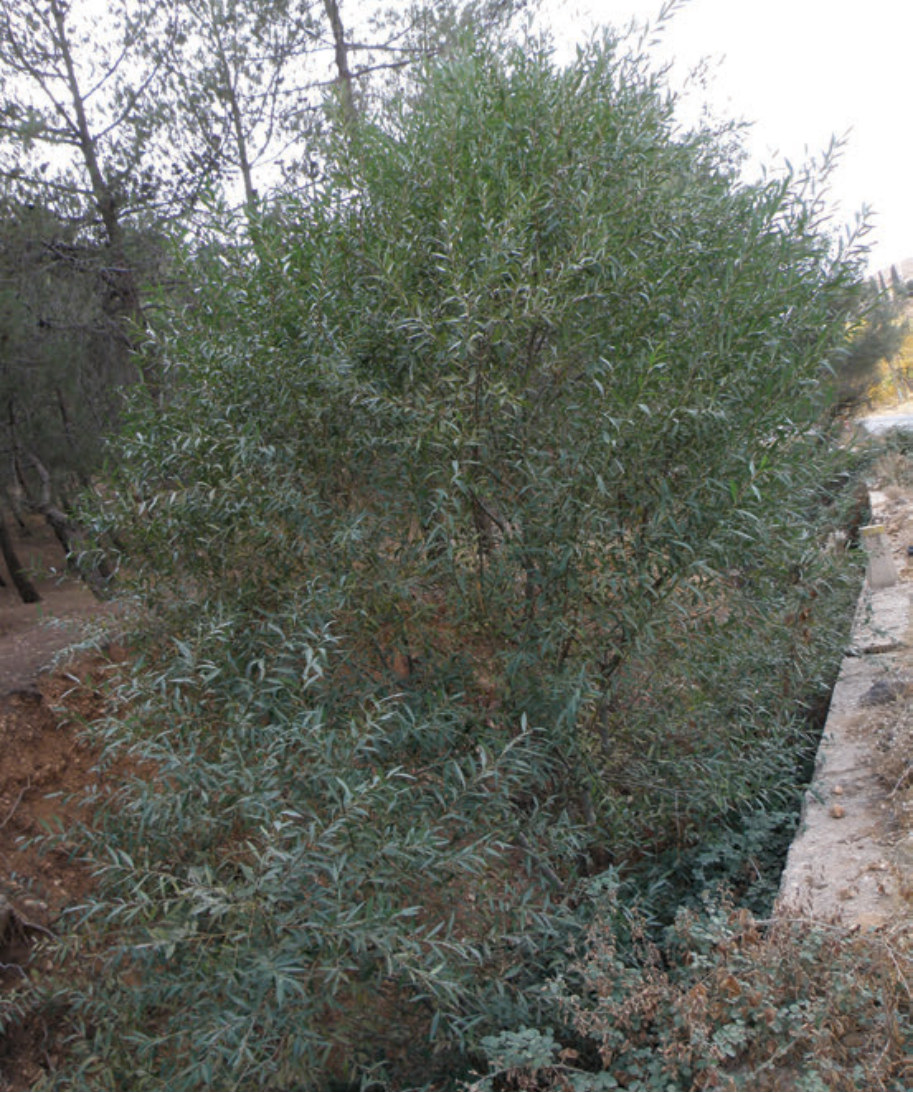
Plant name
white willow
Latin name
Salix alba L
Common names
White willow, sorceress, skewer, espaîdra
foreign names
Eng. White willow, Fr. Saule commun
The group
Willow
Habitat and Geographic Distribution
Its native habitat is Europe, the Mediterranean basin, and as far south as Central Asia and northern China. It also lives in southern Asia and North Africa along riverbanks and waterways.
Botanical description
Brown, hairy when young.
Green or chestnut-colored.
Its branches are long, slender, yellow.
The buds are small, often downy at the tip.
The leaves are simple, alternate, short-petioled, uterine to ovate, acuminate, entire to nearly entire margins, covered with silky white hairs on both sides when young.
Mature leaves have toothed margins, the upper surface covered with a fine down, and the lower surface with a white, powdery dust.
They are up to 1 cm long, short-petioled.
The petioles are thick: their width up to the stipules is narrower than the petioles, and they fall off quickly.
The flowers are unisexual, the male flowers clustered in 1 cm, with a peduncle 6.5 cm long.
The catkins are short, leafy, and zigzagging.
The calyx is absent, manifested by one or two nectaries, and the flower is surrounded by small bracts that fall off quickly.
The male flowers have two stamens, and their filaments are hairy on the lower part.
The female inflorescences are less flowering and slightly smaller than the male inflorescences.
The female flowers consist of two carpels, with a single-locular ovary surmounted by two stigmas (style absent).
The fruit is a capsule, ovoid, glabrous, multi-seeded, which opens via a stylus.
The seeds are enclosed in clusters of silky hairs. Flowering occurs from March to June.
Used part
The bark or stem peel of young plants aged two or three years (collected at the beginning of spring)
chemical components
Glycosides and esters that produce salicylic acid (1.5-12%) include fragilin and populin, in addition to tannins (8-20%) and phavonoids.
The phenolic compounds found are salicylic acid, salicin, salidroside, salginine, tremolidine, salicosalicin, salicortin, and tremolacine.
In general, 322 secondary metabolites have been identified in the willow genus, including flavonoids (flavonol, flavone, flavanone, isoflavone, flavan-3-oles (catechin, procyanidin)), chalcone, dihydrochalcone, anthocyanin, dihydrofavanol, organic acid glycosides, non-phenolic glycosides, sterols, terpenes, and simple phenols.
The bark contains high proportions of phenolic and flavonoid compounds.
It also contains anthocyanins and many other compounds.
Organic acids and sistriol.
The leaves contain a high percentage of fatty acids and volatile substances (mono- and sesquiterpenes) and non-terpenes (aliphatic and aromatic acids, their esters, carbonyl compounds, and hydrocarbons).
Medicinal properties and uses: The bark extract is used to treat rheumatism and neuralgia, especially headaches, joint pain, and diarrhea.
It is also used as an astringent, tonic, and antipyretic, and as a blood thinner.
It is widely used in the manufacture of sports performance enhancers and for weight loss.
The drug's effectiveness is mainly due to the salicin content it contains.
After the acetyl residue of salicin glycoside is cleaved, it is converted into salicin, which is the precursor to salicylic acid.
This acid is responsible for the drug's antipyretic (fever reducer), anti-inflammatory, and analgesic (rheumatic) effects.
(Acetyl salicylic acid precursor is known as aspirin.) A decoction of the leaves is traditionally used to treat boils and skin diseases.
Willow has antioxidant, anticancer, cytotoxic, antidiabetic, antimicrobial, anti-obesity, neuroprotective, and hepatoprotective properties.
Studies indicate the effects of its properties.
Willow is involved in many stressful keratinocyte functions, suggesting its potential role in preventing common acne without adverse effects.
The salicin found in the bark reduces tension in blood vessels that causes headaches.
It is also used as an anti-inflammatory to relieve toothaches and gum inflammation.
Properties and medical uses
The bark extract is used to treat rheumatism, neuralgia (especially headaches), joint pain, and diarrhea.
It is also used as an astringent, tonic, and antipyretic.
The drug's effectiveness is primarily due to its salicin content.
After the acyl residue of the salicylic glycoside, responsible for the antipyretic effects of salicylic acid, is cleaved, it is converted into salicin, which is a precursor to salicylic acid (an antipyretic, anti-inflammatory, and analgesic for rheumatic pains).
(Acetyl salicylic acid precursor is known as aspirin).
An infusion of the leaves is used traditionally to treat boils and skin diseases. Drug interactions and
Side effects and precautions
It should not be used in individuals with a known allergy to salicins (or aspirin), nor in children with flu-like symptoms due to its association with Reye's syndrome.
Caution should be exercised when this medication is used concurrently with other nonsteroidal anti-inflammatory drugs (NSAIDs).
It is not recommended to use it with drugs that prolong thrombosis (PT) or affect platelet aggregation.
Furthermore, its use with alcohol and barbiturates may mask the effects of the medication.
The high salicylate content enhances its toxicity.
It is not prescribed for patients with peptic ulcers, hemophilia, asthma, or diabetes, nor for pregnant or breastfeeding women.
Data suggests that the genotoxic effects of the bark extract occur when it is not metabolized by liver enzymes.
Other uses
It is used to stabilize the banks of waterways.
Willow is cultivated as an ornamental plant in gardens, and its wood has various uses; tanning agents are extracted from the bark and used in leather tanning.
the environment
A light-loving, competition-tolerant, drought-resistant, and hydrophilic species.
Prefers well-drained, fertile, moist soils with a pH ranging from alkaline to neutral and aerated.
Agriculture and productivity
A relatively fast-growing plant, it propagates easily from cuttings and divisions prepared in winter, selected with a diameter of 2 cm and a length of 40 cm.
Studies have shown that the optimal success rate was achieved with hardwood cuttings aged 2-3 years. (Salvadora persicaL)
History and Heritage
It is the altinic poison of several species of this genus, and some trace the poison back to the ancient Celtic Salix.
The scientific name of the genus is alba, meaning water, referring to the proximity of water sources.
The descriptive word for the species is lis, meaning near, and the suffix sal means white, referring to the color of the underside of the plant's leaves.
The plant has been used since ancient times as a remedy for joint pain, rheumatism, headaches, and dysentery.
The ancient Greeks discovered the benefits of chewing willow leaves in relieving anxiety and tested their discovery on Hippocrates in the same year, recording it in one of his medical books, as mentioned by Ibn al-Baytar, al-Antaki, and Ibn Sina.
The scientist Felix Hoffmann worked on producing a "pill" from pure willow leaves to treat anxiety and fever, resulting in the monthly aspirin pill (aspirin acid).
Medical note
This information is for educational purposes only and does not constitute medical advice.
Poisonous or potent plants should only be used under the supervision of a qualified physician or pharmacist.
Related images


