Mary's Tree | Medicinal Plant in the Akhdar Encyclopedia
The plant, containing mono- and semi-terpene lactones (parthenolide), possesses anti-inflammatory properties. It is used as a pain reliever for headaches, and to treat rheumatism, arthritis, and allergies. Parthenolide, a compound extracted from the plant, has properties that inhibit the growth of…
Plant name
Mary's Tree
Latin name
Tanacetum parthenium (L.)Sch.Bip
Common names
Chaste tree, camphor, feverfew, goldenrod, great chamomile
foreign names
Eng. Feverfew, Fr. Grande camomille
The group
Star
Habitat and Geographic Distribution
It grows in the Mediterranean and southern parts of the European continent.
Botanical description
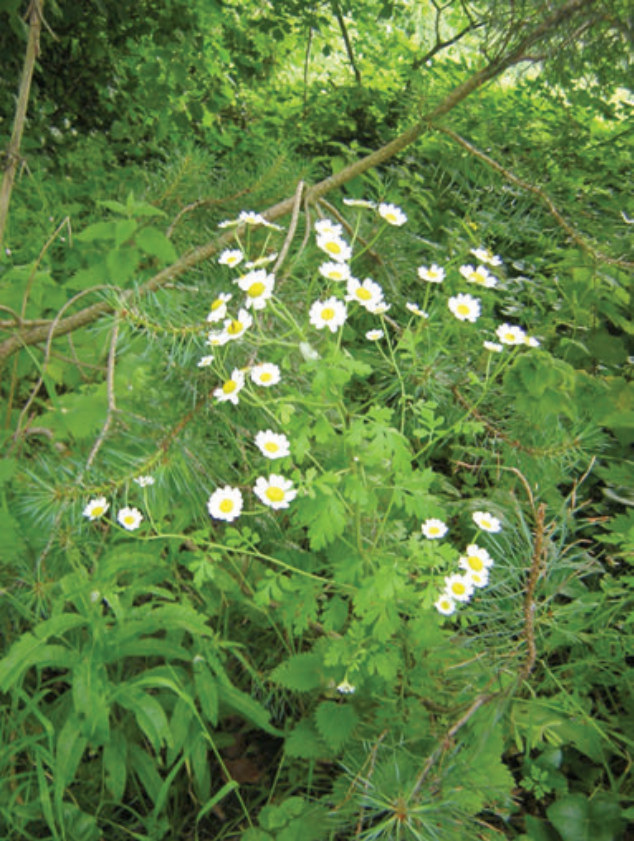
A perennial herb, downy to glabrous, 1 cm tall.
The stems are erect, dense, 20-60 cm.
The leaves are petiolate, soft, and generally ovate, deeply divided into elliptical or oblong lobes, with the upper lobes being lilac-like.
The headlets are gathered in a comb-like inflorescence, 8 mm in diameter, with short spikelets, 8 mm in diameter, containing two pairs of flowers: white lanceolate at the periphery and yellow tubular at the center.
The bracts are arranged in several rows.
The lanceolate flowers are obovate, equal in length to the bracts, and are female.
The fruit is a very small, white acinus, surmounted by a very short, wavy-edged corolla. Flowering occurs from May to July.
Used part
Flowering plant: Latin names: Tanacetum parthenium (L.) Sch.Bip, Matricaria parthenium L., Chrysanthemum parthenium (L.) Bernh, Pyrethrum parthenium (L.) Sm
chemical components
The plant, especially the leaves, contains: paracymene, transchrysanthyl acetate, camphene (its main component being camphor, 0.75% volatile oil), borneol, germacrene, gamma-terpinene, linalool, p-cymene: sesquiterpene lectins, the most important of which are tanaparthin-alpha-peroxide, artecanin, canin, canine, costunolid, parthenolide, secotanapartholide A, 3-beta-hydroxy-parthenolide, rynosin, tanetin, luteolin, apigenin, and flavonoids including apigenin
Properties and medical uses
The plant, containing mono- and semi-terpene lactones (parthenolide), possesses anti-inflammatory properties.
It is used as a pain reliever for headaches, and to treat rheumatism, arthritis, and allergies.
Parthenolide, extracted from the plant, has properties that inhibit the growth of cancerous cells, including human lung cancer.
Parthenolide (a traditional Chinese medicine) has shown antitumor, anti-inflammatory, and anti-inflammatory activity, and it promotes programmed cell death (TPC-1) in thyroid cancer cells.
The extract possesses The hydrated ethanol of the aerial parts of the plant exhibits antiviral activity against Herpes simplex virus S.
and is safe for oral and topical use.
A decoction of the plant is popularly used as a general tonic, for treating stomach spasms and indigestion, as a blood purifier, vermifuge, and emmenagogue.
The decoction or its essential oil is also used topically as an analgesic, anti-inflammatory, and antiseptic for wounds and burns, and as a gargle to disinfect the gums and mouth.
It also acts as an insecticide (for the Colorado potato beetle, Leptinotarsa decemlineata). Caution: Do not use if pregnant.
Side effects and precautions
Not to be used by pregnant women
the environment
It grows as a weed: harmful on rocky slopes, walls, neglected places, and ruins. It tolerates most soil types but is sensitive to acidic soils.
Agriculture and productivity
The seeds are sown in spring in containers (or bags).
The seeds are covered and watered, and the soil is kept moist.
The seedlings are transplanted to their permanent location at the end of spring and the beginning of summer.
If a sufficient quantity of seeds is available, they can be sown directly in the permanent location in beds or basins in spring.
Sowing the seeds only once is sufficient, as the plant self-seeds in subsequent years. Taraxacum officinale F.H.Wigg. (Compositae, Asteraceae)
History and Heritage
The scientific name for the genus and species mentioned above.
Sources indicate that the descriptive name for the species is from the classical Greek parthenion.
Medical note
This information is for educational purposes only and does not constitute medical advice.
Poisonous or potent plants should only be used under the supervision of a qualified physician or pharmacist.
Related images


