Licorice | A medicinal plant in the Akhdar encyclopedia
Licorice (which inhibits the growth of Helicobacter pylori, a bacterium that causes gastric ulcers) possesses anti-ulcer properties, affects steroid hormone metabolism, has immunomodulatory effects, is antimutagenic, antitumor, anti-edema (a free radical scavenger), and counteracts the effects of h…
Plant name
Saws
Latin name
Glycyrrhiza glabra L
Common names
Licorice, licorice root
foreign names
Eng. Reglisse, Fr. Licorice
The group
Pea beans
Habitat and Geographic Distribution
Taurine.
It is widely cultivated in the United States, Russia, Spain, Turkey (Siberia), Iran (Mediterranean), Europe, Greece, India, Italy, Iraq, and Syria.
Botanical description
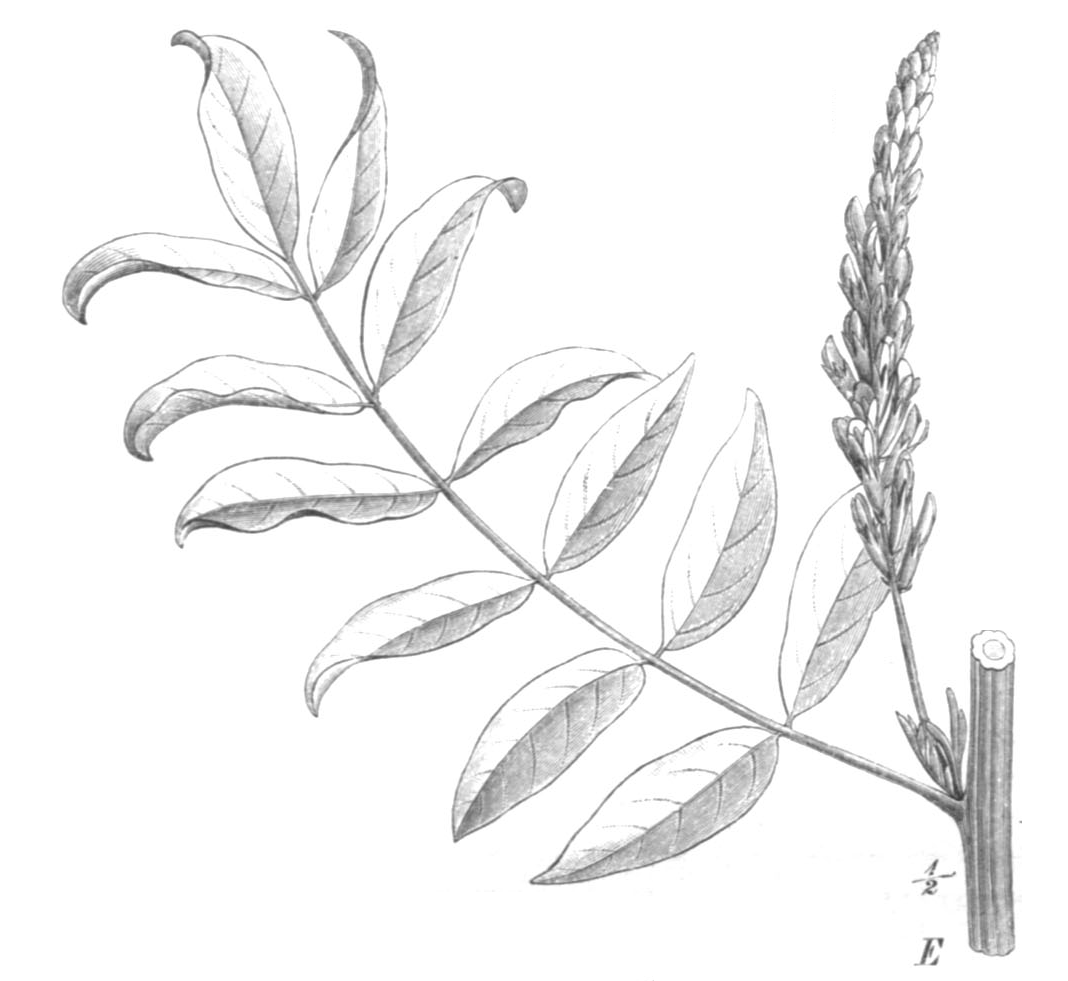
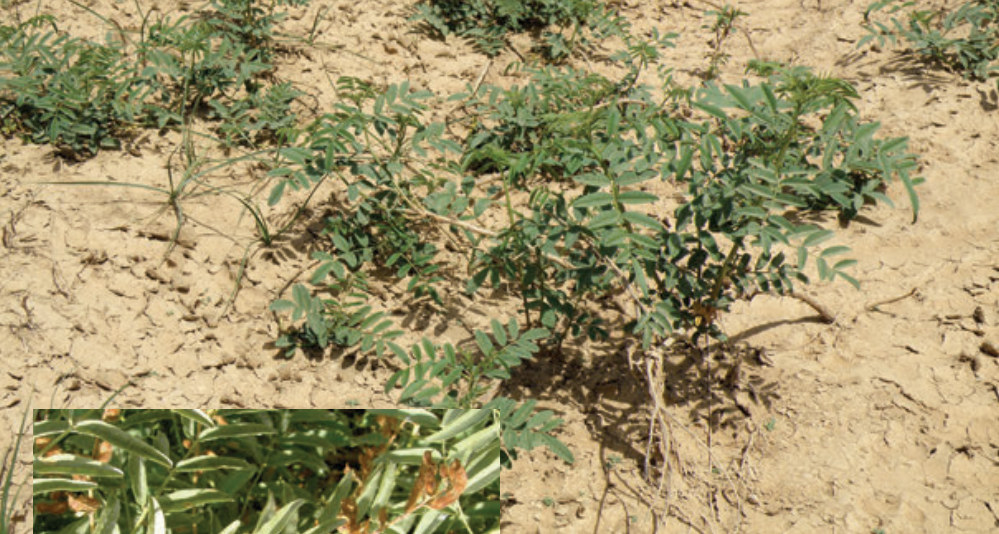
100 cm - An erect, sticky perennial herb with thick, long, sweet-tasting roots.
The stems are numerous and sparsely branched.
The leaves are compound pinnate-tipped, arranged in pairs of leaflets.
The stipules are oblong, hairy, and may be absent.
The leaflets are oblong to oblong-elliptic, acute or blunt at the apex, and sticky on the underside.
The inflorescence is racemose or 1-2 x 5 cm, subspical, axillary, arranged in clusters or along the length of the supporting leaves.
The flowers are not tightly packed and are cylindrical.
The flowers are hermaphroditic, sepals fused into a tube ending in five equal teeth, exceeding 1 cm.
The calyx is bisymmetrical, with stamens arranged in butterfly-shaped petals, blue or purple, and the flag is whitish.
The male flowers are tube-like in length.
The corolla is bisexual.
The female is solitary in carpel, the ovary is superior, glabrous or covered with glandular hairs, the style is curved, ending in a terminal stigma.
The fruit is flat, oblong to linear, with a leathery, glabrous pericarp.
The fruit is a pod, 0.7-0.4 x 3 cm, or covered with glandular hairs to varying degrees, opening late, containing one to several kidney-shaped to spherical seeds.
Flowering occurs from May to October.
There are two cultivars: *G.g.
var.
glabra* (seeds 7), glabrous pod; and *G.g. var. glandulifera* (seeds 3), glandular-covered pod.
Used part
Dried, peeled roots.
Latin name: Glycyrrhiza glabra L. G. glandulifera Waldst. et Kit., G. hirsute Pall
chemical components
Such as flavonoids).
And flavonoids, glycyrrizin (glycyrrizine 15%), 3-triterpene saponins (components responsible for color), isolicoflavonol (chalcone), isoliquiritin, liquiritin, glabridin (a estrogenic agent), and glabren (such as galbren, the yellow of the roots).
Isoflavones and lycocoumarins, glycyrol such as glycyrol, cumestan, cumestan derivatives, chalcones, chalcones, glabrol, galbrol, umbelliferone, urbelliferone, herniarin, hydroxycoumarins, hydroxycoumarins, liqcoumarin such as betasteroids, steroids, licopyranocoumarin, lycopyranocoumarin, and glycocoumarin.
The drug also contains a small amount of volatile oil, stigmasterol, and stigma.
citriol, beta-sitosterol, hexanoic acid, eugenol, estragole, anethole (its main component)
Properties and medical uses
Licorice (which causes ulcers), Helicobacter pylori (inhibits bacteria causing gastric ulcers), has anti-ulcer properties, affects steroid hormone metabolism, has immunomodulatory effects, is antimutagenic, antitumor, anti-edema (free radical scavenger), counteracts hemolytic agents, affects blood electrolytes, has antilipidic and anti-anemic effects, and also has effects on enzyme activity, estrogenic and anti-allergic effects.
Licorice also has antiviral effects, and studies have shown that the compound glycyrrhizin affects the hepatitis virus, which is effective in treating chronic viral hepatitis.
It also combats the virus that causes genital ulcers, enhances the body's resistance to Herpes simplex, and fights the type B virus that causes vaginal infections.
It is used to treat respiratory tract infections (cough, It is used to treat sinusitis accompanied by profuse, yellowish, foul-smelling mucus discharge, as well as nasopharyngitis and bronchitis.
Licorice extract, containing glycyrrhizic acid, is used to treat inflammatory peptic colic (chronic gastritis), as it increases the mucus that protects the stomach wall, reduces acid secretion, and helps ulcer healing.
The coumarin compounds in licorice are natural blood thinners, preventing clotting and reducing the risk of blood clots and strokes.
Coumarin is also believed to inhibit cancer growth.
A compound similar to the phenylalanine found in tea (Akhdar) was isolated from licorice root by scientists (BHP) and shown to have the ability to stop the development of breast cancer in women and prostate cancer in men by inhibiting the activity of proteases responsible for cancer cell proliferation.
Licorice is popularly used as a refreshing, moisturizing, expectorant, digestive aid, and to treat cold sores and the common cold.
It is used for coughs, stomach upset, constipation, increased milk production, and to treat rashes and headaches.
Externally, it is used for dermatitis, eczema, mouth ulcers, wounds, and eye diseases.
pharmaceutical forms
It is available in capsules, especially liquid, as an infusion, in tobacco products, candies, chewing gum, and sugar lozenges. It is sold under various names.
Side effects and precautions
Potential side effects include headache and water retention.
High doses can cause cardiac arrest and rhabdomyolysis.
Licorice should not be combined with carotene, prolonged procane, quinidine, steroids such as prednisolone and nicotinic steroids, aldosterone, diuretics, antihypertensive drugs, and anoxin.
Licorice should not be taken by people with heart disease, high blood pressure, liver and kidney disease, and should be avoided by pregnant or breastfeeding women.
Glycyrrhizinated acid (GLA), derived from licorice, enhances the effects of steroids applied topically.
Scientists have discovered that 97% of GLA can be removed, resulting in deglycyrrhizinated licorice (DGL).
Pharmaceutical companies are now removing GLA from the plant to reduce its adverse effects.
Other uses
Once a sugar, currently used extensively as a flavoring agent and additive in bitter medicines, candies, syrups, foods, chewing gum, tobacco, toothpaste, and soaps. Side effects and interactions...
the environment
It is found naturally near marshes, riverbanks, and winter-flooded lands.
Licorice adapts well to various environmental conditions in areas between latitudes 6-7.
It tolerates high temperatures (up to 45°C) and relatively high salinity.
It tolerates a pH of 6-7 and is particularly tolerant of drought in its youth. It thrives in soils with a pH of 6-7.
Agriculture and productivity
It is propagated by seeds or by cuttings taken from the rhizomes (underground stems) into small pieces.
The planting time varies depending on the propagation method.
For sexual propagation, seeds are sown in the spring in a nursery bed, and the seedlings are transplanted to their permanent location after one year.
For vegetative propagation, which is the preferred method, the rhizomes are planted in their permanent location before sap flow begins, at the end of winter and the beginning of spring.
After preparing the soil, it is marked out in spaced rows.
The planting is done at a distance of 110-120 cm, then the seedlings are planted in the row at a distance of 40-50 cm between each seedling.
As for propagation by cuttings, this is done in holes spaced 60 cm apart, and at least three cuttings are placed horizontally in each hole at a depth of 5-8 cm, then watered immediately.
Licorice needs frequent watering in the first months after planting to help the cuttings form roots and grow, then the land is watered once a month, and this varies Depending on the soil type, water retention capacity, and weather conditions, fertilization significantly improves yield.
It is recommended to begin harvesting roots 2-3 years after planting, with the best time being late autumn when the plant begins to turn yellow, approximately two months after flowering.
Harvesting begins by cutting the foliage at a height of 5 cm from the ground.
The rows are then tilled to loosen the soil, and the runners and rhizomes are cut with special, sharp knives.
Uprooted from the ground, the cutting process helps the remaining parts in the soil to grow quickly and fill the gap.
After cutting, the roots and creeping stems are cleaned, then cut into small pieces, 5-10 cm long.
The cut pieces are dried in the sun for a week, turning them daily to prevent fermentation and fungal rot and to accelerate drying. One hectare yields about 5 tons of dried roots. Lupinus albus L
History and Heritage
The word "jadhr" means "root," referring to its sugary roots.
"Rhiza" means sweet or sugary, and "glykys" is the scientific name for the genus, derived from the Greek word meaning "skinny." Licorice syrup is used in many Arab countries, especially during the summer and the month of Ramadan.
Medical note
This information is for educational purposes only and does not constitute medical advice.
Poisonous or potent plants should only be used under the supervision of a qualified physician or pharmacist.
Related images