Sumac | A medicinal plant in the Akhdar encyclopedia
Sumac fruit, with its phenolic compounds (tannins), possesses antioxidant properties that help protect the liver from toxins and has antibacterial and antiviral effects. Tannins generally have astringent, antiseptic, and anti-inflammatory properties and are used to treat inflammation of the digesti…
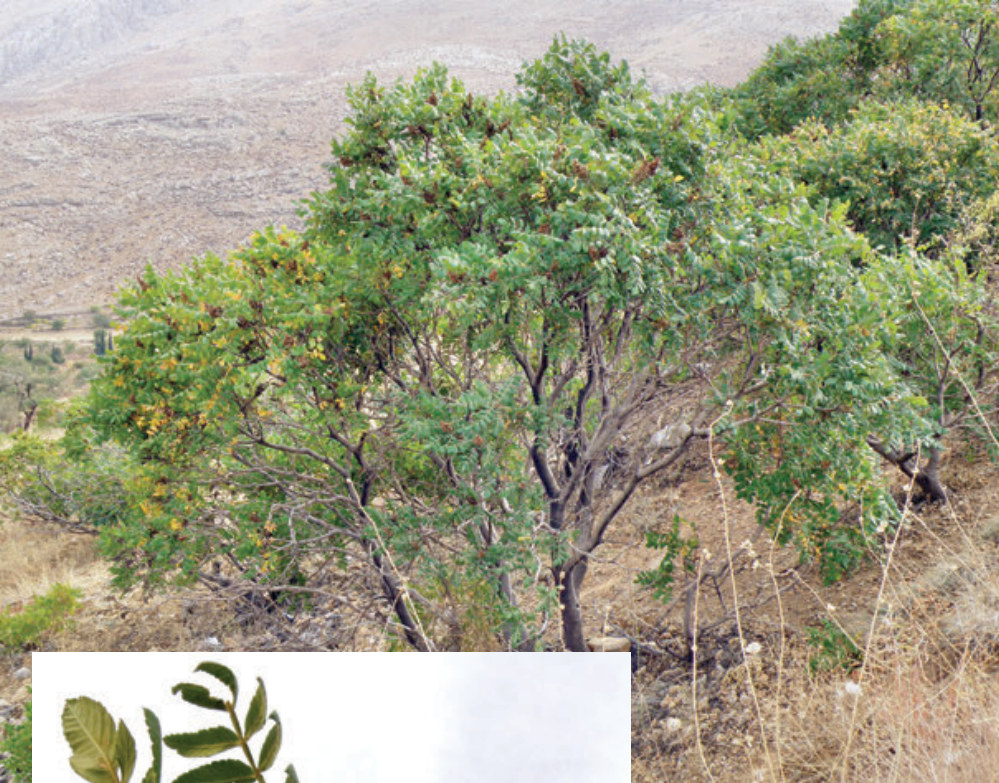
Plant name
Sumac
Latin name
Rhus coriaria L
Common names
S. maq, S. maq al-dabbaghni, sumac al-khil, al-damakh, tam tam, 'abr b
foreign names
Eng. Sumach, Fr. Sumac de corroyeurs
The group
heart
Habitat and Geographic Distribution
Taurine, a Mediterranean species, is widespread in Syria, Lebanon, Jordan, Palestine, and Turkey.
The most important sumac species found in the Mediterranean basin are: *Rhus tripartita*, *Rhus cotinus* L., *Rhus coriaria* L., and *Rhus tannin*.
Botanical description
M.
5 - Shrubs or trees, downy, cm long, deciduous, short.
20 - Petiolate leaves, generally oblong, compound in pairs, 7 - pinnately trifoliate.
Leaflets cm, 2 - 0.7 cm long, rough: 4 - slender, oblong to ovate, acute or blunt apex, toothed margin, downy on both sides.
Inflorescence: raceme, terminal or axillary: dense, flowers, white.
Calyx: five-lobed, hairy.
Petals: five-mm, unisexual or hermaphroditic, 4 - flower: kidney-shaped, brown, downy and 4 - mm long, spherical.
6 - length: twice the length of the calyx, white, ovate. Stamens: five. Fruit: also glandular hairs. Flowering: April to May
Used part
Fruits and leaves
chemical components
By dry weight, it consists of 33% tannins.
The leaves contain phenolic compounds, the most important of which are tannins, methyl ether, gallic acid, and flavonoid compounds such as gallic acid and myricuitrine.
The fruits contain phenolic compounds, the most important of which are tannic acid or gallic acid (tannins), myricetin, quercetin, kaempferol, flavonoid compounds, and organic acids such as cyanidin, peonidin, pelargonidin, petunidin, delphinidin, and anthocyanin compounds, including malic and citric acids (malic, citric, etc.).
Properties and medical uses
Sumac fruit, with its phenolic compounds (tannins), possesses antioxidant properties that help protect the liver from toxins and has antibacterial and antiviral effects.
Tannins generally have astringent, antiseptic, and anti-inflammatory properties and are used to treat inflammation of the digestive system.
Experiments on laboratory mice have shown the fruit's blood sugar-lowering properties and its ability to help stop urinary incontinence.
Experiments on rabbits have demonstrated the protective effect of leaf extracts on the heart and arteries.
It is used traditionally.
Sumac fruit infusion is used topically as a gargle to treat inflammations of the mucous membranes of the mouth and pharynx, and laryngitis.
It is also used in solutions or ointments to treat burns and skin ulcers, and to treat acute diarrhea.
A decoction of sumac bark is used topically to treat fungal skin infections and as a gargle to relieve laryngitis.
Sumac is used in homeopathy to treat problems of a weak bladder.
Sumac (tannin) solutions are given in cases of poisoning by alkaloids and heavy metal salts.
Side effects and precautions
Allergic reactions or drug interactions may occur; self-use should be avoided by pregnant and breastfeeding women, children, and patients with chronic diseases.
Other uses
Tannins separated from the leaves are used in leather tanning.
Food uses
The fruit is used as a popular spice and appetite stimulant, and sumac is added to some Arabic dishes.
Dyes in various colors—red, yellow, black, and brown—can be made from different parts of the plant. The oil extracted from the seeds can be used in candle making.
the environment
It grows in various soil types, especially Mediterranean red (Triarosa), yellow, and sandy clay soils, and tolerates lime and salinity.
Sumac is a shrub with strong roots that penetrate and spread rapidly within the soil.
Consequently, it can be used to stabilize soils in sloping, rocky, and valley areas.
However, it can compete with fruit trees if planted alongside them, and it becomes difficult to eradicate once it spreads in a particular area.
Agriculture and productivity
Sumac plants are propagated by seeds, root cuttings, or vegetative cuttings.
The seeds retain their viability for a year or more, and are generally difficult to germinate due to the infestation of their rhizome and the dormancy of their embryos.
Therefore, it is necessary to mechanically or chemically scarify the seed coat and then place them in moist sand for 24 hours.
The treated and stratified seeds are sown directly into plastic bags at a rate of 3 seeds per bag in late winter and early spring, and germinate within one to two weeks.
The germination rate is sometimes low due to the presence of empty seeds.
The seedlings are transplanted to their permanent location at 6-12 months of age in late winter and early spring, and can be transplanted year-round if irrigation water is available, while preserving their long root systems.
The seedlings require light and weeding.
The plant flowers at the beginning of summer, and its fruits ripen in August and September.
Seed harvesting begins in autumn when the seeds turn brown from 4-5 year old trees.
This is done by cutting the fruit clusters, spreading them out, and drying them in the sun.
The fruiting husk (the outer layer) is then removed by pounding the dried fruit or rubbing it through a sieve.
(Ammi majus L., Ammi majus var.
genuinum Gren. & Godr., Apium ammi Crantz., Carum majus L. Koso-Pol., Visnaga major L. J.Vick)
History and Heritage
The scientific name of the genus Rhus is derived from the ancient Greek "rhous," the old name for sumac.
The descriptive name for the species coriaria comes from its use in tanning, as the Latin word corium means "leather." The ripe fruits were well known to Europeans since the time of the ancient Romans, who appreciated their acidity and used them in vinegar, much like lemons today.
Medical note
This information is for educational purposes only and does not constitute medical advice.
Poisonous or potent plants should only be used under the supervision of a qualified physician or pharmacist.
Related images


