Belladonna | A medicinal plant in the Akhdar encyclopedia
Extracts from the leaves and roots possess properties that dilate the pupils, relax the parasympathetic nervous system, and antagonize acetylcholine receptors. High doses produce a centrally acting relaxant effect on the smooth muscles of the digestive system, urinary tract, and bronchi. They also…
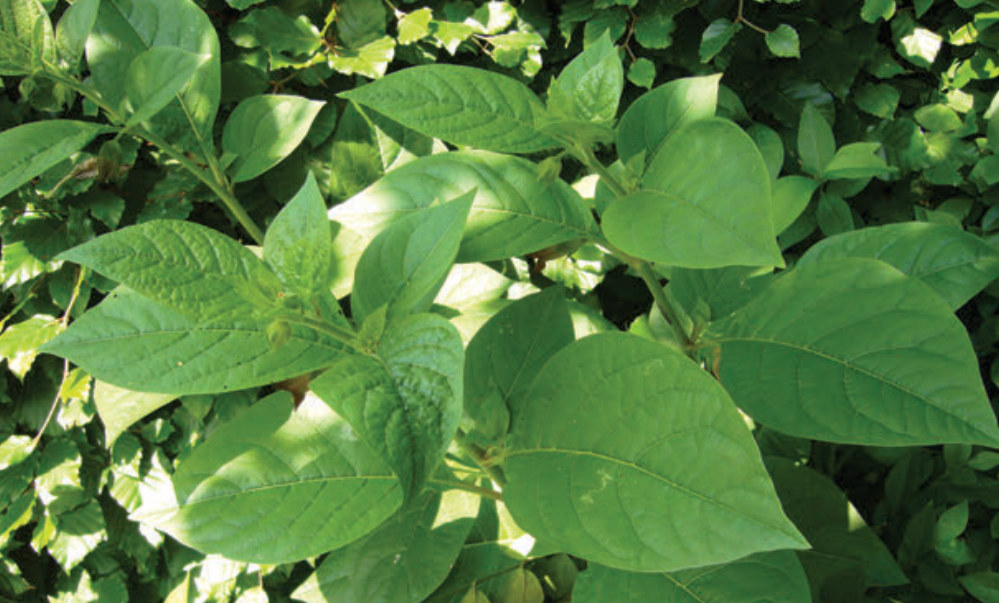
Plant name
Sitt al-Hassan
Latin name
Atropa belladonna L
Common names
The beautiful woman, the lilac
foreign names
Eng. Belladonna, Baneworth, Fr. Belladone
The group
eggplant
Habitat and Geographic Distribution
The plant is widespread in central and southern Europe, northern Africa, the eastern Mediterranean, and southwestern Asia. It is cultivated in England, France, and northern America.
Botanical description
The stem is 1.5 cm long, a small, evergreen shrub, growing to about an upright, and highly branched.
The leaves are dark green, alternate in the lower part of the stem and opposite in the upper part, and are 1 cm in shape.
From the leaf axils emerge 15-15 cm long, heart-shaped flowers, 2.5-3.5 cm in color, solitary or paired.
They are purple or crimson in length, with five sepals fused at their bases.
The lobes flatten into a rhizome when the fruit is ripe.
There are five stamens, and the style is solitary, branching into two stigmas.
The fruit is a berry, spherical and green, turning black when ripe, containing numerous highly poisonous seeds. Flowering occurs during the summer and autumn seasons, depending on the region.
Used part
Leaves and roots. Latin name: Atropa belladonna L.
chemical components
Atropin, the most important of which is hyoscyamin.
Hyoscyamin comprises a significant percentage of the rhitobanne alkaloids.
Other alkaloids include flavonoids, coumarins, tropanol, and other rhitobanol derivatives, scopolamine, and tannins.
Properties and medical uses
Extracts from the leaves and roots possess properties that dilate the pupils, relax the parasympathetic nervous system, and antagonize acetylcholine receptors.
High doses produce a centrally acting antispasmodic effect on the smooth muscles of the digestive, urinary, and bronchial systems.
They also inhibit glandular secretions.
The drug is used to treat respiratory tract infections and chronic infectious bronchial diseases.
A decoction of the leaves is traditionally used to treat liver, gallbladder, and pancreatic diseases.
A poultice of the leaves is applied topically to treat infections, wounds, burns, parasitic diseases, neurological disorders, gout, rheumatic pains, and phlebitis.
It is used to relieve bite pain, and atropine eye drops are still used to dilate the pupils to obtain a good view of the retina during eye examinations.
It is also used to treat brain and nerve disorders, whooping cough, asthma, neuralgia, and sciatica.
Atropine was used to treat heart conditions before admission to coronary care units to treat bradycardia and heart block after myocardial infarction.
Side effects and precautions
It is possible that tender leaves can cause certain reactions: positivity
Other uses
It can be used in the preparation of shampoos and cosmetics.
the environment
Belladonna grows on forest edges and open areas, along roadsides, in thickets, and in areas north of 55°C - neglected, damp, partially shaded lands and calcareous soils.
The best areas for its growth are between latitudes 50°C and 200°C above sea level.
It thrives in light soils rich in organic matter and close to water sources, provided partial shading is implemented during planting.
Plants are cultivated and their productivity is 6 cm per plant.
Plants are planted in permanent locations.
The plant is propagated by seeds sown in shallow beds at a rate of 0.8-1 ton per hectare. The leaf yield is 8 cm at a rate of 70 x 0.75 m.
Agriculture and productivity
The plant is propagated by seeds sown in beds 50 cm apart.
The seedlings are then transplanted to their permanent location at a spacing of up to 60 x 70 cm, using 8 kg of seeds per hectare. Yields are of
History and Heritage
The goddess of fate, Atropa, is the name of one of the three daughters of Zeus, the Greek god of war.
The descriptive name, bella, comes from the Italian belladonna, meaning woman.
The name donna means beautiful, referring to the plant known as belladonna (from Atropa).
The word (2009) refers to the plant *Atropos*, a highly poisonous plant known to ancient botanists as *Solanum mortale*, which was used to beautify women's faces. Queen Cleopatra used it for cosmetic purposes.
Medical note
This information is for educational purposes only and does not constitute medical advice.
Poisonous or potent plants should only be used under the supervision of a qualified physician or pharmacist.
Related images


