Linden | Medicinal plant in the Akhdar Encyclopedia
The fruit extract has antibacterial activity against Pseudomonas aeruginosa and Staphylococcus aureus, and is an analgesic and antioxidant due to its rutin content. The seeds possess muscle-relaxing properties (containing flavonoid compounds), and the fruit extract is beneficial in treating gastric…
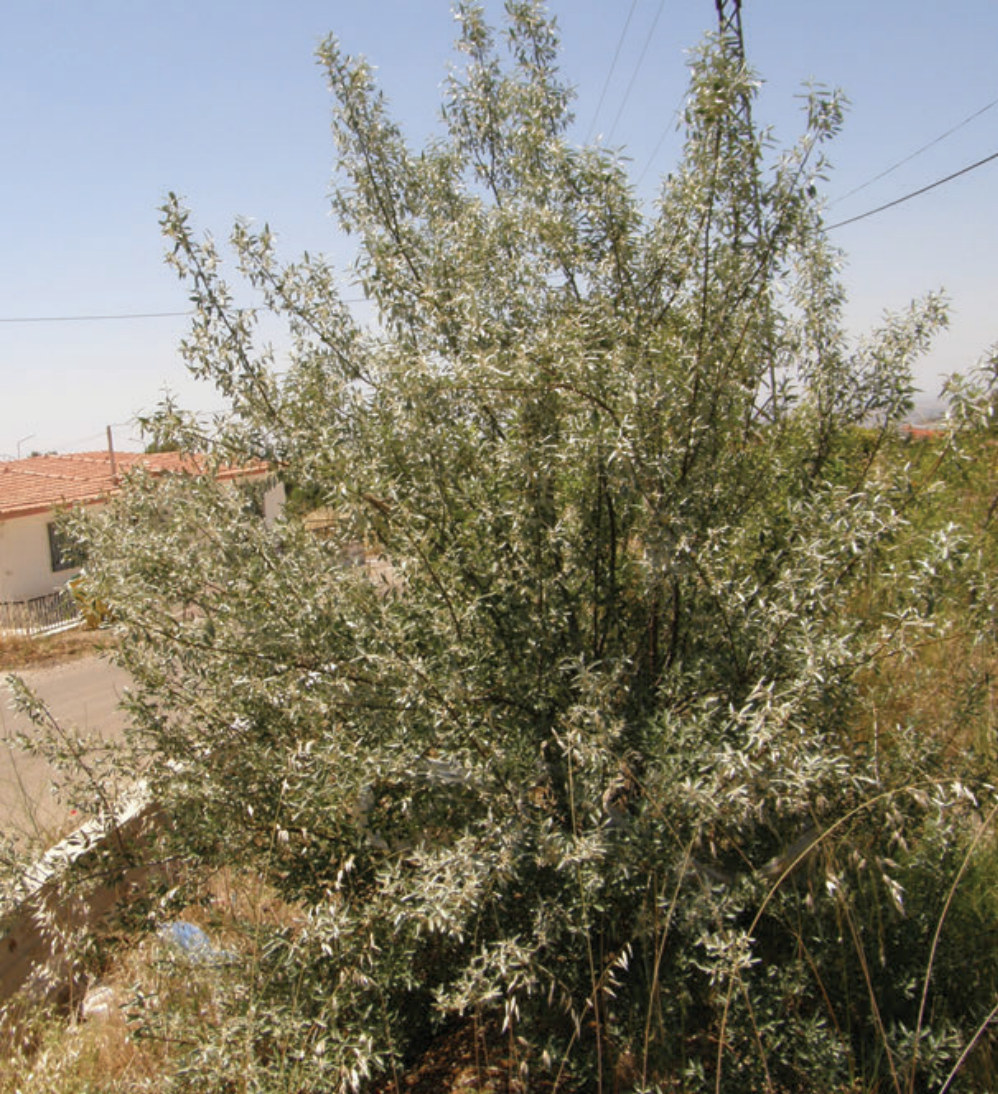
Plant name
Linden
Latin name
Elaeagnus angustifolia L
Common names
Linden, aromatic olive, Bohemian olive, silver saffron
foreign names
Eng. Russian olive, Fr. L'Olivier de Bohème
The group
Linden
Habitat and Geographic Distribution
Native to southern Europe, western and central Asia, and Cyprus, from where it spread to many parts of the world. Latin name: Elaeagnus angustifolia L.
Botanical description
The branches are often thorny.
The leaves are deciduous or evergreen, alternate, pedunculated (8 - shrub or small tree), linear, pale green on the upper surface, silvery on the underside, - mm), uterine or uterine (8 - 5).
The petioles are 1.6 - 0.6 x 5 cm.
The flowers are solitary or in clusters (8 - flowers, 3 - mm long), fragrant (2) pedunculated.
The calyx is tubular, pedunculated (mm), the sepals are triangular, silvery-white on the outside, yellow on the inside, the corolla is absent.
The stamens have pedunculated filaments.
The male ovary is nearly spherical.
The fruit is a drupe, elliptical, yellow or red, sweet, 1.5 x 1.5 cm, and ripens at the end of autumn. Flowering occurs from April to July.
Used part
Fruits, flowers, and leaves
chemical components
The fruits contain sugars, primarily fructose, 52% linoleic acid, glutamic acid, and arginine.
They also contain fatty oil, the main components of which are linoleic acid, polyphenols, and rutin.
Among the phenolic compounds are rutin and tannic acid.
The most important components are 5% linoleic acid, 5% linolenic acid, and 12% linolenic acid.
Caffeic acid, phenolic acids including catechin, tannins, 16% phosphatidylethanolamine, 52% phosphatidylcholine, and phospholipids, are among its main components.
It also contains phospholipids (Mg, K, and Ca), minerals such as calcium (C, A, and E), and several vitamins, the most important of which is trans-ethylcinnamate (79%).
The flowers contain a volatile oil, the most important component of which is catechin. The leaves contain phenolic compounds similar to those found in the fruits.
Properties and medical uses
The fruit extract has antibacterial activity against Pseudomonas aeruginosa and Staphylococcus aureus, and is an analgesic and antioxidant due to its rutin content.
The seeds possess properties (flavonoid compounds) that relieve muscle tension, and the fruit extract is beneficial in treating gastric ulcers.
The fruits and flowers are used traditionally to treat nausea, vomiting, insomnia, asthma, jaundice, tetanus, and flatulence.
A decoction of the flowers (inhaled as steam) is used, due to its volatile oil content, to improve heart function.
A decoction of the leaves is used for its analgesic properties in cases of anxiety and spasmodic coughs.
A decoction of the leaves and flowers is also used as a diuretic and to treat fever.
The unripe fruits are eaten as a light-colored fruit.
For appetite, the fruit paste is used topically to treat rheumatic pain and arthritis.
The plant is known for its medicinal applications and is added to food products as a vital element to enhance antioxidants, polyphenols, fiber, flavonoids, sterols, carbohydrates, and protein content.
Side effects and precautions
Allergic reactions or drug interactions may occur; self-use should be avoided by pregnant and breastfeeding women, children, and patients with chronic diseases.
Other uses
Linden is a versatile tree that can be used as a windbreak and a beautiful ornamental shrub.
Its fragrant flowers are a desirable source of bee forage and high-quality honey.
The leaves have high forage value, and the porous wood is suitable for light uses and excellent for kindling. The sweet fruit is eaten by birds and can also be used in making jams.
the environment
The Hamba tree is a light-loving, drought- and pollution-resistant species that requires no special care.
It can thrive in various soil types, even moderately saline, provided the soil is well-drained.
The plant's roots possess symbiotic fungal nodules that promote growth and allow it to survive in various soil types.
Agriculture and productivity
The tree is fast-growing and regenerates vigorously after cuttings.
It can be easily propagated by cuttings and suckers, giving it a significant advantage in spreading and expansion.
The plant can be planted in well-irrigated ordinary soil in autumn or spring, and it can also be propagated by stratified seeds.
The tree should be pruned in winter to encourage branching, and organic fertilization should be applied in spring.
For good growth and branching, it is recommended to prune about a third of the plant at the end of winter during the first few years.
The plant tolerates pruning well, as well as pests and diseases.
Flowering begins in the sixth year of the plant's life, and the flowering period does not exceed one week.
Harvesting begins when two-thirds of the flowers have opened. Ephedra alata Decne. Ephedra alata var. decaisnei Stapf
History and Heritage
The name "Gnusa" means olive tree, and the suffix "elaia" comes from the ancient Greek "eleagnus," the scientific name for the genus.
It is an aromatic plant, and thus "aromatic olive" refers to the fragrant scent of its flowers.
The word "Vitex" means sharp-leaved, describing the plant's leaves.
The common name is linden, and the species' descriptor, Angustifolia, calls it "Bohemian olive," a literal translation of the plant's name in French. It is also called "silver sap" due to its shiny, silvery leaves.
Medical note
This information is for educational purposes only and does not constitute medical advice.
Poisonous or potent plants should only be used under the supervision of a qualified physician or pharmacist.
Related images


