Oval-shaped rubber plant | Medicinal plant in the Akhdar Encyclopedia
The information provided about oval rubber is for educational purposes only and does not represent a prescription or a substitute for consulting a doctor.
Plant name
oval rubber
Latin name
Plantago ovata Forssk
Common names
Oval plantain, psyllium, civet, plantain
foreign names
Eng. Spogel plantain, Fr. Ispaghala
The group
The Ribliya
Habitat and Geographic Distribution
Arabian and western Irano-Turanian desert.
It is cultivated in many countries, particularly India, and the United States is the largest importer of seeds, which are used in many of its pharmaceutical industries.
Botanical description
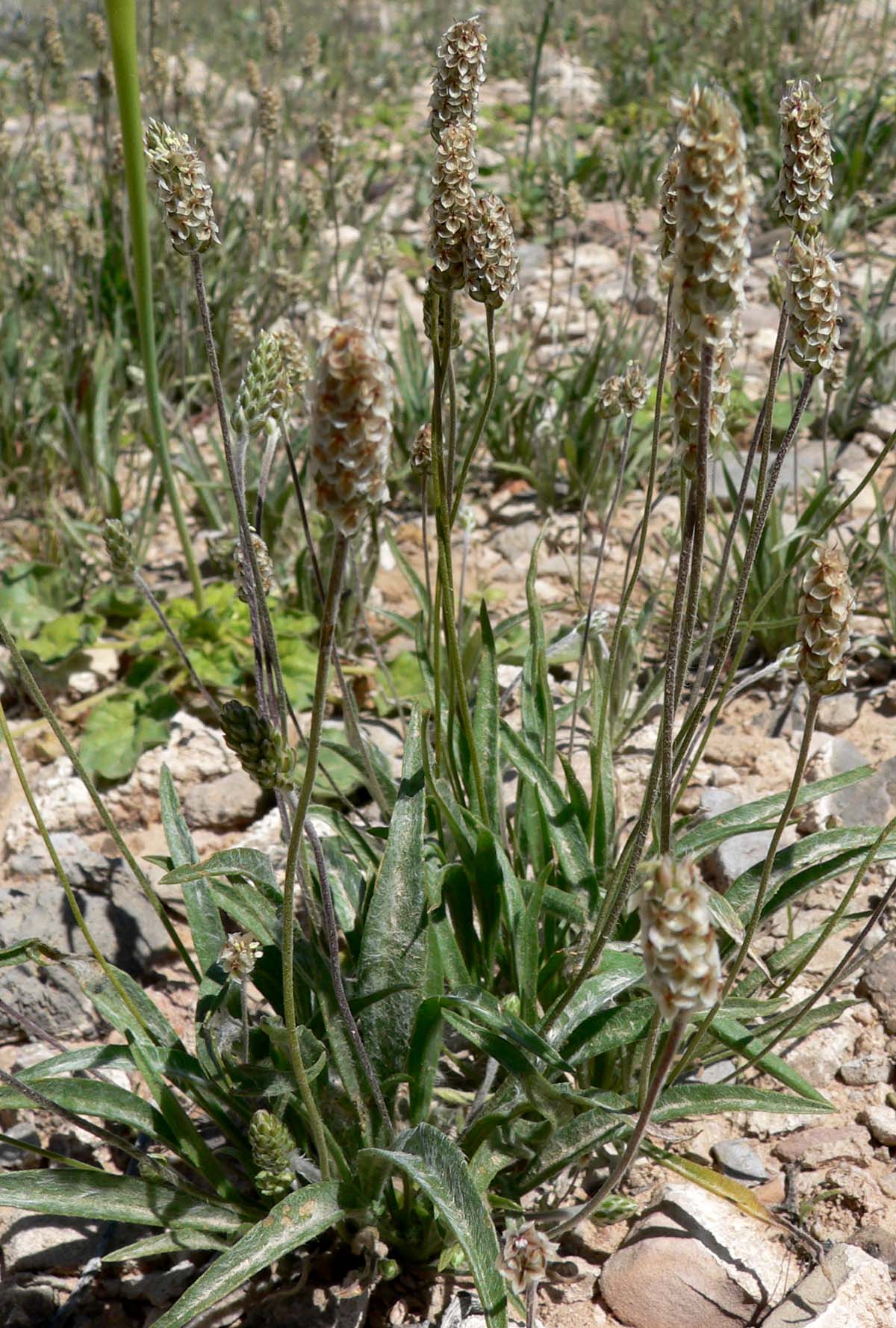
The stem is stemless, covered with dense, soft hairs.
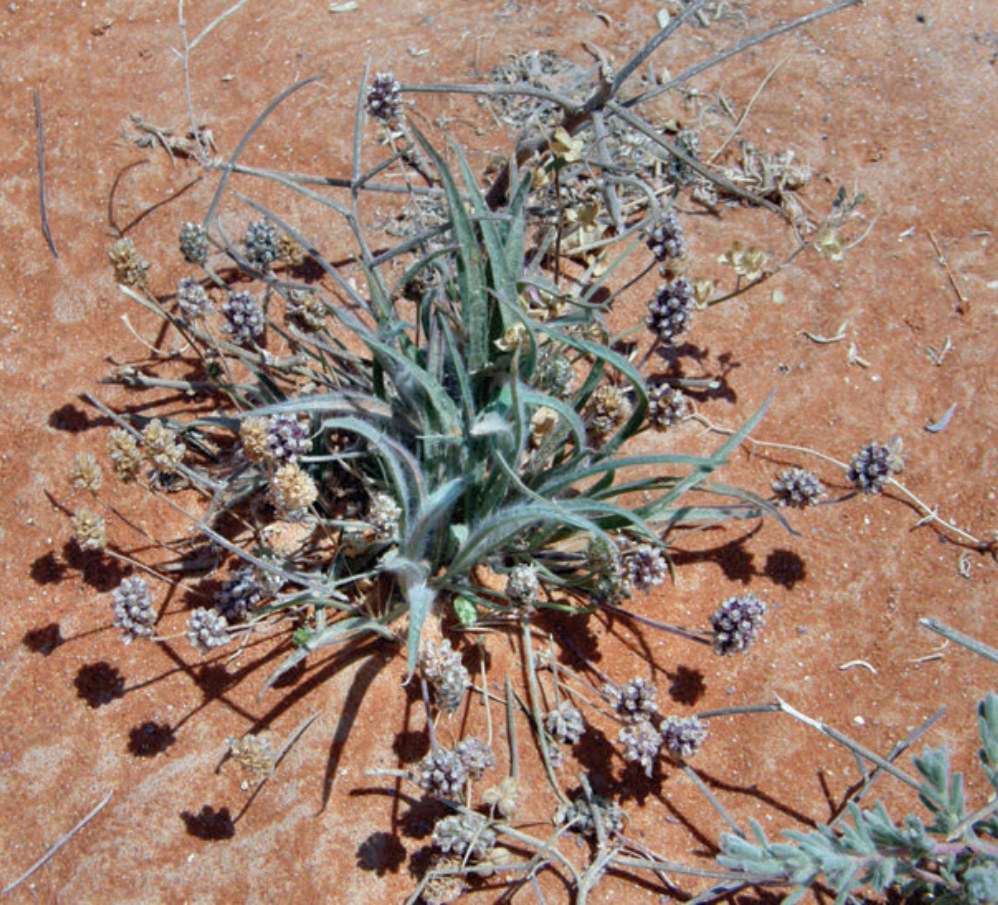
The leaves emerge in rosettes.
The herb is biennial or perennial, with the base of the plant being linear to uterine, acute at the apex, gradually narrowing towards the base, with entire or slightly toothed margins.
The inflorescence is an ovoid to cylindrical spike, erect or prostrate, varying in length, with leafless, rounded, membranous midrib equal in length to the calyx.
The bracts are ovoid, sepals fused into a short tube ending in four nearly equal lobes, boat-shaped, with an ovoid to ellipsoid calyx, dull apex, membranous: the midrib is herbaceous.
The petals are fused, with ovoid lobes.
The corolla is broad, glabrous, ending in a short apex, slightly projecting.
The female has two stamens, carpels, and a superior ovary with two stones.
The fruit is a dry, membranous, ovoid capsule containing two seeds.
The seed is brown, elliptical, and rich in plant mucilage. The flowering period is from January to April.
Used part
Seeds.
Latin name: Plantago ovata Forssk., P. ispaghula Roxb, P. brunnea Morris, P. insularis Eastw
chemical components
The seeds of the plantain species P.
afra contain husks (6.83%), protein (0.94%), ash (4.07%), total albumin (84.98%), globulin (35.8%), and prolamin (23.9%).
Plantain seed oil is high in linoleic acid (40.6%), oleic acid (39.1%), and linolenic acid (6.9%).
Properties and medical uses
The information provided about oval rubber is for educational purposes only and does not represent a prescription or a substitute for consulting a doctor.
Side effects and precautions
Allergic reactions or drug interactions may occur; self-use should be avoided by pregnant and breastfeeding women, children, and patients with chronic diseases.
the environment
The plant grows on sandy loamy soils in sunny locations, preferring a cool, dry climate, and requires minimal water. Its growth and appearance are affected by the amount of rainfall.
Agriculture and productivity
The plant is propagated by seeds, which are sown in mid-spring if a sufficient quantity is available, or planted in containers.
Veronica officinalis L., Veronica officinalis f.
albiflora (G.
Don) House., Veronica officinalis var. officinalis, Veronica officinalis var. multicaulis Wallr
History and Heritage
It means oval. ovata is the descriptive toxin of the species.
Medical note
This information is for educational purposes only and does not constitute medical advice.
Poisonous or potent plants should only be used under the supervision of a qualified physician or pharmacist.
Related images