Khoshian | Medicinal plant in the Akhdar encyclopedia
Sulfur compounds and their derivatives exhibit antibacterial, antifungal, and nematocidal properties. The fatty acids in the seeds show high efficacy in inhibiting bacterial and fungal growth. A decoction of the plant is used in folk medicine for constipation. Caution: The plant extract has an irri…
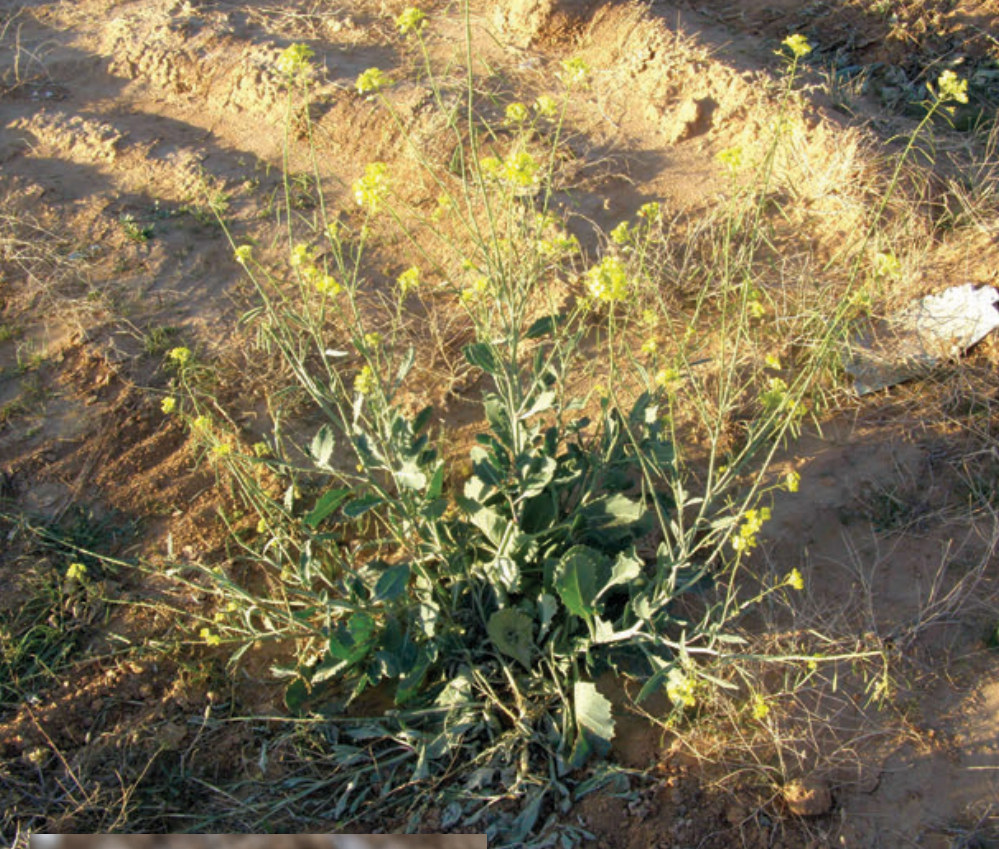
Plant name
Khushiyan
Latin name
Diplotaxis harra (Forssk.) Boiss
Common names
Khoshian, the neighborhood
foreign names
Eng. Stink-weed, Fr. iplotaxis
The group
cabbage
Habitat and Geographic Distribution
Arabic, growing in the Levant, Iraq, Iran, the northern and eastern parts of the Arabian Peninsula, Mars, Libya, Tunisia, the Sahara, Algeria, and Morocco
Botanical description
A biennial or perennial herb, covered with stiff hairs, 7 cm long.
The stem is woody, sometimes almost hairless, with a long base and branching.
The leaves are simple, mostly basal, 1 cm long, obovate or oblong, tapering gradually to spoon-shaped, toothed or lobed, sometimes entire.
The stem leaves are uterine.
The flowers are about 70 cm long.
The inflorescence is a loose raceme, containing 10 cm of flowers, yellow, with a stalk equal in length to or shorter than the flower.
The sepals are 1.7 mm - flattened, hairy, long, free, erect, 4 mm, yellow, with an obovate blade.
The stamens (4+2) are in two whorls, tapering gradually to form a claw.
The male and female are of different lengths.
The female is bicarpel-bearing, the ovary superior, divided into two locules by a false septum.
The fruit is a mustard, linear, legile in dimensions, the lobes are membranous, flat, twisted, the head is very short, the stigma is bilobed.
The seeds are very small, placed in rows within each stone. Flowering is from February to May.
Used part
Aerial parts. Latin name: Cleome droserifolia (Forssk.) Del
chemical components
Glycosides, including sinigroside, are hydrolyzed by the enzyme myrosinase, releasing volatile sulfur compounds, including isopropyl isothiocyanate and 3-butenly isothiocyanate, in addition to the non-volatile compound hydroxybutynyl isothiocyanate.
The seeds contain 2-hydroxy-3-butenly isothiocyanate, fatty acids including arachidonic acid and palmitic acid (palm), and sterol compounds such as stigmasterol and beta-sitosterol.
Phytochemical analysis of the aerial parts revealed the presence of fafoanoids, glucosinolates, and sterols.
The fafoanoid glycosides exhibited promising cytotoxicity with the potential to inhibit cancer cell growth.
Furthermore, methanolic extracts obtained from the aerial parts were found to be effective against Escherichia coli.
Properties and medical uses
Sulfur compounds and their derivatives exhibit antibacterial, antifungal, and nematocidal properties.
The fatty acids in the seeds demonstrate high efficacy in inhibiting bacterial and fungal growth.
A decoction of the plant is used in folk medicine for constipation.
Caution: The plant extract has an irritating and reddening effect on mucous membranes.
Side effects and precautions
The plant extract has an irritant and reddening effect on mucous membranes.
the environment
It is found in arid and very arid steppe regions on stony gypsum and light transported soils. It is an indicator of overgrazing.
Agriculture and productivity
The plant reproduces by seed and is rarely cultivated.
The optimum temperature for seed germination is 15°C, and the germination rate decreases as the temperature rises or falls beyond this.
It is noted that the highest germination rate occurs in a completely salt-free medium, and increasing sodium chloride levels are accompanied by a gradual decrease in germination.
Eruca vesicaria (L.) Cav.
Brassica vesicaria L., Eruca sativa subsp.
vesicaria (L.) Jahandiez & Maire Velleruca longistyla Pomel, Eruca sativa var.
vesicaria (L.) Coss., Euzomum vesicarium (L.) Link, Raphanus vesicarius (L.) Crantz
History and Heritage
The word "harra" refers to the presence of two seeds in each stone.
"Taxis" means double, and "diplous" is the scientific name derived from the Greek-Arabic word meaning "hot."
Medical note
This information is for educational purposes only and does not constitute medical advice.
Poisonous or potent plants should only be used under the supervision of a qualified physician or pharmacist.
Related images


