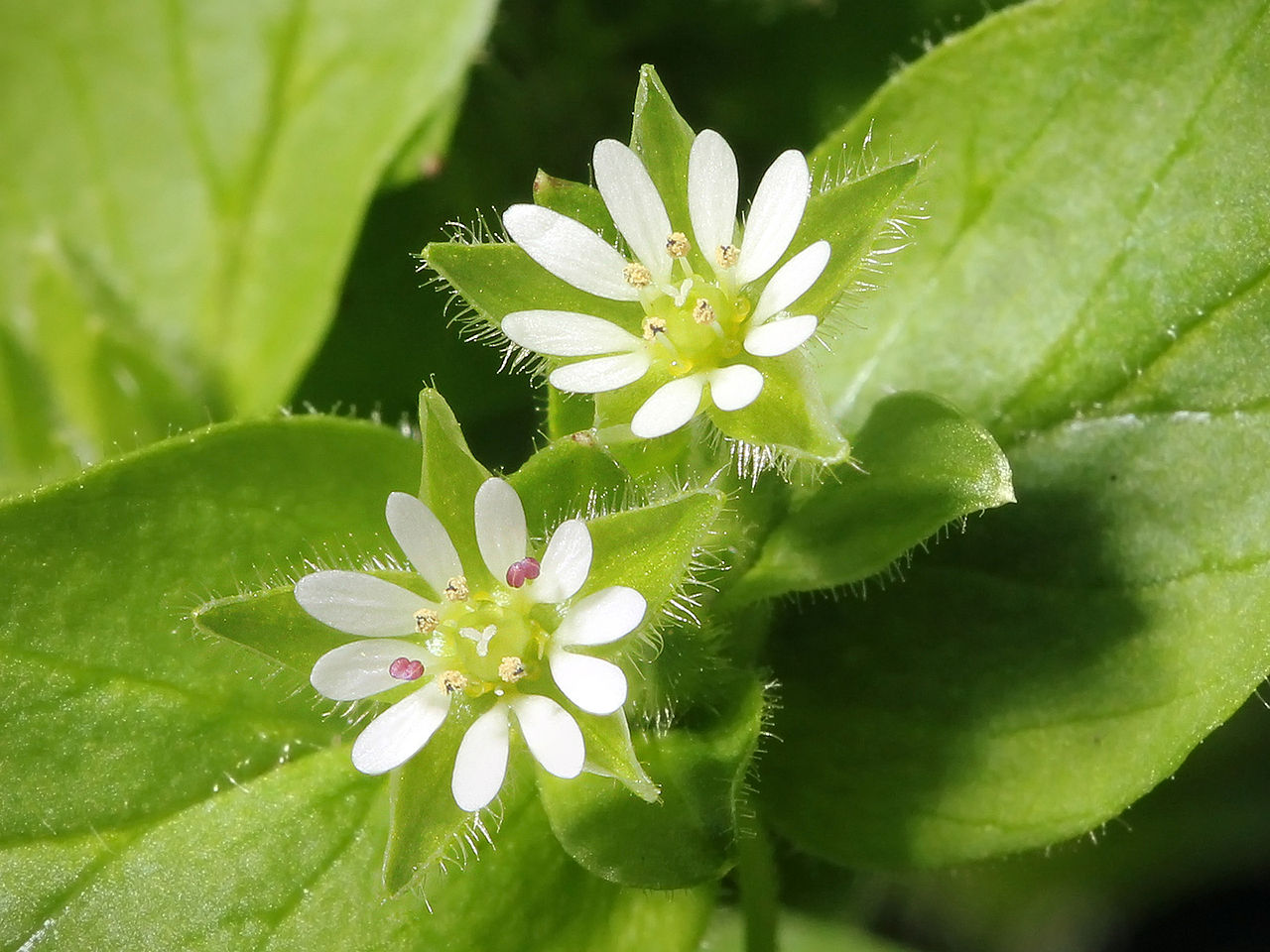
Glassweed | Medicinal plant in the Akhdar Encyclopedia
A decoction of the plant is traditionally used to treat rheumatism, gout, joint stiffness, tuberculosis, and blood disorders. Topically, it is used as a poultice to treat skin conditions such as eczema, wounds, and ulcers. It is also used as a wash or bath to treat hemorrhoids and eye inflammation.…
Plant name
Glassweed
Latin name
Stellaria media (L.) Vill
Common names
Glassweed, Meshit, Habila, Qazaza, Janmiya
foreign names
Eng. Chickweed, Fr. Stellaire
The group
clove
Habitat and Geographic Distribution
It is widespread throughout most of the world and is cultivated in North America and Australia.
Botanical description
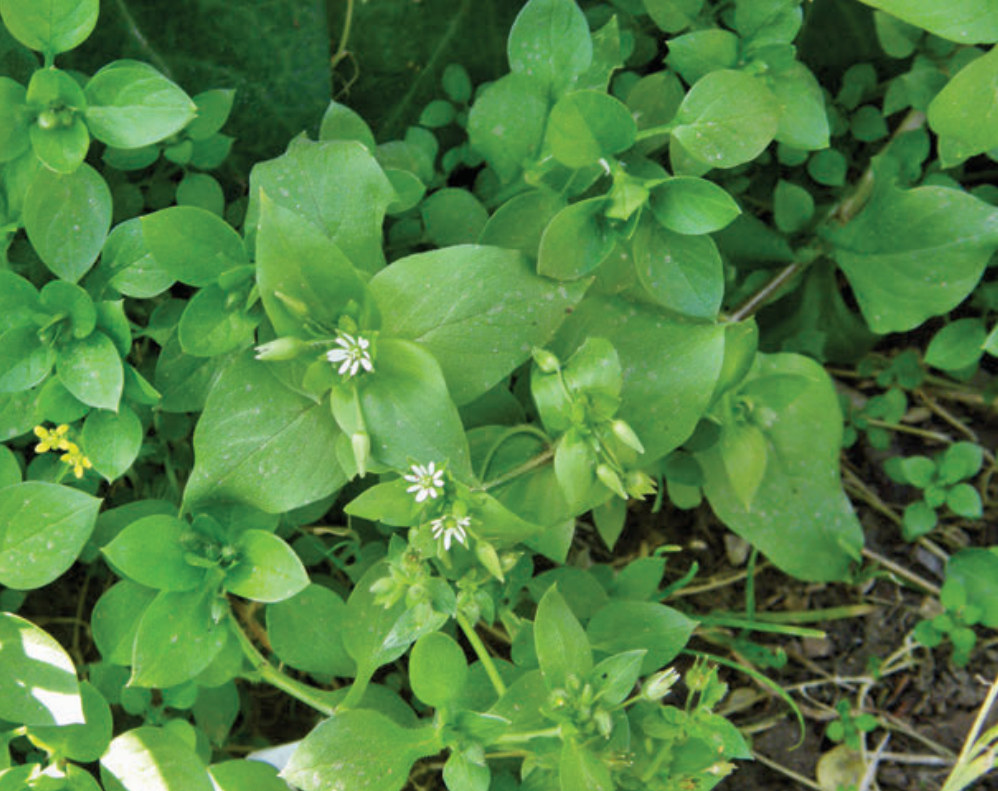
Market: Weak, 50 - Perennial herb, lying prostrate or ascending, branching, bare to downy or glandular, 6 - often bearing one or two lines of hairs.
Leaves 1 cm, petiolate to slender, ovate to 3 - 0.6 ×.
Elliptical, bare or fringed - oblong.
Inflorescence: cymose, dichotomous.
Pteryloides 7 mm, free, 5 or longer, downy.
Septates: uterine, white margin, downy to bare.
Oval (sometimes 5), longer or squamer than the sepals, white, bilobed to sometimes bipartite.
Stamens 5 mm, petals 1.4 - 0.7 mm.
Fruit: capsule exceeding or equal to the calyx.
Seeds 1.5, very short, up to 3 in length).
Regions 10.
Black to pale brown, with a surface bearing sharp or blunt tubercles. Flowering from January to April.
Used part
The flowering aerial parts are harvested from April to September.
The chemical constituents include flavonoids such as rutin, ascorbic acid (vitamin C0.15%), and alkaloids.
Chemical analysis of aqueous, ethanolic, and methanolic extracts revealed the presence of alkaloids, saponins, cardiac glycosides, fatty acids, tannins, terpenoids, and phenolic compounds. Extracts contain
chemical components
Flavonoids, including rutin, ascorbic acid (vitamin C0.15%), and alkaloids were identified.
Chemical analysis of aqueous, ethanolic, and methanolic extracts revealed the presence of alkaloids, saponins, cardiac glycosides, fatty acids, tannins, terpenoids, and phenolic compounds.
Leaf extracts contain active flavonoid compounds such as luteolin, vicenin, isoquercetin, genistein, and apigenin.
Vanillic acid, caffeic acid, p-hydroxybenzoic acid, and [unclear] were also identified.
Chlorogenic acid and ferulic acid were isolated, along with two triterpene saponins derived from gypsogenin and oleanolic acid.
Three metabolites were identified from the aerobic parts: tetramethyloctane, trimethyloctane, and 6-methylheptyl-3′-hydroxy-2′-methylpropanoate.
These metabolites exhibited anti-obesity and anti-inflammatory activity.
Several important compounds were identified in the plant's leaf extract, including methyl stearate and hexacosanyl palmitate.
Fresh and mature leaves contain hexacosanyl palmitate, β-sitosterol, 6,7-dimethyl heptacosane, 3-methyl-6-hydroxy-heneicos-3-enyl acetate, tria-contanoic acid, tricontanol, hentriacontane, and pentacosa-nol.
They also contain essential and non-essential amino acids.
Important components such as glycine, alanine, lysine, thymine, uracil, aspartic acid, glutamic acid, serine, proline, thymidine, tyrosine, 2-histidine, g-aminobutyric acid and threonine.
Phytochemical analysis of the leaf extract revealed a high percentage of saponins (1.19 mg/g) and phenols (45.5 ± 0.25 mg/g).
Flavonoids (1.4 mg/g).
Essential minerals in the plant: nickel, zinc, copper, sodium, cobalt, magnesium, lead, iron, manganese, cadmium, and mercury.
Properties and medical uses
A decoction of the plant is traditionally used to treat rheumatism, gout, joint stiffness, tuberculosis, and blood disorders.
Topically, it is used as a poultice to treat skin conditions such as eczema, wounds, and ulcers.
It is also used as a wash or bath to treat hemorrhoids and eye inflammation.
The biologically active metabolites have demonstrated diverse pharmacological activities, including anti-obesity, antifungal, antibacterial, antioxidant, antiproliferative, anti-inflammatory, antidiabetic, and anti-anxiety properties.
Various parts of the plant have been used to treat different digestive disorders, diarrhea, measles, jaundice, infections of the digestive and reproductive systems, respiratory infections, and asthma.
It also reduces swelling and is used as a poultice for fractures.
Isolated compounds have shown significant pharmacological activities, such as antitumor and anticancer properties.
In India, a decoction of the leaves is used to dress deep wounds, stop bleeding, and reduce swelling.
Crushed leaves, stem, and root are used as a plaster cast for dislocations and swelling.
The plant's decoction possesses unique moisturizing and soothing properties, making it a suitable remedy for skin itching, menstrual cramps, and scabies.
The flavonoids and beta-sitosterol compounds in the plant significantly inhibit lipase and amylase activity in mice and reduce total triglycerides and cholesterol.
Side effects and precautions
No incidents or side effects have been reported with appropriate use of the prescribed dose.
Other uses
The tender leaves and stems are consumed as a salad.
the environment
The plant grows on walls, roadsides, agricultural fields, and damp places.
It prefers moist conditions in sunny and partially shaded areas.
It grows and becomes vigorous in fertile conditions and flowers in sparse conditions while still young.
Agriculture and productivity
An easy-to-cultivate plant, it reproduces by seeds sown in early spring in isolated beds away from neighboring fields to prevent encroachment.
The seeds germinate and grow quickly and require moderate moisture.
Catha edulis (Vahl) Endl.
Celastrus edulis Vahl, Catha forskalii A.Rich., Catha inermis J.F.Gmel., Celastrus tsaad Ferreira & Galeotti ex Walp., Dillonia abyssinica Sacleux
History and Heritage
The word "media" refers to a type of genus, specifically to its genus-like arrangement of petals, and "stella" is the scientific name for the genus, derived from the Latin word for "medial." The plant was given to birds as a tonic in the Middle Ages and was also harvested as a vegetable.
Medical note
This information is for educational purposes only and does not constitute medical advice.
Poisonous or potent plants should only be used under the supervision of a qualified physician or pharmacist.
Related images