Wormwood | A medicinal plant in the Akhdar encyclopedia
The plant, with its ketone compounds, possesses anti-inflammatory, antibacterial, and blood pressure-lowering properties, and there are positive indications of its effectiveness in treating some types of cancer.
Plant name
Wormweed
Latin name
Tanacetum densum (Labill.) Sch.Bip
Common names
Wormweed
foreign names
Eng. Prince-of-Wales feathers, Silver tansy. Fr.Tanaisie
The group
Star
Habitat and Geographic Distribution
Eastern Mediterranean, in Syria and Lebanon
Botanical description
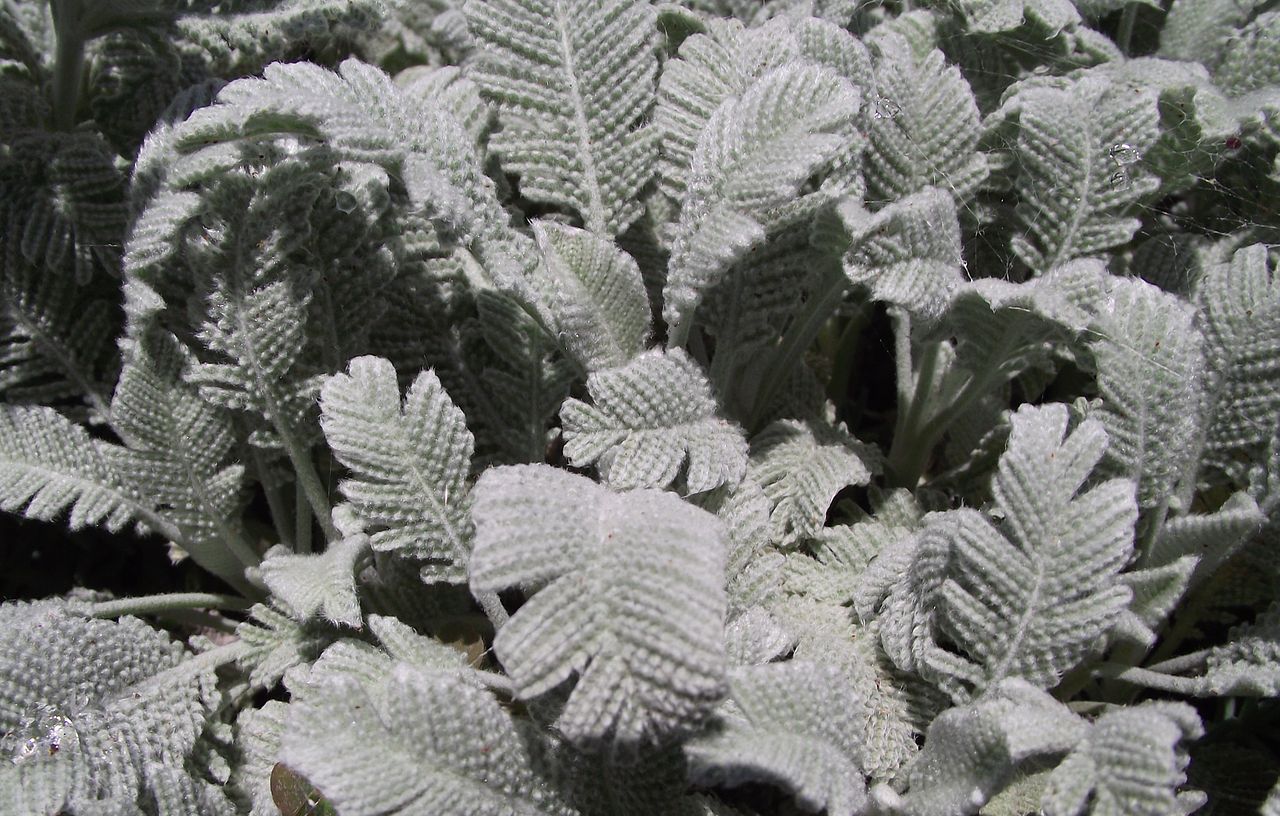
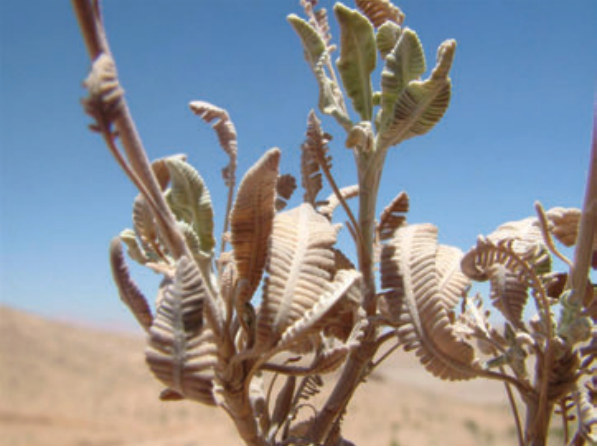
A small shrub with numerous stems, non-climbing, emerging from a very woody, woolly root, densely covered with downy hairs of amber or yellowish-white.
The branches are of two types: sterile (bearing head inflorescences) and fertile.
The sterile branches bear a greater number of leaves.
The leaves are pale green, covered with woolly hairs, oblong in the outer margin, tapering to a point, gradually increasing in length, petiolate to semipetate, with a blade deeply divided into closely spaced linear lobes.
The upper stem leaves are more reduced.
The tip of each fertile branch bears a few head inflorescences gathered into a comb-like inflorescence.
The peduncle exceeds the head in length.
The head is nearly spherical to ovate.
The bracts are covered with hairs of a diameter of approximately 10-10-10, woolly, and tightly packed.
The dracium has a torn, membranous apex.
The ligules are spoon-shaped, trilobed, oblong, and pale yellow.
The fruit is an acinus, surmounted by a very short corolla. Flowering occurs from July to August.
Used part
Flowering aerial parts.
Latin names: Tanacetum densum (Labill.) Sch.Bip., Pyrethrum densum Labill., Chrysanthemum densum (Labill.) Steud
chemical components
Studies on several species of the genus T.
densum have shown that the aerial parts contain (in addition to volatile oil, the most important components of which are: carloolide A = guaianolide) and sesquiterpene lectins.
The percentage of cineole is 1.8%, and the percentage of camphor is 15.5%.
The camphor is 17%.
The main components of this oil are: carloolide A = guaianolide, and sesquiterpene lectins.
Properties and medical uses
The plant, with its ketone compounds, possesses anti-inflammatory, antibacterial, and blood pressure-lowering properties, and there are positive indications of its effectiveness in treating some types of cancer.
Side effects and precautions
Allergic reactions or drug interactions may occur; self-use should be avoided by pregnant and breastfeeding women, children, and patients with chronic diseases.
the environment
The plant grows in sunny, high-altitude areas, is relatively drought-tolerant, and thrives in neutral and moderately alkaline soils (pH 6.6-8.5).
Cultivation and Productivity: The plant is propagated by seeds or vegetatively by division in the spring. Water the plant once a week or as needed.
Agriculture and productivity
The plant is propagated by seed or vegetatively by division in spring.
Water once a week or as needed.
Other names for this plant include: Tanacetum parthenium (L.) Sch.
Bip, Matricaria parthenium L., Chrysanthemum parthenium (L.) Bernh., Pyrethrum parthenium (L.) Sm., Chamaemelum parthenium (L.) E.
H.
L.
Krause, Chrysanthemum, Dendranthema parthenium (L.) Des Moul., Leucanthemum odoratum Dulac, and Leucanthemum parthenium (L.) Godr. & Gren.
History and Heritage
It is derived from the Greek tanzita, from the Latin Tanacetum.
Some sources suggest that the genus's scientific name, from the Latin word meaning dense, may refer to the density of the velvety hairs, densum, or "immortality." The species name is athanasia, which covers many markets.
Medical note
This information is for educational purposes only and does not constitute medical advice.
Poisonous or potent plants should only be used under the supervision of a qualified physician or pharmacist.
Related images