Surgeon's herb | Medicinal plant in the Akhdar encyclopedia
The plant possesses antibacterial and antiviral properties. A study has shown that its tincture is beneficial in inhibiting HIV activity and treating other viral infections, such as genital herpes. The plant has an astringent effect that reduces bleeding and also alleviates diarrhea. Due to its ast…
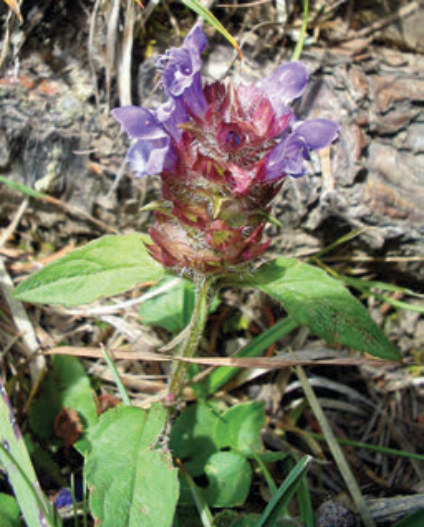
Plant name
woundwort
Latin name
Prunella vulgaris L
Common names
Woundwort, wound healer, purple woundwort, pain reliever
foreign names
Eng. Self-Heal, Fr. Brunelle commune
The group
oral
Habitat and Geographic Distribution
It is almost universal, spreading in Europe and temperate regions.
Botanical description
Perennial herb, glabrous.
The stem is ascending, low in height (rarely - cm), branching from the base, purple (20 - exceeding mm in length), uterine to 25 - red.
Leaves petiolate (petioles length ovate, entire or slightly toothed, dull apex, scalloped or pedicel cm, glabrous to sparsely 2.5 - 0.6 × 6 - 1.5 cm base, blade dimensions hairs, stem leaves widely spaced.
4 cm - Inflorescence spike, dense, ovate or oblong, bracts broad, membranous, fringed, rounded, apex becomes acuminate, bilipped, abruptly compressed.
Calyx pseudobulbar, closed during fruit formation, upper lip teeth, very scalloped, axillary, lower lip teeth mm, tube prominent.
15 - Corolla bilipped, purple, slightly elongated, upper lip helmet-shaped, lower lip bilipped, parallel, filaments terminated in drooping.
Stamens mm.
2 - Inflorescences, oblong, smooth, 4 cm long with straight apices. Style bilobed. Fruit inflorescence of June to August
Used part
The flowering plant's leaves have a bitter and astringent taste.
Its chemical constituents include bitter principles, flavonoids (rutin, hyperoside), tannins, triterpene saponins, triterpenic acids (ursolic acid, oleanolic acid, rosmarinic acid), sterol glucosides, volatile oil, sugars, vitamins (A, B, C, K), and minerals (K, Ca, Cu, Mg).
chemical components
Triterpene saponins.
Tannins.
Tertiary saponins: hyperoside, rutin; flavonoids; bitter compounds; rosmarinic acid; oleanolic acid; ursolic acid; tertiary acids: ursolic acid; mineral salts A, B1, C, K; volatile oil; sugars; vitamins; sterol glucosides; sterol glucosides; rosmarinic acid; vitamin A; vitamin K; vitamin C; vitamin C; vitamin D; vitamin D
Properties and medical uses
The plant possesses antibacterial and antiviral properties.
A study has shown that its tincture is beneficial in inhibiting HIV activity and treating other viral infections, such as genital herpes.
The plant has an astringent effect that reduces bleeding and also alleviates diarrhea.
Its astringent properties make it useful topically as an antiseptic and hemostatic agent.
Extracts are used in gargles, creams, and compresses to treat chronic ulcers, mouth, gum, and throat wounds, burns, boils, bedsores, hemorrhoids, and viral skin infections.
The plant is of great medicinal importance in treating throat ailments, colds, and headaches.
It is boiled, and the steam is inhaled.
A postpartum bath is also made from it.
It is used to treat herpetic keratitis and acts as an antibiotic, hypotensive, antipyretic, diuretic, antirheumatic, antibacterial, antioxidant, and vermifuge.
It is also used to treat wounds and sores.
The aqueous extract contains an active anti-HIV compound, prolin, a polysaccharide that also has anti-herpes simplex virus activity.
This aqueous extract prevents anaphylactic shock and allergic reactions.
The plant protects the red blood cells of mice from hemolysis and protects the kidneys, as well as the brain, against lipid peroxidation.
Its high rosmarinic acid content makes it highly suitable for therapeutic applications.
Recently, the plant has been widely used due to its pleasant taste and nutritional value, as it contains a good proportion of carbohydrates, proteins, and fats.
Analyses confirm its high carbohydrate, fat, and protein content.
The plant contains significant amounts of antibacterial phenols.
It is effective in treating typhoid fever and other bacterial infections, particularly those caused by Escherichia pseudomembranosus, Bacillus typhi, E.
coli, and Mycobacterium tuberculosis.
Traditional healers in Kashmir prescribe inhaling the steam of this herb to clear phlegm from the chest cavity and brain, thereby reducing chest infections and headaches.
It is common in Kashmir to use a decoction for bathing a month after childbirth.
Traditional healers consider it a brain tonic that can give the head stamina, and it acts as a disinfectant, alleviating general weakness in the mother's body.
The herb also contains saponins, which are used to stop bleeding and treat wounds and sores by aiding red blood cell clotting.
It has also been used by nursing mothers to treat cracked nipples.
Other metabolites include alkaloids with analgesic, antispasmodic, and antibacterial effects.
Side effects and precautions
Allergic reactions or drug interactions may occur; self-use should be avoided by pregnant and breastfeeding women, children, and patients with chronic diseases.
Other uses
The plant's leaves can be eaten fresh or cooked, added to salads or soups, and a refreshing tea can be made from its dried or fresh leaves.
This tea is tonic, aids digestion, stimulates liver function, and helps cleanse it of toxins.
the environment
This plant thrives in neglected lands, meadows, and forest edges.
It prefers basal and temperate soils. It is planted in moist soil in sunny or partially shaded locations.
Agriculture and productivity
It is propagated by seed.
Seeds are sown in spring in a nursery or greenhouse.
When the seedlings reach a suitable size, they are transplanted into bags or pots, one seedling per pot, and then transplanted to their permanent location at the beginning of summer.
If a sufficient quantity is available, seeds may be sown directly into the permanent location.
The plant can also be propagated by division in spring or autumn.
Divided plants are planted directly in their permanent location if they are large enough, or they are kept in the nursery for a while if they are small.
The plant flowers at different times depending on the climate and other conditions, but usually in summer. It can become a weed, which can be difficult to eradicate.
History and Heritage
The plant has been known as a medicinal and edible herb for a long time.
In Europe, it was said that this herb was sacred, sent by God to heal all parts of the human and animal body.
It was also grown in home gardens because it was believed to "drive away the devil." In the past, it was famous for its properties in healing wounds and stopping bleeding.
Its spike-like flowers were often used to treat mouth and throat inflammations, based on the belief that plants heal the organs they resemble.
Medical note
This information is for educational purposes only and does not constitute medical advice.
Poisonous or potent plants should only be used under the supervision of a qualified physician or pharmacist.
Related images


