Prickly pear | A medicinal plant in the Akhdar encyclopedia
Prickly pear possesses digestive properties, particularly for fatty substances. It is a stimulant, laxative, and cleanser for the digestive system. Consuming ripe prickly pear fruit is considered one of the best ways to prevent and treat indigestion and constipation. Studies have shown the positive…
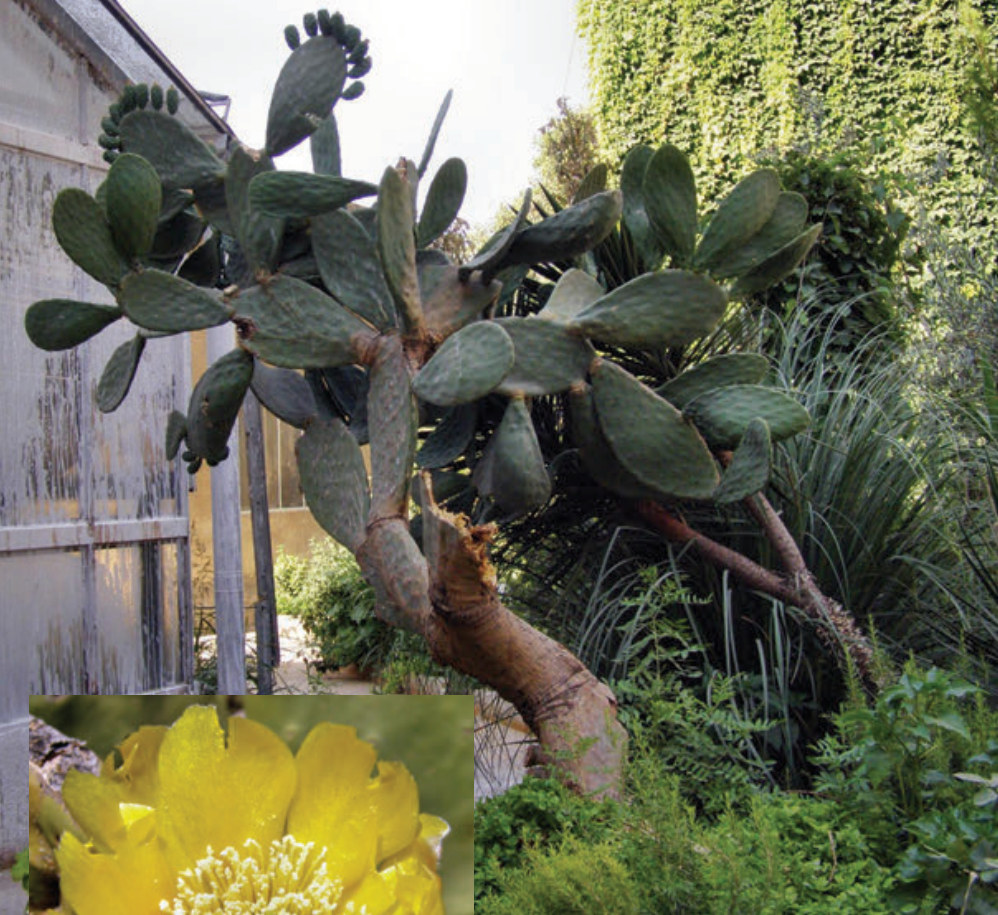
Plant name
prickly pear
Latin name
Opuntia ficus-indica (L.) Mill
Common names
Prickly pear, cactus, aloe
foreign names
Eng. Prickly pears, Fr. Figuier de Barbarie
The group
cactus
Habitat and Geographic Distribution
From Mexico, it was introduced to southern Europe, Africa, the Middle East, and India, and is cultivated in most Arab countries.
Botanical description
A shrub capable of reaching several meters in height.
The base of the mature plant is woody, cylindrical to varying degrees, bearing a series of articulated plates that form flat stems, each several centimeters long and wide, with an oblong shape.
Circular cushions cover their surface, from which short, white or brownish thorns and hairs emerge.
The leaves are weak and ovoid, resembling modified leaves that are easily detached from the plant and pierce the skin.
The flowers are arranged in clusters on the edge of the plates, in sections or clusters.
The calyx is simple, composed of centimeters, pale yellow.
The stamens are numerous, with cylindrical anthers.
The style is thick, ending in several stigmas.
The ovary has a thick, leathery outer wall, and its surface bears cushions from which spiny hairs emerge, leading to the fruit.
The fruit is sweet and edible after peeling.
It flowers at the beginning of summer.
Often cultivated is the spinless, smooth fig of the same species: Opuntia ficus-indica f. inermis
Used part
The fruit and the market (the boards).
The chemical components of the ripe prickly pear fruit include 14% of its weight in sugars, 1.5% in proteins, a high percentage of vitamins A and E (alpha and beta tocopherol, β-Tocopherol, a-Tocopherol), vitamin K, and vitamin C (25-30 mg per 100 g), selenium, organic acids, the most important of which are glutamic acid, citric acid, malic acid, and oxalic acid, and mineral salts magnesium, sodium, potassium, calcium, manganese, iron, zinc, copper, and phosphorus.
The seeds contain 3-10% protein and 6-13% fatty acids, primarily linoleic acid.
The red color of the fruit and juice is due to the presence of betalains (betanin and indicanthin), which are antioxidant pigments.
Betalains are cellular pigments that include two classes of compounds: betacyanins (red-purple) and betaxanthins (yellow).
The fruit contains flavonoids such as quercetin, isoramentin, and kaempferol.
The tablet extract contains phenols.
The gum of the tablets provides numerous nutritional benefits (arabinose polysaccharides).
It contains galactose, galacturonic acid, rhamnose, and xylose.
It also contains uronic acid (10%).
The fruit juice and peel contain numerous phenolic compounds (hydroxycinnamic and hydroxybenzoic acids), flavonoids, lignin, and stilbenes.
chemical components
The ripe prickly pear fruit contains 1.5% protein and 1.5% sugars by weight.
It also contains organic acids, primarily glutamic, citric, malic, and oxalic acids, as well as mineral salts, especially vitamins A and C, and high levels of vitamins phosphorus and calcium.
Properties and medical uses
Prickly pear has digestive properties, especially for fatty substances, and is a stimulant, laxative and cleanser of the digestive system.
Eating ripe prickly pear fruit is one of the best ways to prevent and treat indigestion and constipation.
Studies have shown the positive effects of eating prickly pear fruit in resisting spasms, urinary retention and dysentery.
Ancient Arab physicians advised their obese patients to restrict their diet to prickly pear fruits for weight loss.
They also used the pads (stems) of the prickly pear to treat respiratory ailments, particularly whooping cough.
The pads, split lengthwise, were used as poultices to treat back and spinal pain.
Extracts from the pads possess anticancer and antioxidant properties and help lower blood glucose and cholesterol levels.
The methanolic and ethanolic extracts of the prickly pear pads and fruit peels have demonstrated antibacterial activity.
The seed emulsion exhibited antioxidant and anti-inflammatory activity, enhanced the skin's hydroxyproline content and collagen properties, and promoted angiogenesis.
It also aided in the rapid healing of skin injuries.
The peel extract showed antibacterial activity against Gram-positive bacteria compared to Gram-negative bacteria.
Side effects and precautions
Allergic reactions or drug interactions may occur; self-use should be avoided by pregnant and breastfeeding women, children, and patients with chronic diseases.
the environment
The plant grows in various soil types.
Unlike many plants, it requires irrigation during its flowering period.
It can be grown rainfed in humid areas.
In some regions, it may become an invasive species.
Propagation and Productivity: It is propagated by seed, but vegetative propagation is more common using its leaves or sections, especially the lateral leaves near the soil surface.
It is preferable to expose the sections to sunlight for 7 to 15 days before planting them directly in the permanent location, in holes spaced 2-3 meters apart, and in rows spaced 3-4 meters apart.
Water spacing is limited.
It is easy to establish and requires minimal agricultural maintenance.
Its relatively rapid growth allows it to achieve dense soil cover that prevents erosion by wind and rain. Cannabis sativa var. indica. Cannabis sativa L
History and Heritage
Ficus indica.
The species name Opunte or Opus, the scientific name for the genus, comes from the name of an ancient Greek city whose name means "Indian fig." The plant has long been used as a hedge and as a source of its highly palatable edible fruit.
Medical note
This information is for educational purposes only and does not constitute medical advice.
Poisonous or potent plants should only be used under the supervision of a qualified physician or pharmacist.
Related images


