Purslane | Medicinal plant in the Akhdar Encyclopedia
The alcoholic extract of the aerial parts exhibits analgesic, antifungal, and anti-inflammatory properties. The juice of the leaves is used traditionally as a diuretic and fever reducer, and in the treatment of urinary tract infections. The plant's mucilaginous properties also make it a soothing re…
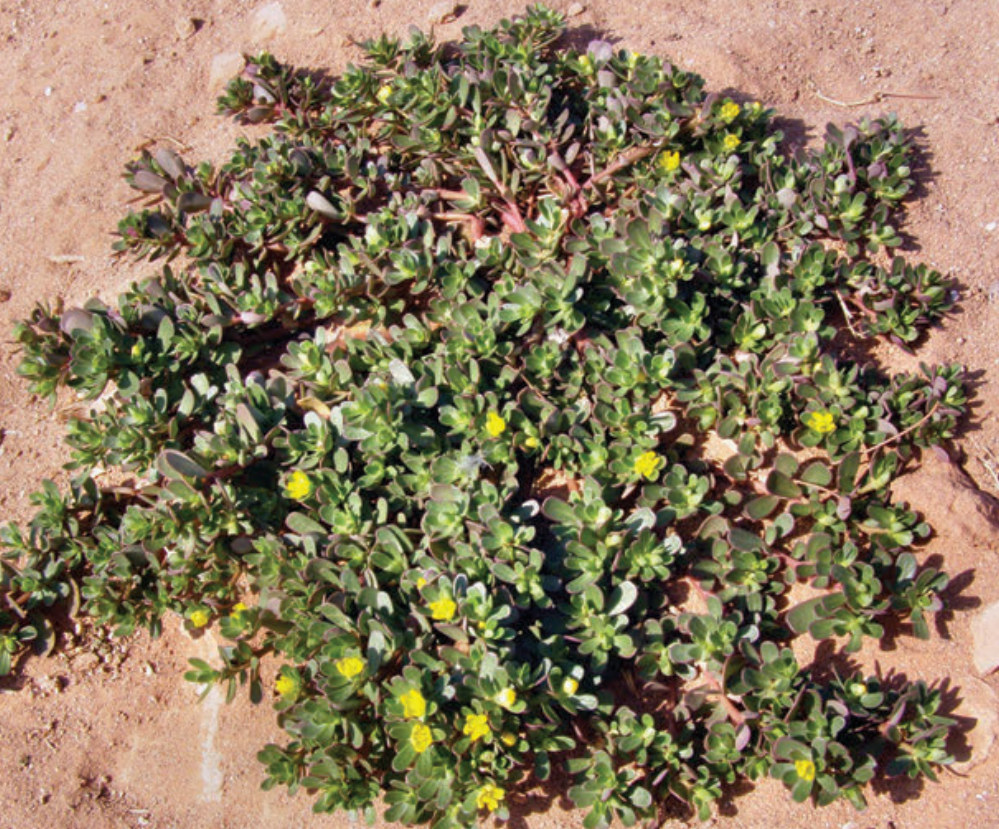
Plant name
purslane
Latin name
Portulaca oleracea L
Common names
Purslane, common purslane, blessed purslane, common purslane
foreign names
Eng. Purslane, Fr. Pourpier
The group
legumes
Habitat and Geographic Distribution
Eastern Mediterranean, and the species became globally widespread.
Botanical description
50 cm - A perennial herb, hairless, prostrate, highly branched, 2 cm long, opposite.
The branches are thick and nipple-like.
The leaves are nipple-like, oblong, entire, and green.
The stamens are obovate, and the flowers are hermaphroditic.
There are two sepals, unequal in size, fused at their bases, and also partially fused with the ovary.
They are deciduous, with stamens 6 mm long.
The corolla is rapid, 15 mm wide, and the stamens are located on the sepals.
The male reproductive organ is on the stamens.
The ovary is solitary, surmounted by a style, and ends in lobes.
The fruit is rhombic, polyseed, and opens via a cap.
It is pear-shaped.
The fruit is a capsule with a membranous pericarp, 10 mm wide, black, and tuberous.
1-0.5 Seeds.
Flowering from February to September.
Within this species, *Var. sativa*, the cultivated purslane is a distinct cultivar.
Used part
Aerial parts. Latin name: Portulaca oleracea L.
chemical components
Purslane contains methionine, lysine, histidine, and alanine.
It also contains valphones, coumarins, alkaloids, amino acids, anthracchinone glycosides, tannins, saponins, hydrocyanic acid, and a fixed oil, the most important fatty acids of which are valine.
Other components include the minerals calcium and iron, nitrates, chlorides, and carbitate, as well as oleic acid (α, α-linolenic acid), linolenic acid, linoleic acid, and oxalic acid (A, B, C), potassium, magnesium, beta-carotene, and vitamins.
Properties and medical uses
The alcoholic extract of the aerial parts exhibits analgesic, antifungal, and anti-inflammatory properties.
The juice of the leaves is used traditionally as a diuretic and fever reducer, and in the treatment of urinary tract infections.
The plant's mucilaginous properties also make it a soothing remedy for gastrointestinal disorders such as diarrhea.
The plant is used as a vermifuge, and a decoction of the flowers and leaves is applied topically to treat gingivitis, skin inflammations, to stop bleeding, and to treat sores, eczema, hemorrhoids, and burns.
Side effects and precautions
It should not be used during pregnancy, nor should it be used for extended periods as it affects sexual potency in men.
Other uses
Purslane is used in salads and fattoush dishes in some countries, such as Syria, and is cultivated for this purpose.
the environment
Purslane grows wild in agricultural lands, fallow fields, and garden beds, in various varieties, and is sometimes considered a weed that is harmful to crops.
The plant is light-loving and thrives in warm and temperate regions, but can also grow in cold and hot environments.
It is drought-tolerant.
It is cultivated in various soil types, but medium-fertility soil types are preferred.
Agriculture and productivity
The plant is propagated by seeds, sown in beds or raised beds in rows, starting from late spring until the end of summer. After scattering
History and Heritage
The word "purslane" is of Persian origin, then it was transferred to Russian and from there to Arabic.
The scientific name for the genus is oleate, meaning "vegetable." Greek physicians recommended its use to treat the ancient species *Oleracea*.
The poison described for this species is fever, erysipelas, and bladder and stomach ailments.
Ancient Islamic sources also mention that the plant was prescribed as an astringent, a tooth strengthener, and a remedy for stomach ulcers.
Medical note
This information is for educational purposes only and does not constitute medical advice.
Poisonous or potent plants should only be used under the supervision of a qualified physician or pharmacist.
Related images


