Psyllium seeds | A medicinal plant in the Akhdar encyclopedia
The seed husks, with their mucilaginous properties and mechanical laxative effects (through increased intestinal motility and stool volume), are effective in treating constipation and intestinal colic. They are also beneficial in reducing diarrhea and conditions requiring soft, loose stools, such a…
Plant name
Psyllium seeds
Latin name
Plantago afra L
Common names
Psyllium seeds
foreign names
Eng. Psyllium seed, Fr. Flea herb, Psyllium
The group
Plantain or plantain
Habitat and Geographic Distribution
Mediterranean region
Botanical description
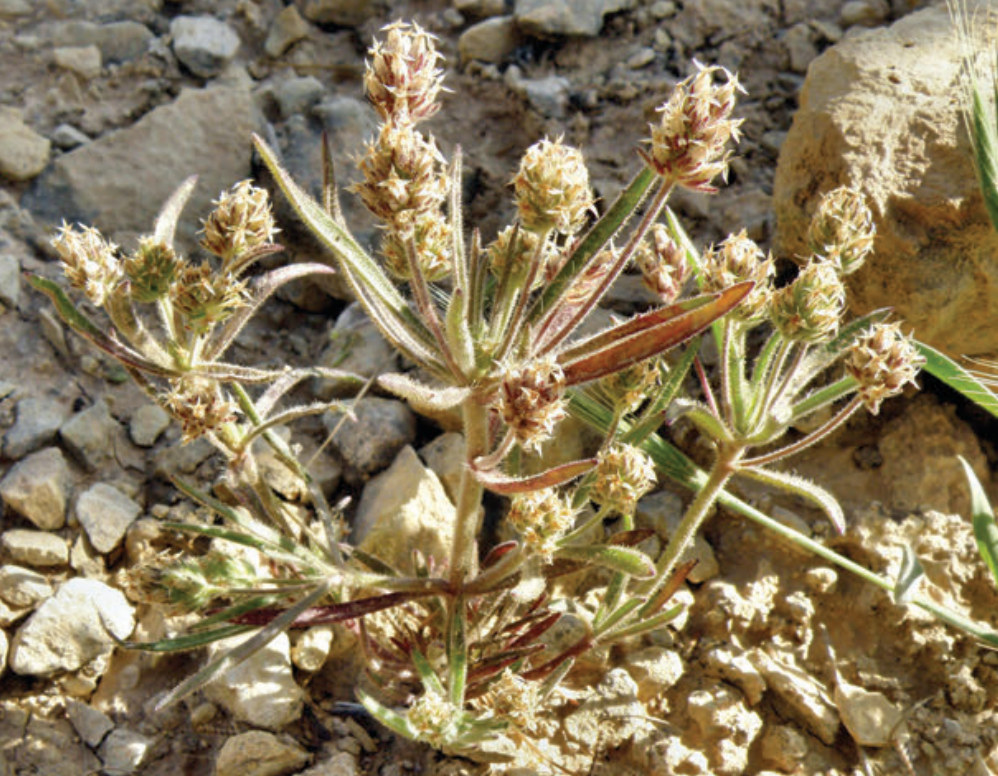
A small, perennial herb with leaves that are mattate or linear, opposite or arranged in whorls.
The flowers are small, clustered in short, tightly packed terminal spikes.
The stamens attract shrubs due to their high pollen production. The fruit is a membranous capsule that splits open in pairs.
Used part
The leaves and seeds are dark reddish-brown, bulging intensely in water and surrounded by a transparent, gummy layer.
chemical components
The membranous seed coats contain only substances composed of polysaccharides (10-12%), salivary sugars, and arabinoxylans and galacturonic acid.
The seeds also contain glycosidic compounds (0.41%), primarily aucubin, and iridoids (pridine alkaloids such as indicainine and plantagonine).
Other components include phenolic compounds (resin, valphones, tannins), mineral salts, fiber (10-20%), fatty oil, proteins (potassium, calcium, iron, zinc), and vitamins.
Properties and medical uses
The seed husks, containing mucilaginous substances, possess mechanically laxative properties (by increasing intestinal motility and stool volume), making them effective in treating constipation and intestinal colic.
They are also beneficial in reducing diarrhea and conditions requiring soft, loose stools, such as anal fissures, hemorrhoids, and post-surgical procedures performed in the anal area.
The seeds and husks of species within the genus Plantago sp.
generally possess anti-inflammatory properties, particularly against colitis, as research has shown.
The seeds are effective in reducing the risk of colon cancer.
They are used to treat stomach ulcers and bladder and kidney infections.
The alcoholic extract of the plant has antioxidant properties.
A decoction of the seeds is used traditionally to treat irritated skin surfaces, and the juice of the leaves is used in creams and ointments to treat hemorrhoids, wounds, and inflamed skin surfaces.
In folk medicine, P.
afra is used to treat viral hepatitis, and it is also used to lower cholesterol and blood glucose levels, and to alleviate bladder problems.
Extracts are used Water is included in the diets of diabetic patients to lower blood sugar in both type 1 and type 2 diabetes by inhibiting the absorption of glucose in the intestines.
Plantain is used to treat respiratory problems and relieve pain, as well as to treat infectious diseases and tumors.
Many varieties have been used to treat snake bites, burns, and eye diseases.
The seed husks of P. psyllium are suitable for reducing the risks of obesity in general.
Side effects and precautions
Not recommended for use
Other uses
It is a source of nutrients and animal feed, regulates digestive functions, helps control inflammation, and improves meat quality.
Precautions: The seeds should not be used by people with intestinal spasms or inflammation.
Misuse may lead to esophageal and intestinal obstruction, especially in the elderly.
Environment: The plant thrives in various moderately fertile soils and sunny areas, with similar requirements to P. avenaria.
the environment
This plant thrives in various moderately fertile soils and sunny areas, with similar requirements observed. P. avenaria, this species and the species
Agriculture and productivity
The seeds are sown dry (in autumn) or moist (in spring).
Planting distances, harvesting date, and various cultivation practices (fertilization, irrigation) affect the percentage of active ingredient, depending on the species.
Flowering begins in late spring and early summer and continues until early autumn, depending on the species.
Leaves are harvested from the beginning of flowering until early autumn, and seeds are collected after the ear has matured. (Plantago albicans L., Lagopus albicans (L.) Fourr., Plantago pallida Salisb.)
History and Heritage
Plantain, also known as the sole of the foot, is the scientific name for the genus.
The name derives from the plant *Planta*, referring to the shape of the leaves.
The medicinal properties of the seeds of many species within this genus were well-known.
The Greeks used it and called it "the mother of herbs." Pliny went so far as to say that if you placed a few pieces of meat in a pot with plantain seeds, it would regenerate.
Antiochus mentioned it as a treatment for tuberculosis, asthma, hemoptysis, mouth and gum ulcers, and burning urination. Ibn al-Baytar and Ibn Sina also mentioned its numerous benefits.
Medical note
This information is for educational purposes only and does not constitute medical advice.
Poisonous or potent plants should only be used under the supervision of a qualified physician or pharmacist.
Related images


