Sage | A medicinal plant in the Akhdar encyclopedia
Cineole possesses antimicrobial properties. The plant has blood pressure-lowering, antispasmodic, and hypoglycemic properties. It is an analgesic and sedative, and its extract is used as a gargle and mouthwash for the mouth and throat. A decoction of the plant is traditionally used to treat diabete…
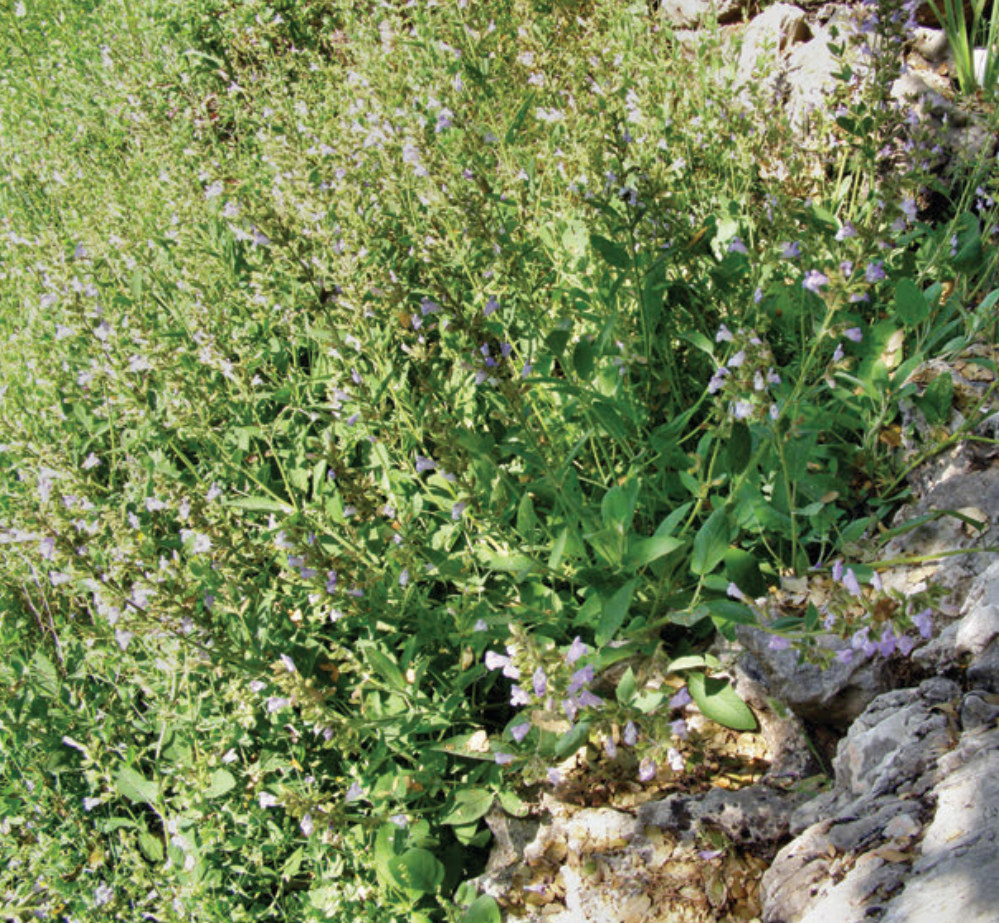
Plant name
sage
Latin name
Salvia triloba L. fil
Common names
Sage, Sage trifoliata
foreign names
Eng. Greek Sage, Fr. Sauge
The group
oral
Habitat and Geographic Distribution
Mediterranean countries include Greece, Albania, Cyprus, Turkey, and Syria.
Botanical description
A small shrub, densely covered with layered, woolly hairs.
The stem is thick and square-crossed.
The leaves are simple, petiolate, oblong-cuspid, with a hairier upper surface than an underside, heart-shaped or lobed base, ovate-uterine, and in most parts of the plant, trilobed due to the presence of two widely spaced lobes at their base.
The flowering leaves are pedunculated and apical.
The flowers are arranged in cymose inflorescences: they are placed in whorls on the stem branches, forming a raceme or cymose inflorescence, sticky and compact.
The flower bracts are pedunculated, membranous, and deciduous.
The calyx is covered with hairy hairs.
The male has two stamens.
The ovary is dicotyledonous, sticky, semi-diploid, with triangular teeth.
The corolla is pale purple, squamous in length.
There are some carpels, tetrastomes.
The fruit is an individual lacking the lateral lobes at the leaf base. Flowering from February to July
Used part
The leaves (wild plants have their leaves harvested once a year, while cultivated plants have their leaves harvested three times a year), flowers, and the essential oil extracted from them.
chemical components
Cineol is a volatile oil whose main component is cineole.
Properties and medical uses
Cineole possesses antimicrobial properties.
The plant has antihypertensive, antispasmodic, and hypoglycemic properties.
It is an analgesic and sedative, and its extract is used as a gargle and mouthwash for the mouth and throat.
A decoction of the plant is traditionally used to treat diabetes and heart and lung diseases.
Externally, it is used to treat skin conditions.
Plant extracts have been shown to help alleviate the neurological inflammation characteristic of Alzheimer's disease.
Treating mice with plant extracts led to a significant improvement in biochemical parameters, and the same applies to methanolic extracts, which have anti-inflammatory effects against the neurological conditions that characterize Alzheimer's disease.
Side effects and precautions
Allergic reactions or drug interactions may occur; self-use should be avoided by pregnant and breastfeeding women, children, and patients with chronic diseases.
the environment
The plant is found in maquis and agaric regions: within Mediterranean forests, it prefers sunny locations and sandy soils.
Nitrogen-rich soils encourage vigorous vegetative growth at the expense of flowering.
Agriculture and productivity
The plant is propagated by seeds sown in bags or containers in the nursery at the beginning of spring.
Germination occurs within two weeks.
Once the seedlings reach a suitable size, they are transplanted to their permanent location at the beginning of summer.
The plant can also be propagated by semi-hardwood cuttings during the growing season. Teucrium polium L. Chamaedrys polium (L.) Raf. (Labiatae) Lamiaceae
History and Heritage
The scientific name of the genus is derived from the Greek word salvare, meaning "to heal," referring to the healing properties attributed to some species.
The species name triloba means "three-lobed leaves." The parts used are the leaves (wild plants are harvested once a year, while cultivated plants are harvested three times a year), the flowers, and the essential oil extracted from them.
Medical note
This information is for educational purposes only and does not constitute medical advice.
Poisonous or potent plants should only be used under the supervision of a qualified physician or pharmacist.
Related images


