Lemon balm | A medicinal plant in the Akhdar encyclopedia
It is used traditionally as a digestive aid and carminative, and in the treatment of colitis, asthma, fever, and diarrhea. It is also used as a diuretic and to lower blood pressure. Furthermore, it is used to treat cancer, particularly breast cancer. The leaves and essential oil possess calming, an…
Plant name
Lemon balm
Latin name
Aloysia triphylla (L'Hér.) Britt
Common names
Lemon balm, lemon verbena, verbena
foreign names
Eng. Lemon verbena, Fr. La verbene citronnée
The group
Frippina
Habitat and Geographic Distribution
It grows naturally in the temperate and subtropical regions of South America (Brio, Chile, Argentina, Paraguay).
Its cultivation has been introduced to many countries for centuries.
It was introduced to the Arab region (Syria, Lebanon, and Palestine) a long time ago.
Botanical description
M.
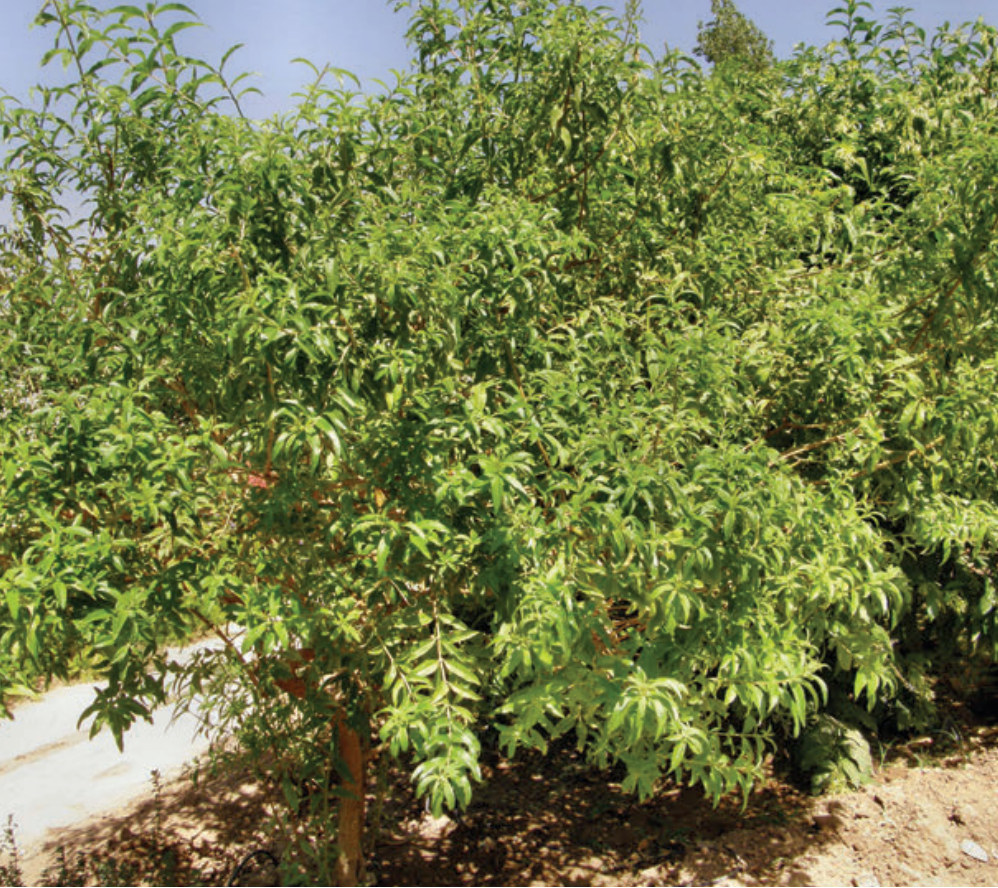
Branches are striated, 4 - small shrubby, deciduous in areas with cold or dry winters, their length rough.
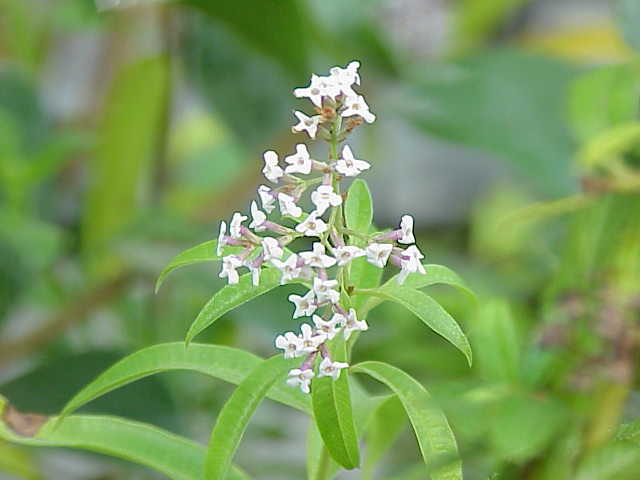
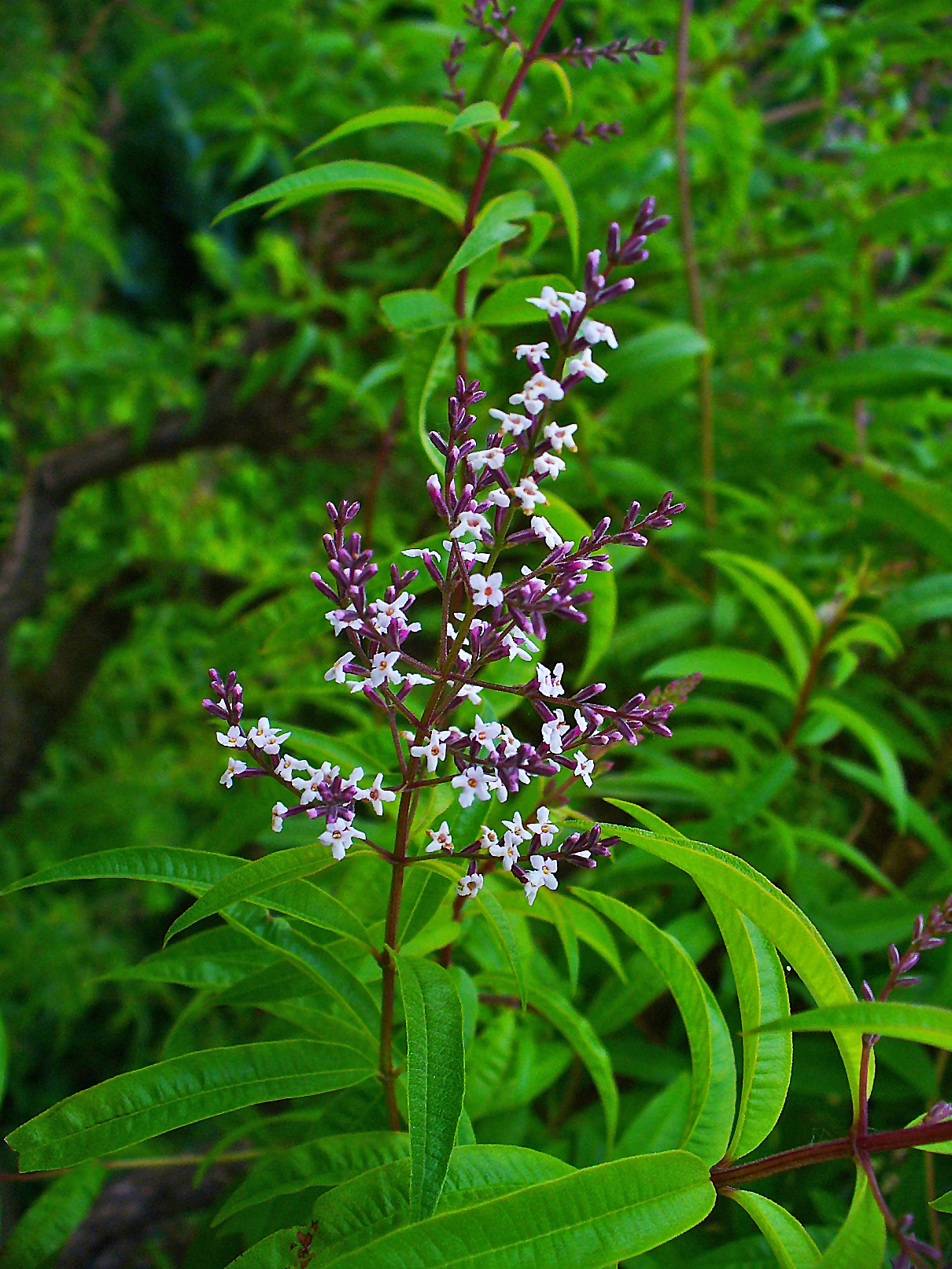
Leaves are matrilineal, pinnate (often three leaves are placed in a single inflorescence), exuding a lemon-scented fragrance, bearing on the underside sap glands secreting volatile oil when rubbed by hand, entire margins, short petioles, length.
The lateral nerves emerging from the main nerve are positioned almost perpendicular to it.
The inflorescence is semi-spis, cm.
Flowers are white, pink, or lilac, small in size.
The flowers are loose, terminal, about 5 mm long, ending in four teeth.
They are fused to the five petals in a tube 3 cm long.
The calyx is tubular, hairy, about mm long, split into two lips.
The male has four stamens of varying lengths (8 long pairs and one short pair), often included in the petal tube. The fruit is a drupe, not always reaching maturity.
Used part
The essential oil and dried leaves are harvested just before flowering.
chemical components
The active ingredients include cirsimaritin, chrysoeriol, and verbenine, as well as flavonoids such as verbenine, linalool, limonene, and citral (its main component being 0.2% sertral), volatile oil (hispidulin and eupatorin), tannins, and mucilage (geraniol and linalool).
Properties and medical uses
It is used traditionally as a digestive aid and carminative, and in the treatment of colitis, asthma, fever, and diarrhea.
It is also used as a diuretic and to lower blood pressure.
Furthermore, it is used to treat cancer, particularly breast cancer.
The leaves and essential oil possess calming, anti-nervous, anti-insomnia, carminative, antispasmodic, antibacterial, antiviral, and antioxidant properties, and have a hormonal effect, in addition to their antipyretic effect.
The essential oil has proven effective in relieving headaches and alleviating the effects of Alzheimer's disease.
It is used topically for skin care, where it helps to tighten skin tissues.
The essential oil has demonstrated antimicrobial activity against both Gram-negative and Gram-positive bacteria, as well as against Staphylococcus aureus and Proteus vulgaris, compared to the antibiotics ciprofloxacin and ampicillin.
It has also shown stronger antifungal activity than fluconazole and exhibits toxic effects against cancer cells.
With its antioxidant effect and strong cytotoxicity compared to doxorubicin, the plant is used as a promising source of ingredients in the food, cosmetics, and pharmaceutical industries.
Pharmaceutical preparations include infusions, tinctures, ointments, and essential oils.
pharmaceutical forms
Infusions, tinctures, ointments, and essential oils
Side effects and precautions
Using the essential oil can cause skin irritation, especially with sun exposure.
Therefore, it is best to apply it in the evening.
The plant may interact with sedatives and thyroid medications, so it should not be used concurrently with sedatives, antidepressants, or thyroid-regulating drugs.
It should not be given during pregnancy or breastfeeding without medical supervision.
Other uses
The leaves, with their distinctive lemony fragrance, are added to food products.
The essential oil is used in the formulation of inexpensive perfumes.
Side effects, interactions, and precautions: Using the essential oil can cause skin allergies, especially upon exposure to sunlight.
Therefore, it is best to apply it to the skin in the evening.
The plant may interact with sedatives and thyroid medications; therefore, it should not be used concurrently with sedatives, antidepressants, or thyroid-regulating drugs.
It should not be given during pregnancy and breastfeeding without medical supervision.
the environment
This plant requires a warm, humid climate, but can tolerate short periods of low temperatures.
It also needs sunny locations protected from frost and wind.
Light soils are preferred, and it thrives in most moderately fertile, well-drained soils.
Agriculture and productivity
The plant can be propagated by seed.
However, the most common method is propagation by young or semi-hardwood cuttings, which are rooted in a nursery at the end of spring and the beginning of summer.
These cuttings are transplanted to their permanent location after a year, taking care to protect them from frost and providing the necessary care, including fertilization and moderate watering.
It can also be propagated by root cuttings, provided they are well protected from frost during the winter.
The plant requires pruning in the spring.
Viola odorata L.
Viola hirta var.
odorata (L.) Fiori, Viola hirta subsp. odorata (L.) Fiori, Viola martii subsp. odorata (L.) Schimp. & Spenn
History and Heritage
Maria Luisa, Empress of Parma and wife of Charles IV of Spain, was known for her sip.
Aloysia, the scientific name for the genus, is said to mean "three-leaved." It is cultivated extensively in southern France. The species name is Triphylla.
Medical note
This information is for educational purposes only and does not constitute medical advice.
Poisonous or potent plants should only be used under the supervision of a qualified physician or pharmacist.
Related images