Melalum | A medicinal plant in the Akhdar encyclopedia
Oak possesses astringent, soothing, analgesic, and blood sugar-lowering properties. It is used in supportive treatment for skin inflammations. It is traditionally used to treat intestinal bleeding, coughs with blood, and bronchitis. A decoction of the leaves is used topically as a gargle to treat g…
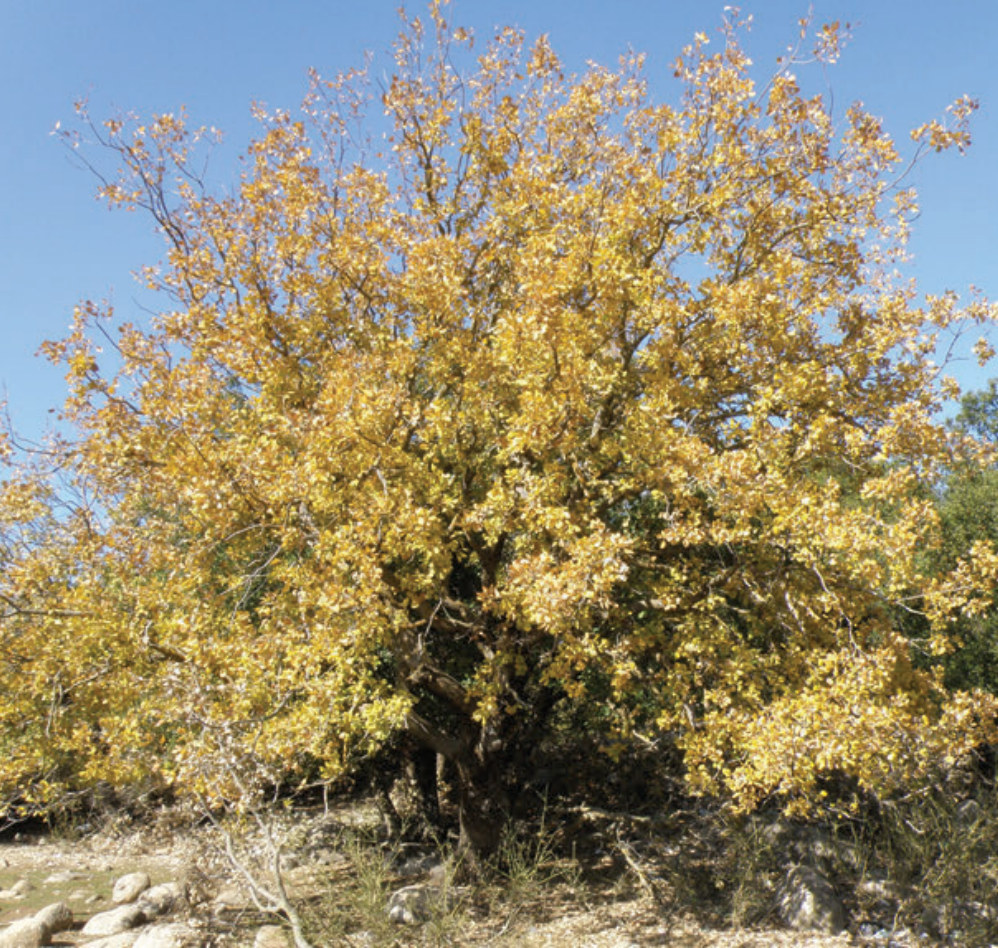
Plant name
The bored
Latin name
Quercus infectoria Oliv
Common names
Al-Mulloul, oak, oak, gall oak
foreign names
Eng. Gall oak, Fr. Chêne
The group
adulteress
Habitat and Geographic Distribution
Turine.
It is widespread in the Mediterranean forests of Syria and Lebanon, western Iran, Palestine, Jordan, Iraq, Iran, Turkey, Cyprus, and other countries in Western Asia.
It is also found in southern Europe and North Africa. It is cultivated in Europe, the Maghreb countries, and Egypt.
Botanical description
The trunk is gray, scaly, grayish-smooth, with an ovate crown.
The branches are ascending, 15 - a deciduous tree, 4-2 x 7 cm tall - and horizontal.
The buds are ovate, with ovate scales, hairy margins or glabrous.
The leaves are simple, alternate, oblong to oblong-mammary in size, dull apex, rounded or gradually tapering base, wavy to sinusoidal - cm, ovate margin, glossy upper surface, downy lower surface when young, becoming glabrous or semi-glabrous later, bearing cm, glabrous or semi-glabrous, stipules hairy, falling off quickly.
0.5-2 lateral veins.
The petioles are 9 - cm, with a reddish-hairy stump.
The flowers are unisexual.
The male flowers are gathered in closely packed, grayish catkins, carpel-like inflorescences, with the ovary inferior, 3 cm.
The female flowers are fewer in number.
The female 12 - hairy segments, stamens 6 - simple calyx, composed of, develops: within it only one ovule as a result of the abortion of the other ovules.
Tertiary, climes, solitary or in pairs, squamous inflorescence or peduncle, cylindrical 2-1×5-3.
The fruit is a nut (or acorn), ovoid in shape, surrounded at its base by a hemispherical calyx.
The scales of the calyx are flat and non-protruding, triangular in number.
5 - acorn length - calyx length. Flowering from March to April, and fruiting in early October.
Used part
The leaves, and the gall (globular tumor)
chemical components
The leaves contain ellagitannin (gallotannin), expensive tannins, quercitol (cyclitol), and sugars (gallic acid), in addition to expensive acids.
The gallnut contains expensive tannins in a proportion of up to [percentage missing], starch, gum, resin, and traces of volatile oil.
Properties and medical uses
Oak has astringent, soothing, analgesic, and blood sugar-lowering properties.
It is used in supportive treatment for skin inflammations.
It is used traditionally to treat intestinal bleeding, coughs with blood, and bronchitis.
A decoction of the leaves is used topically as a gargle to treat gingivitis, ulcerative stomatitis, and tonsillitis.
Preparations of the leaves and gallnuts are used as ointments to treat skin inflammations, eczema, impetigo, tinea versicolor, menorrhagia, and hemorrhoids.
It has a long history of use in traditional Chinese medicine for treating diarrhea, bleeding, skin diseases, and many other human ailments.
Its medical applications have become increasingly common in Greece, Asia Minor, Syria, and Iran.
Studies have shown its potential use against a wide range of enzymes, such as cholinesterase and monoamine oxidase, as well as tumors, hypertension, microbes, and as an insecticide, parasite, and antioxidant.
Extracts can be used as an effective and natural disinfectant to sanitize eggshells from disease-causing microorganisms.
Their effectiveness against microbes such as Staphylococcus aureus, Escherichia coli, Pseudomonas aeruginosa, Salmonella typhimurium, and Candida albicans has been proven.
Side effects and precautions
Its use is not recommended for extended periods, as it may cause liver damage, and prolonged and concentrated topical use can also cause the appearance of some skin tumors.
Other uses
It is used industrially to obtain tannins used in leather tanning and ink manufacturing.
Side effects and precautions: Its use internally for extended periods is not recommended due to the potential for liver damage.
Furthermore, prolonged and concentrated topical application may cause the development of certain skin tumors.
the environment
A light-loving species, relatively tolerant of frost and drought.
It grows well in calcareous soils and prefers red soils, although it can live in rocky, poor soils.
Agriculture and productivity
Oaks are propagated by layering after being raised at 5°C for 45 days.
The oak is planted on its side in plastic bags in the nursery and watered moderately.
Germination occurs approximately 15 days after planting.
Examples of species include: Centaurium erythraea Rafn, Centaurium centaurium (L.) W.Wight ex Piper, Centaurium minus Moench, Chironia centaurium (L.) F.W.Schmidt, Erythraea centaurium (L.) Pers., Erythraea vulgaris Gray, Gentiana centaurium L., and Gonipia linearis Raf.
History and Heritage
The scientific name of the genus Quercus is the Latin name used by the ancient Romans in Western Europe, and some trace the name back to the ancient Celtic origin Kaër quez, meaning "beautiful tree".
The descriptive name for the species, infectoria, means that the tree is infested by an insect (a type of tumor-making wasp) *Cynips tinctoriae* Oliv-gallae.
It lays its eggs on the branches and leaves, causing the formation of galls rich in tannins.
The name *sindian* is of Persian origin, while the name *balooq* is of Aramaic origin.
Ancient myths mention that the oak tree is rarely struck by lightning and has been associated with Zeus, the god of thunder in Greek mythology, and Donar, the god of lightning.
Among the ancient Germanic peoples, the oak tree was considered the tree of Jupiter in Roman mythology, and among the Celts, it was a symbol of courage and strength.
It was mentioned by Ibn Manzur in his dictionary "Lisan al-Arab," as well as by Ibn al-Baytar, al-Antaki, and Ibn Sina.
Oak was used in ancient times to treat diarrhea, digestive tract inflammations, bedwetting, skin rashes, and hemorrhoids.
The wood was used for heating, building houses, and constructing storerooms, and the acorns were collected and used as food, similar to nuts. Such as walnuts, terebinth, almonds, and dried figs
Medical note
This information is for educational purposes only and does not constitute medical advice.
Poisonous or potent plants should only be used under the supervision of a qualified physician or pharmacist.
Related images


