Comb | A medicinal plant in the Akhdar encyclopedia
The plant is a stimulant for its enzymes. It exhibits hepatoprotective properties and lowers blood sugar, in addition to its hepatoprotective effect. The plant extract has antibacterial properties against Candida albicans, Staphylococcus aureus, and Escherichia coli. The alcoholic extract also exhi…
Plant name
comb
Latin name
Cleome droserifolia (Forssk.) Del
Common names
The comb, the sky, the cold wind, rotten, gazelle horn, Abu Tarboush
foreign names
Eng. Cleome herb. Fr.Cléome
The group
cabbage
Habitat and Geographic Distribution
Sudan was attacked in Egypt, Libya, Saudi Arabia, Palestine, and Ethiopia.
Botanical description
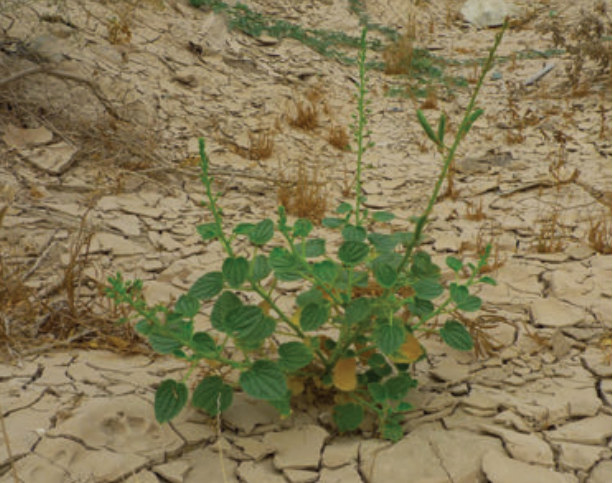
A small, cushion-shaped shrub, greenish-yellow in color, with abundant, highly branched, and intertwined leaves.
The leaves are simple, 50 cm long, with long petioles, rounded to kidney-shaped or heart-shaped, trilobed, covered with short, simple hairs and glandular hairs.
The flowers are solitary in the axils of the upper leaves, with long stalks, tending towards paired, 1.5 cm in diameter.
The sepals are symmetrical, wide, reddish, glandular, and oblong.
The petals are yellow, with a thick, scaly, appendage at the base, shorter than the style, and glandular at its apex.
The stamens are ciliated.
The female is bicarpel; the ovary is unistomata, pseudo-pleatous, oblong or ellipsoidal, and glandular.
The fruit is a capsule with an erect sac.
The seeds are compressed, 1.5 cm or flattened, glandular, rounded, and glabrous. - Flowering kidneys from March to May
Used part
The flowering aerial parts of the plant (which has a distinctive aroma) contain the following chemical constituents: 4.0% sulfur-containing volatile oil, the most important components of which are benzylisothiocyanate, naphthyl-n-caryophyllenepropyl ether, and carotol, among others; glucocapparin (sulfur glycosides); 3.0% flavonoids, the most important of which are kaempferol, isorharmnetin, rhamnosidem, quercetin, and artemitin; sterols (beta-sitosterol and stigmasterol); triterpenes; coumarins; alkaloids; docosaniocic acid; and citric acid.
chemical components
Its main components: 0.4% carboxylic oil and others.
Caroteloxyl, naphthyl-n-propyl ether, caryophyllene, benzyl isothiocyanate, glucocapparin, carboxylic glycosides: glucocaparin.
Artemitin, quercetin, rhamnosides, isorharmnetin, kaempferol: the most important of which are 0.3% valvonoids.
Tertiary compounds, coumarins, alkaloids, and stigmasterol, beta-sitosterol: citriol compounds. Docosaniol acid
Properties and medical uses
The plant is a stimulant for its enzymes.
It exhibits hepatoprotective properties and has hypoglycemic properties, in addition to its hepatoprotective effect.
The plant extract has antibacterial properties and is effective against Candida albicans, Staphylococcus aureus, and Escherichia coli.
The alcoholic extract also exhibits antihistamine-like effects and is hypotensive, a mild analgesic, and a diuretic.
The plant is traditionally used for indigestion, to stimulate liver function, increase bile secretion, lower blood sugar, and to treat asthma and kidney ailments.
A paste made from the juice of the leaves is used topically, along with its antiseptic extract, to treat wounds and skin inflammations. The seeds are used as a vermifuge, carminative, stimulant, and astringent.
Side effects and precautions
The plant is poisonous; the toxicity manifests as symptoms of convulsions, tremors, sweating, respiratory distress, then loss of consciousness and death.
the environment
The plant grows in stony and sandy valleys and plains.
Agriculture and productivity
The plant reproduces by seeds. It is a cultivated plant, but it is harvested wild for its uses.
History and Heritage
The genus Kleio, derived from the Greek Cleome, is believed to be composed of approximately 150 dew-bearing plants, possibly named for the glandular hairs covering the leaves.
The term Kleio is derived from the Greek Cleome, and the genus name Droseros, from the Greek Droserifolia, refers to a type of annual and perennial plant.
The descriptive name for the species is droserifolia, and it may also refer to the glandular hairs covering the leaves.
Medical note
This information is for educational purposes only and does not constitute medical advice.
Poisonous or potent plants should only be used under the supervision of a qualified physician or pharmacist.
Related images


