Cumin | A medicinal plant in the Akhdar encyclopedia
Cumin seeds and their essential oil possess antioxidant properties and are effective against certain types of bacteria, including Bacillus subtilis and Staphylococcus epidermidis, as well as Candida albicans fungi. They also have appetite-stimulating and digestive properties, increasing digestive s…
Plant name
cumin
Latin name
Cuminum cyminum L
Common names
Cumin, anise, caraway, whale cumin
foreign names
Eng. Cumin, Fr. Cumine
The group
celery
Habitat and Geographic Distribution
The plant is believed to be native to the Nile Valley, Sima Mersin, and Sudan, although it is widespread in Asia, particularly India and Pakistan.
It is cultivated in most hot and dry regions of Asia and Africa, and in the southern United States.
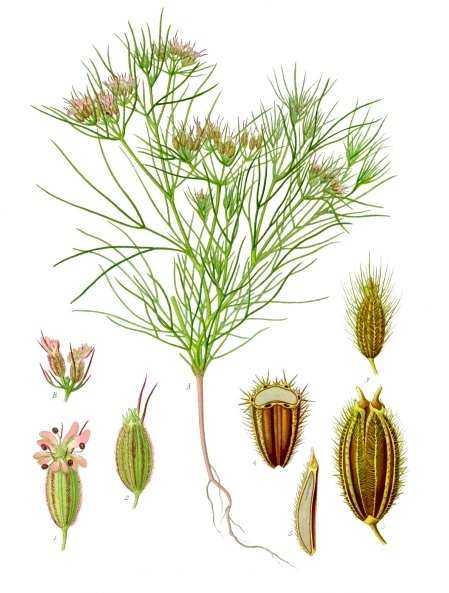
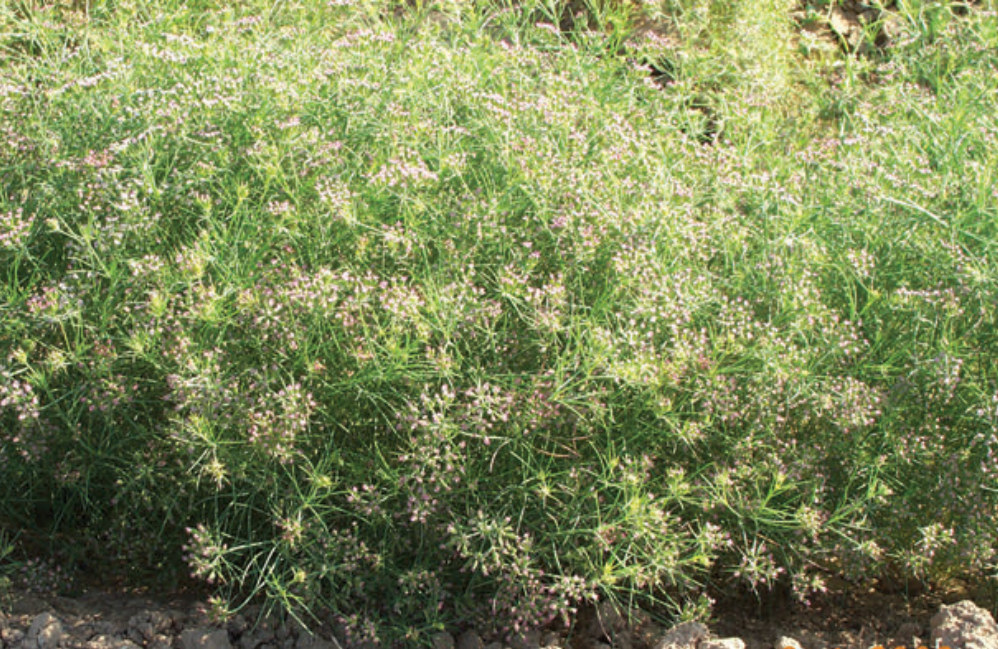
Botanical description
A slender, hairless herb, 1 cm long.
The stem is dichotomously branched into 50-20 cylindrical segments at the base.
The leaves are small and hairless, deeply divided into linear lobes.
The flowers are white or oblong-pink, clustered in compound umbels.
The calyx is reduced.
The petals are five, oblong, and toothed at the apex.
The male flowers have five stamens.
The female flowers have two carpels, and the ovary is inferior.
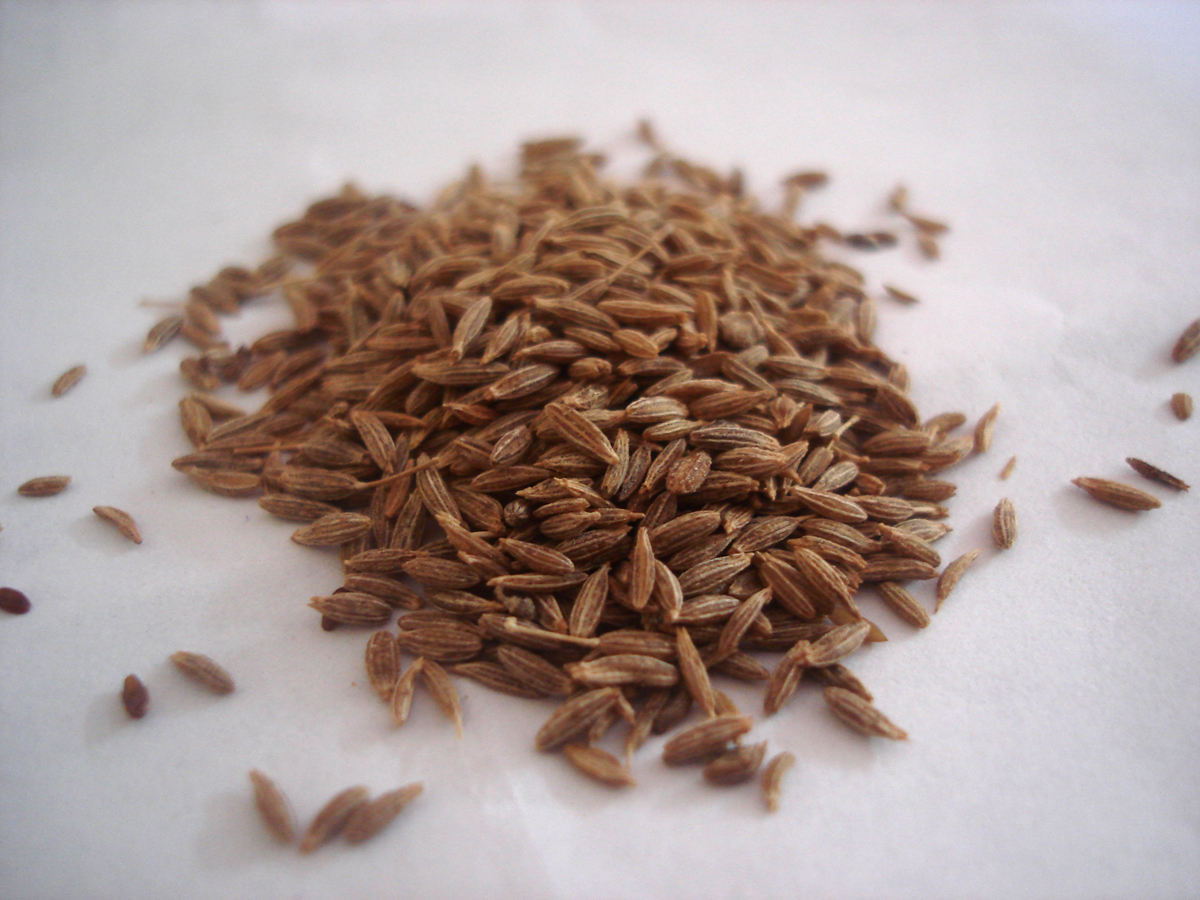
The fruits are two spindle-shaped acinus 1 mm wide, about 6 mm long, yellowish-brown in color, and have an aromatic scent and a tart taste.
Used part
Ripe and dry fruits, the essential oil extracted from the fruits
chemical components
Beta-pinene, gamma-terpinene, and gamma-terpinene cumin aldehyde are its main components.
Cumin aldehyde (5%) contains volatile oil.
Its main fatty acids are parsnip acid (15%), and fixed oils p-menthandial, p-cymene, and p-pinene.
It also contains flavonoids (20%), proteins (oleic acid, palmitic acid, and petroselic acid).
Properties and medical uses
Cumin fruits and their volatile oil possess antioxidant properties, and are effective against some types of bacteria (Bacillus subtilis and Staphylococcus epidermis) and Candida albicans fungi.
They also have appetite-stimulating and digestive-enhancing properties, increasing digestive secretions, helping to expel gases, and relieving intestinal spasms.
Studies have shown that cumin fruits contain compounds with estrogenic effect (isoflavonoids) that affect lipid metabolism in the body, thus contributing to the prevention of menopausal diseases in women and cardiovascular diseases.
Cumin extract also has an antiplatelet effect.
The essential oil of the fruits has been found to possess strong toxicity against the adult grain storage insects *Sitophilus zeamais* (corn weevil) and *Tribolium castaneum* (red flour beetle).
Strong fumigant toxicity against them.
The compounds R-Carvone and D-limonene also showed strong thalassemia and fumigant toxicity against them.
Cumin fruit is used traditionally as an abortifacient and emmenagogue.
A decoction of the powdered fruit is used for its calming and appetite-stimulating properties, and to treat stomach acidity, flatulence, colic, digestive disorders, and spasms caused by intestinal worms.
It is also used to promote urination and lactation in nursing mothers, and to relieve rheumatic pains.
A decoction of cumin fruit is used topically as a face wash to remove blemishes and achieve a brighter complexion.
On clear skin, and for washing inflamed eyes.
Ointments are also prepared from the powdered fruit, used to treat wounds, sores, scabies, and itching.
The powdered fruit is often mixed with oil to stop nosebleeds.
Cumin is sold in markets as whole fruit or in pharmaceutical preparations and dietary supplements.
Drug Interactions and Precautions: Cumin interacts with some sleeping pills.
Prolonged use of the essential oil can cause skin irritation.
It should not be taken by kidney patients.
Food Uses: The powdered fruit is considered...
Cumin is one of the essential spices added to many foods to stimulate the appetite and give them a distinctive taste and aroma.
Cumin oil is added to sweets, bread, cakes, and pastries to flavor them, and it is also an ingredient in some perfumes.
Side effects and precautions
Cumin interacts with some sleeping pills, and prolonged use of its essential oil can cause skin irritation.
It should be avoided by people with kidney disease.
In food, cumin seed powder is a staple spice added to many dishes to stimulate the appetite and impart a distinctive flavor and aroma.
Cumin oil is added to sweets, bread, cakes, and pastries for flavoring, and it is also an ingredient in some perfumes.
the environment
Cumin thrives in hot, semi-hot, arid, and semi-arid regions, tolerating temperatures as low as 25°C for short periods.
However, it cannot tolerate extremely high temperatures.
The optimal soil for its growth is in well-drained, light, and aerated loamy soils, which are the most suitable.
Heavy clay and sandy soils are unsuitable for cumin cultivation because the former leads to diseases causing wilting and suffocation, while the latter results in premature fruit ripening and reduced fruit weight. Cumin tolerates mild salinity and alkalinity but prefers temperate soils.
Agriculture and productivity
Cumin is propagated by seed, and it is advised not to plant seeds that have been stored for more than two years.
The seeds are sown in autumn before the temperature drops, after being mixed with sand (31).
Planting is done in furrows.
Thinning is carried out when the plants reach a height of 5-8 cm.
(Eryngium campestre L., Eryngium vulgare Lam., Eryngium campestre var.
genuinum Rouy & E.G.
Camus., Eryngium campestre var. latifolium Mariz., Eryngium campestre var. parvifolium Merino)
History and Heritage
Cumin is an ancient Arabicized word, likely derived from Babylonian.
Its scientific name is *Cumin oleate*, a term also derived from Babylonian.
The ancient Egyptians recognized the properties of cumin and cultivated it extensively along the banks of the Nile, calling it "Qamnini." It is mentioned in ancient papyri in Akrat Man, where the Greek physician Dioscorides described it as having a warming effect, expelling wind, and possessing astringent and drying properties.
He noted that it is used with oil or honey to heal wounds, and that when crushed with vinegar and inhaled, it stops nosebleeds.
Galen stated that cumin breaks up kidney stones, relieves colic, flatulence, and hematuria.
He added that cumin mixed with oil is used as an ointment for swollen testicles.
The Arabs introduced it to the western Mediterranean in the 12th century, and Ibn Sina mentioned it and distinguished its various types.
Medical note
This information is for educational purposes only and does not constitute medical advice.
Poisonous or potent plants should only be used under the supervision of a qualified physician or pharmacist.
Related images