Hibiscus | A medicinal plant in the Akhdar encyclopedia
Hibiscus syrup has a pleasantly tangy taste, is refreshing, and helps alleviate the feeling of heat. It contains antiseptic and antibacterial compounds that combat bacteria that commonly infect people during the summer heat. The syrup also has refreshing properties, stimulates digestion and the sec…
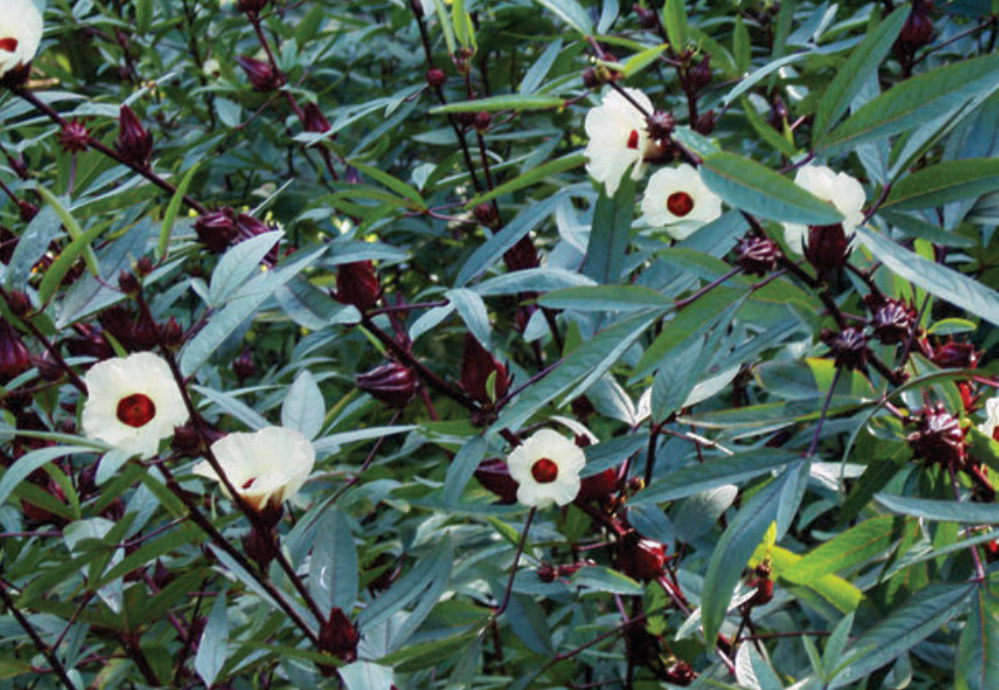
Plant name
hibiscus
Latin name
Hibiscus sabdariffa L
Common names
Hibiscus, as a neighbor
foreign names
Eng. Roselle, Fr. Karkade
The group
bakery
Habitat and Geographic Distribution
The West Indies and Central Africa are now widely cultivated in tropical and hot regions of the world. It is grown in Upper Egypt and Sudan.
Botanical description
An annual or perennial herb, it can reach a height of 1 m.
The stem is simple or branched, rigid, and glabrous.
The leaves are simple, large, bipinnate, the lower ones ovate unlobed, the upper ones palmately lobed, all glabrous.
The flower stalks are relatively large, axillary, solitary, and semi-peripheral.
The calyx is supported by a sepal composed of 1 mm, which becomes a 10-piece, linear segment.
The inflorescence is hairy, red, and necrotic with sepals, purple, and fused.
The fruit is fused.
The calyx is 1 cm, hairy, woolly, and spiny, bearing at its base a linear gland on a nerve.
The petals are 3 cm long and fall off during drying.
The corolla is yellow with a crimson spot in the center.
The petal is 1 cm long and contains numerous spherical seeds.
The stamen filaments fuse to form a stomatal tube.
The fruit is a capsule, approximately the size of a pod. Autumn - flowering in summer.
Used part
The calyx and the red, fleshy sepals.
Latin name: Hibiscus sabdariffa L., Hibiscus cannabinus L., Sabdariffa rubra Kosteletzky
chemical components
hibiscus acid: The most important of these are fruits (15-30%).
The sepals contain organic acids (fruit acids, vitamin C, malic acid, citric acid, tartaric acid, cyanidin-3-xyloglucoside, delphinidin-3-glucoside): (red color).
anthocyanin pigments.
Amounts of calcium oxalate.
hibiscin, gossypetin: Valvonic compounds, including delphinidin-3-xyloglucoside.
rhamnogalacturonans, arabinogalactans, arabinans: Salivary (gelatinous) compounds.
Properties and medical uses
Hibiscus syrup has a pleasantly tangy taste, is refreshing, and helps alleviate the feeling of heat.
It contains antiseptic and antibacterial compounds that combat bacteria that commonly infect people during the summer heat.
The syrup also has refreshing properties, stimulates digestion and the secretion of digestive juices, acts as a mild laxative, loosens phlegm, and quenches thirst.
Its organic acids, particularly citric acid, contribute to its effectiveness.
The aqueous extract of hibiscus petals has cardiac stimulant, hypotensive, and uterine relaxing effects.
Studies have shown that hibiscus syrup helps relieve the pain of gout and rheumatism.
Research has demonstrated the effectiveness of hibiscus flower extract in eliminating tuberculosis bacteria, several other bacterial strains, and some parasites.
Furthermore, the flowers and leaves have been shown to have soothing properties for uterine, stomach, and intestinal cramps.
Hibiscus tea is popularly used as a rich source of organic acids and vitamin C.
It acts as a diuretic, cleanses the digestive system, soothes uterine and intestinal cramps, calms nerves, and increases blood circulation.
It also helps strengthen the heart.
It is often used in winter to treat colds and flu due to its high vitamin C content.
Side effects and precautions
Allergic reactions or drug interactions may occur; self-use should be avoided by pregnant and breastfeeding women, children, and patients with chronic diseases.
Other uses
Hibiscus syrup is prepared from the flower sepals by steeping them in cold water or boiling them briefly and then straining.
It is served hot or cold and sweetened to taste.
The sepals are used in the production of jellies, jams, ice cream, and sweets to impart a healthy, natural color and pleasant flavor.
Pharmaceutical and soap manufacturers use natural coloring agents extracted from hibiscus flower sepals in their products.
The sepals are also used in cosmetics as a natural pigment (lipstick, face powder).
The hibiscus plant is a major natural source of plant fibers used in the production of rope, paper, and pure cellulose.
Precautions: The sepals contain a high percentage of calcium oxalate, so they are not recommended for patients with kidney disease or urinary tract problems in general. They should also be avoided by people with low blood pressure.
the environment
Hibiscus thrives in hot, dry regions with long days, high temperatures, and low humidity.
Under these conditions, it produces a high-quality, abundant floral color.
The plant prefers light, fertile soil.
Anthocyanin formation is influenced by both genetics and environment.
A high concentration of sugars in the cells facilitates the formation of anthocyanin pigments.
Light and low temperatures further enhance sugar concentration and pigment production.
Agriculture and productivity
The plant is propagated by seeds sown in spring.
Delaying sowing reduces lateral branching and results in fewer, smaller flowers.
Sowing is done in rows 75 cm apart, leaving 60 cm between holes, and 4-5 seeds are placed in each hole. One hectare requires 12-25 kg of seed.
History and Heritage
Named after the ibis bird that feeds on ibis, the genus *hibiskos* is believed to derive its name from the Greek word for plant. Its leaves were used as food by the ancient Indians.
Medical note
This information is for educational purposes only and does not constitute medical advice.
Poisonous or potent plants should only be used under the supervision of a qualified physician or pharmacist.
Related images


