Celery | A medicinal plant in the Akhdar encyclopedia
The fruit possesses diuretic, sedative, and anticonvulsant properties, and its volatile oil has antibacterial and antifungal effects. The fruit is traditionally used for its diuretic properties and to treat kidney and bladder pain, gout, and rheumatism. It is also used to treat nervous conditions,…
Plant name
celery
Latin name
Apium graveolens L
Common names
celery
foreign names
Eng. wild celery, Fr. Céleri, Ache odorante
The group
celery
Habitat and Geographic Distribution
Celery is believed to have originated in central and southern Europe, although it grows wild in Asia Minor and North Africa.
Several varieties are cultivated for food consumption in many parts of the world.
Botanical description
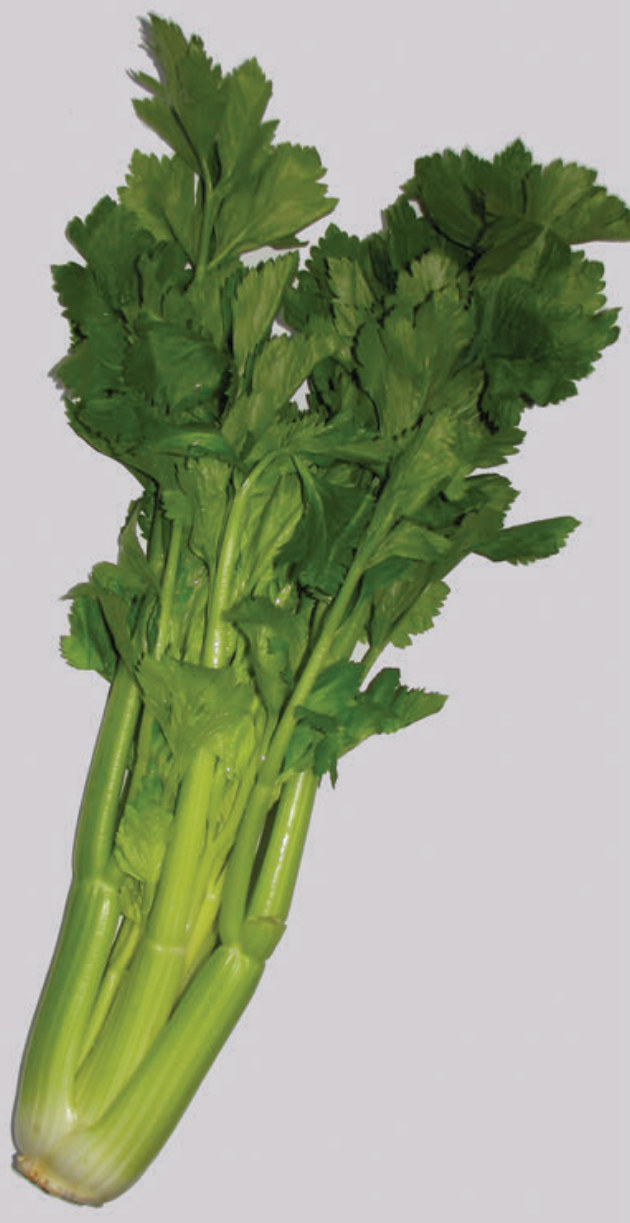
A perennial or biennial herb, hairless, 100 cm - strong aromatic scent, highly branched.
Roots are spindle-shaped.
Stems are erect or ascending, angularly notched, hollow, and dichotomously branched.
Leaves are somewhat hairy, glossy, pinnately compound, the lower ones being stamen-like, five-leaved, with leaflets rhomboid to triangular in shape, toothed margin, and the stem is semi-tine or tine, with a blade in three parts, each part rhomboid to uterine in shape.
The flowers are small (mm), clustered in compound umbels (5), axillary, bractless, sclerotized or pedunculated.
The calyx is absent.
The petals are whitish-white, elliptical, or greenish, with ridges longer than the peduncle.
The fruits are 2-1.5 × 1.5 mm double acini, with spherical, fragrant segments appearing on the peduncles, and possess prominent ribs. Flowering occurs from May to September.
Used part
The part used varies depending on the type and preparation; a reliable or competent reference should be consulted before use.
chemical components
Its color is golden yellow.
The fruits contain a volatile oil that is yellowish-green, and flavonoids including: coumarins such as isoquercetin, apinin, grapheoside A, B, dihydrofurocoumarin, apiometin, sesquill, and silirioside.
It also contains bergapten oil, which is greenish-green and slightly astringent in taste.
It contains pyridoxinenic acid, in addition to linoleic and oleic acids, and flavonoids such as apinin and grapheoside.
The aerial herbaceous part contains 0.8% volatile oil, coumarins, phenolic compounds, and steroids. It also contains vitamin C.
Properties and medical uses
The fruit possesses diuretic, sedative, and anticonvulsant properties, and its volatile oil has antibacterial and antifungal effects.
The fruit is traditionally used for its diuretic properties and to treat kidney and bladder pain, gout, and rheumatism.
It is also used to treat nervous conditions, as a stomach tonic and carminative, and to treat coughs.
The green parts are traditionally used to reduce high blood pressure, treat arthritis, bronchitis, coughs, asthma, fever, flatulence, and digestive disorders, and to treat liver and spleen disorders.
It is also used to soothe tension headaches, muscle and nervous spasms, allergies, amenorrhea, toothache, and to cleanse the urinary tract, treat urinary retention, and alleviate vomiting.
pharmaceutical forms
Celery is available in capsule form as an anti-rheumatic agent, under names such as Cashet's Leisure, Rheumatic Pain, and others.
Side effects and precautions
Allergic reactions such as laryngeal constriction, facial swelling, skin rash, and dermatitis are often exacerbated by sun exposure.
High doses may cause a slowing of nervous system activity, resulting in side effects such as dizziness.
The plant should be avoided by pregnant or breastfeeding women. It should not be given in cases of kidney inflammation.
Other uses
The green parts are used in cooking to flavor food, and in the manufacture of soap and chewing gum.
The plant is also included in diets due to its high fiber content.
Celery fruits are used in the manufacture of cosmetics as hairsprays and perfumes.
the environment
Celery thrives in cold and temperate regions, tolerating low temperatures during its vegetative growth period and short-term frost resistance.
However, high temperatures of 10-15°C reduce leaf and oil production.
The plant grows in organically rich soils, is intolerant of acidity, but relatively tolerant of salinity.
Cultivation and Productivity: In warm regions, the plant is sown directly from seed or by transplanting.
In colder regions, sowing takes place after winter, ideally after the winter season.
Soaking the seeds in warm water for a few days before sowing is recommended.
Water frequently during vegetative growth and less frequently during flowering and fruit formation.
Apply basic fertilizers.
Harvesting begins in early autumn and continues until the end of winter.
Yields can be measured in kg when sown directly from seed.
2.4 kg of seeds are used for seedling planting, and up to 1.2 tons of fruiting vegetation are needed per hectare.
One ton of fresh Akhdar grass before flowering yields approximately 10 kg of oil and 2-1.5 tons of dry fruit per hectare.
Additionally, one ton of fruiting grass yields approximately 15 kg of oil and 1 ton of dry fruit.
Agriculture and productivity
The plant is grown by
History and Heritage
Celery is a name that has been used for a long time and is applied to, as well as to, other species of A. graveolens, Smyrnium olusatum, and others.
Medical note
This information is for educational purposes only and does not constitute medical advice.
Poisonous or potent plants should only be used under the supervision of a qualified physician or pharmacist.
Related images