Flax | A medicinal plant in the Akhdar encyclopedia
Flaxseed is an oilseed (45-50% oil on a dry weight basis). Its oil has shown numerous health benefits and industrial applications. The plant is anti-diabetic and anti-inflammatory. It has laxative and purgative properties, but in large doses, it can induce vomiting. The plant is used traditionally…
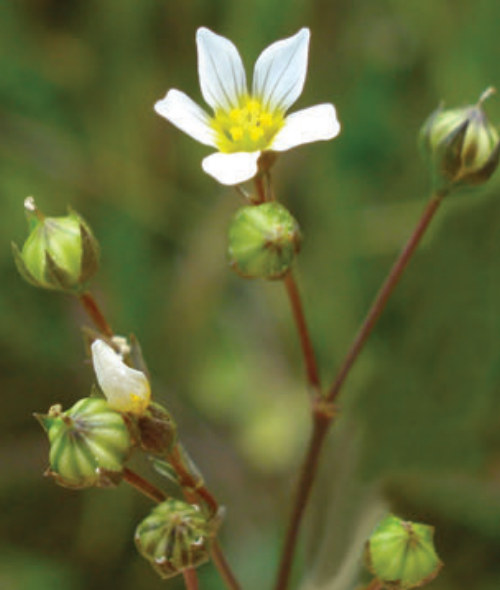
Plant name
linen
Latin name
Linum catharticum L
Common names
linen
foreign names
Eng. Fairy flax, Mountain fla x, Fr. Lin sauvage purgative
The group
Linen
Habitat and Geographic Distribution
Europe, the Mediterranean basin, and North Africa
Botanical description
A perennial to biennial herb that may live for several years.
The roots are long, thin taproots, reaching a height of [missing information - likely a measurement in height].
The stem is upright or erect, simple or branched at the base, slender, and sparsely leafless.
The leaves are opposite and dull.
The flowers are white to yellow.
The fruits are spherical, up to [missing information - likely a measurement in length] mm, smooth, glabrous, and brown in color. 1.5-1.5 mm. The seeds are pale.
Used part
herbaceous plant
chemical components
The results showed the presence of 18 polyphenolic compounds.
These findings support the daily consumption of flaxseed by diabetic patients and indicate that flaxseed polyphenols are novel dietary supplements or herbal medicines for the treatment of diabetes and its complications, possessing anti-diabetic and anti-inflammatory properties.
(Lignans 0.5%, including achromatin (a bitter substance), 2% tannins, and a small amount of volatile oil (0.15%).
Properties and medical uses
Flaxseed is an oilseed (45-50% oil on a dry weight basis).
Its oil has shown numerous health benefits and industrial applications.
The plant is anti-diabetic and anti-inflammatory.
It has laxative and purgative properties, and if taken in large doses, it can induce vomiting.
The plant is used traditionally to treat constipation, decreased urination, colds, rheumatic diseases, and intestinal worms. Precautions: It can cause gastritis and vomiting.
Side effects and precautions
It causes gastritis and vomiting.
Other uses
Numerous studies have shown that flax, being highly hygroscopic, is capable of absorbing large quantities of heavy metals such as cadmium and petroleum hydrocarbons from contaminated soil.
the environment
Flax thrives in well-drained soils with a medium structure, such as yellow clay or silty soils, and is well-suited to light soils.
Agriculture and productivity
It is propagated by seed.
The soil is prepared for planting by deep autumn plowing and several shallow tillages, followed by the addition of fertilizers.
Flax is a relatively low-demand crop in terms of nutrients, and mineral fertilization is not recommended if the soil is fertile.
The basic post-planting care operations are hoeing, weed and disease control, pest control, and irrigation when needed. (Linum usitatissimum L. Linum angustifolium subsp. usitatissimum L.)
History and Heritage
The scientific name of the genus comes from the Greek *linon*, which is the Latin name for these plants.
The species name *catharticum* means "laxative." The part used is the herbaceous plant.
Medical note
This information is for educational purposes only and does not constitute medical advice.
Poisonous or potent plants should only be used under the supervision of a qualified physician or pharmacist.
Related images


