The rhizome | A medicinal plant in the Akhdar encyclopedia
The plant itself does not contain any hormonal compounds, although it possesses properties similar to hormones. Research has demonstrated that the fruit extract, due to its saponin content, increases testosterone production by 30-50%, thus improving protein synthesis, increasing endurance, and enha…
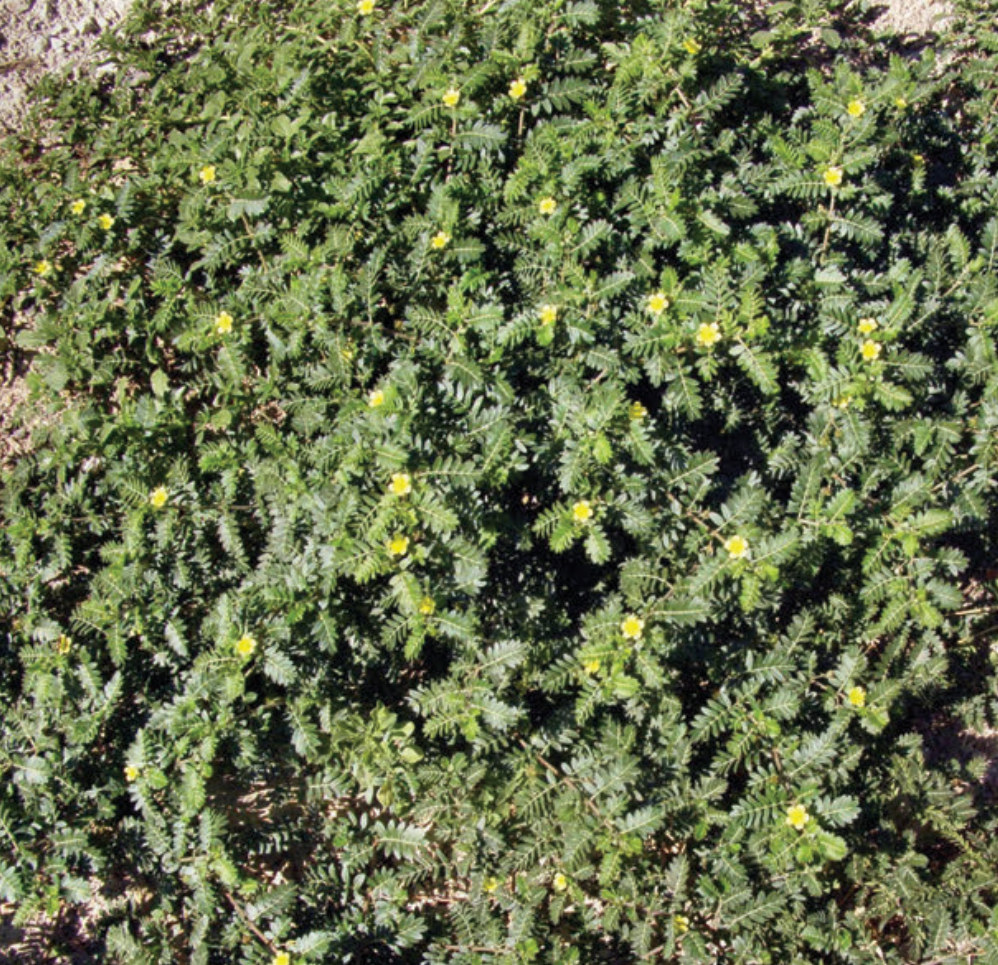
Plant name
The tooth pole
Latin name
Tribulus terrestris L
Common names
The molar, the thorn, the old woman's tooth
foreign names
Eng. Maltese cross, Fr. Croix de Malte
The group
The ratratiah
Habitat and Geographic Distribution
Temperate and tropical regions of the Old World, where it is naturally distributed in southern Europe, southern Asia (Iranian-Turanian), the eastern Mediterranean, Africa (Sudanese), and Australia; almost universal distribution.
Botanical description
The stem is numerous, lying on the ground.
The leaves are 60 - a perennial herb, covered with coarse, layered hairs, ranging in length from 1 cm.
They are arranged in pairs of unequal size, usually in equal pairs.
The smallest leaflet is pinnately compound, 1 mm long, ovate-oblong, and 12 mm long, uterine.
The leaflet has 4 pairs.
The stipules are 8 - leaflets, and the apex contains 1 cm.
There are five sepals, 1.5 at the apex.
The flowers are hermaphroditic, solitary or clustered in scorpioid-like inflorescences, stalk-like, about 12 mm in diameter, uterine.
The petals are five, free, twice the length of the sepals, yellow, oblong, and free, about 1 mm long.
The stamens are ten, free, shorter than the petals.
The female is five-carpeled, the ovary is five-segmented, the stigma is semi-folded (style is absent) and umbel-shaped.
The fruit is a drupe, composed of segments (fruits).
The drupe is non-porous, open, hard, and about [diameter] in diameter, covered with gray hairs.
It contains a seed and strong spines, one of which may be present.
The two lower spines may be truncated or reduced to tubercles. Flowering occurs from April to September.
Used part
Aerial parts, fruits, and roots
chemical components
The aerial parts of the plant contain steroidal saponins: gitogenin, hecogenin, tigogenin, diosgenin, chlorogenin, ruscogenin, isorhamnetin, gracillin, and glycosides including gracillin, harman, and norharman.
It also contains alkaloids such as norharman, and sterols like kaempferol and quercetin.
The flowers contain flavonoids including quercetin, oleic acid, and linoleic acid.
The fruits contain fatty oil, the main components of which are linoleic acid and stigmasterol, as well as traces of alkaloids, glycosides, and behemic acid, stearic acid, and palmitic acid.
Palm contains volatile compounds, resins, proteins, enzymes, and a percentage of nitrates.
Properties and medical uses
The plant does not contain any hormonal compounds, although it possesses some of their properties.
Research has proven that the fruit extract, due to its saponin compounds, increases testosterone production by 30-50%, thus improving protein synthesis, increasing endurance, and increasing muscle mass and performance (without resorting to anabolic steroids).
It also stimulates libido in men, improves sexual performance, increases sperm count and motility, and helps with...
It helps eliminate infertility.
The plant stimulates the immune system.
Studies have shown its effectiveness as an antibacterial and antifungal agent, and its properties in treating inflammation of the reproductive and respiratory systems (laryngitis and stomatitis).
An increase in estradiol levels has been observed in women, which contributes to increased libido and ovulation rates, and alleviates menstrual symptoms.
The plant is used to treat coronary artery disease, and its effectiveness in reducing cancerous tumors (as an antioxidant) has been proven.
The plant possesses diuretic, antispasmodic, and blood sugar-lowering properties.
It is anti-rheumatic and astringent, useful in treating wounds and skin boils.
The fruits and roots are used in folk medicine to expel bladder stones and treat urinary retention.
The plant slows hair loss caused by testosterone deficiency.
A decoction of the entire plant is used to treat urinary tract infections, kidney stones, and edema.
Treatment with this plant leads to a significant decrease in fasting blood glucose, postprandial glucose (within two hours of a meal), and hemoglobin-binding glucose levels.
Caution: The plant is moderately toxic due to its components.
It contains alkaloids and nitrates, and its use without medical supervision can cause liver problems (hepatic photosensitivity) and eye problems.
Therefore, it should not be used by pregnant women (abortionist) except under medical supervision. The plant is toxic to ruminants and causes liver disorders in them.
Side effects and precautions
The plant is moderately toxic due to its alkaloid and nitrate content.
Its use without medical supervision can cause liver problems (hepatic photosensitivity) and eye problems, therefore it should not be used by pregnant women (those undergoing abortions) except under medical supervision. The plant is toxic to ruminants and causes liver disorders in them.
the environment
This plant thrives in sandy loam soils, particularly in low-lying areas and neglected, damp fields.
It prefers sunny locations and is considered a weed in many regions. It can even grow well in desert climates and arid soils.
Agriculture and productivity
The plant propagates easily by seed.
It is rarely cultivated, and when grown for medicinal purposes, care must be taken to ensure it does not spread to neighboring fields.
History and Heritage
The scientific name of the genus is its Latin name.
It was used in ancient folk medicine as an antispasmodic, pain reliever, and aphrodisiac. The parts used are the aerial parts, fruits, and roots.
Medical note
This information is for educational purposes only and does not constitute medical advice.
Poisonous or potent plants should only be used under the supervision of a qualified physician or pharmacist.
Related images


