Dioecious nettle | Medicinal plant in the Akhdar Encyclopedia
Nettle possesses local anesthetic properties, and its preparations are used to treat rheumatism, arthritis, and gout. Nettle is anti-inflammatory, antifungal, and antiviral, and its effectiveness in treating urinary tract infections and renal colic has been proven. Experiments have shown the plant'…
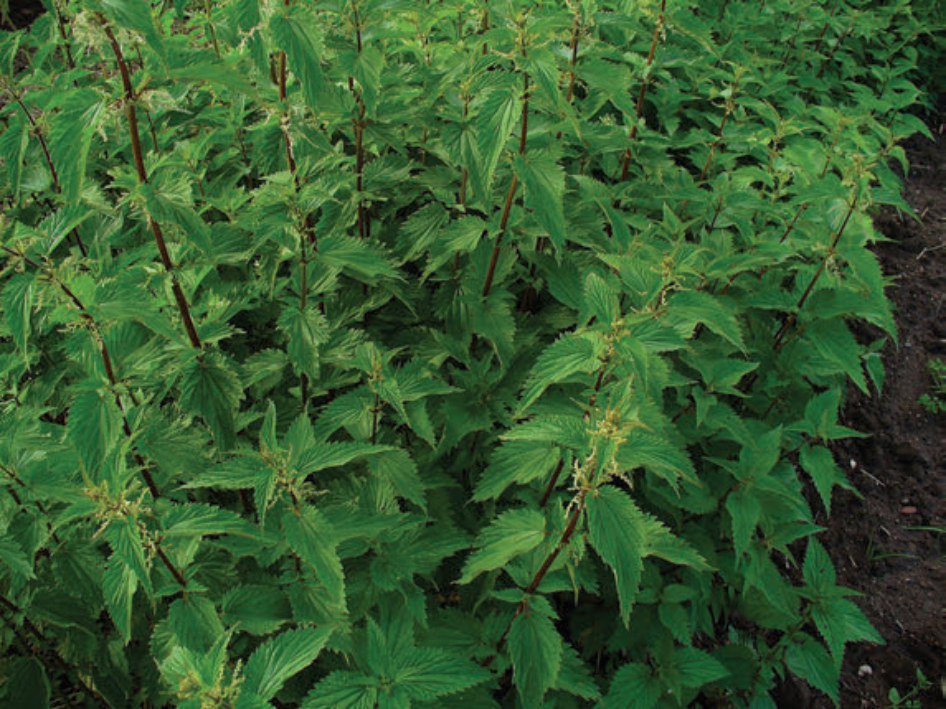
Plant name
dual-action nettle
Latin name
Urtica dioica L
Common names
dual-action nettle
foreign names
Eng. Great nettle, Stinging nettle, Fr. Grande ortie, Ortie dioique
The group
Nettle
Habitat and Geographic Distribution
The genus *Urbanus* is believed to have originated in southern Europe, extending to Siberia, western China, and northwestern Africa, although it is now widespread throughout much of the world.
The *Urbanus* genus includes several species, many of which are found in the Arab region.
The most important of these is *Urbanus pilulifera*, which is only permitted for use as a hair rinse. *Urbanus petite ortie* can be used as food.
Botanical description
cm, Akhdar, the color is milk rhizome and arada.
The market is strong and erect.
150 - A perennial herb, dioecious, cm long, soft, ovate, heart-shaped at the base, pointed and acuminate at the apex, toothed.
15 - The leaves are simple, opposite, stipule-like, with long margins, covered with biting and prickly hairs.
The tip of these hairs is stiff and reddish, quickly becoming brittle when touched, and injecting pungent substances into the skin that cause severe itching.
They are located in a cellular aperture at the base of the leaf.
The flowers are very small, unisexual, found on different plants, gathered in spike-like inflorescences, axillary (emerging from the leaf axils), longer than the segments, reddish in color in female plants and yellow in females.
4).
The calyx is simple, composed of U.
The urens are leaf-like structures (unlike male plants, the male flowers have four stamens).
The ovary is unicornuate, uniovule-like, superior, with a slender stigma.
The fruit is an ovoid acinus embedded in the permanent calyx, containing a single, sandy-colored, flat, and pointed seed, measuring 1 mm in length.
Its pointed end bears remnants of the stigma.
These fruits are typically enclosed by two outer leaves, 0.7 mm in length and 1.5 mm in width, and two smaller, green, inner leaves. Flowering occurs from June to September.
Used part
The flowering plant, including its leaves, fruits, and roots, must be removed from the ground before the flowering period.
If using roots, they must be removed from the ground specifically before the flowering period.
chemical components
The surface of the plant, especially the leaves, is covered with capillary capillaries.
At their bases, there is a liquid composed of many chemical compounds, the most important of which are: formic acid, acetylcholine, serotonin, serotonin, histamine, formic acid, isoquercitrin, and rutin, of which rutin is 0.7-1.8%.
The flowering plant contains flavonoids.
Kaempferol, astragalin, 4-1% silicic acid (and salicylic acid, caffeic acid, malic acid), phenolic compounds (primarily malic and caffeic acids), chlorophyll, minerals (potassium, boron, vitamins A and B), 2-3% volatile ketone, potassium nitrate, citriol, tannins, enzymes, glucoprotein (calcium, iron, sulfate, phosphorus), and glycoproteins.
It also contains sterol compounds, agglutinin, isolectin (a mixture of compounds), 0.1% lectins (the roots contain compounds), campesterol, stigmasterol, beta-sitosterol (sterols), glucogalacturon, glucans, polysaccharides, lignans, and phenolic acids.
The fruits contain aldehydes and scopoletin compounds, as well as phenolic compounds, proteins, mucilage, fatty oils, and carotenoids.
Properties and medical uses
Nettle possesses local anesthetic properties, and its preparations are used to treat rheumatism, arthritis, and gout.
Nettle is anti-inflammatory, antifungal, and antiviral, and its effectiveness in treating urinary tract infections and renal colic has been proven.
Experiments have shown the plant's inhibitory effect on HIV-1 and HIV-2 viruses, as well as the influenza virus.
Studies have demonstrated the diuretic effectiveness of the juice from the green parts, which contains potassium nitrate, scopoletin, beta-sitosterol, and histamine.
The aqueous extract of the roots, containing polysaccharides and agglutinin (lectins), increases urine flow in prostate patients and reduces residual urine.
It is used to treat bladder irritation, inflammation, and benign prostatic hyperplasia (BPH).
Russian doctors claim to have achieved success in treating scrofula and certain types of cancer with nettle tincture.
Tests have also shown nettle's effectiveness in lowering blood sugar and blood pressure.
Nettle contains iron (Fe).
The plant, which is a component of red blood cells, is used to drink its juice in cases of anemia.
It is also beneficial in reducing arteriosclerosis (due to its chlorophyll content) and in stimulating digestive secretions.
The chlorophyll in the plant is an effective antiseptic for wounds.
The plant is traditionally used to treat kidney and gallstones and urinary tract diseases.
A paste made from the plant is used topically as a poultice to treat rheumatism, arthritis, and sprains, and to relieve sciatica pain.
Its powder or tincture is also used topically to stop nosebleeds.
For nasal irritations, burns, wounds, rashes, chronic itchy skin lesions (eczema), and hemorrhoids.
Drug interactions: Nettle increases the effect of the anti-inflammatory drug diclofenac.
Side effects and precautions
Excessive use of stinging nettle may harm the circulatory system.
Stinging nettle should not be used in cases of fluid retention caused by kidney failure. Skin contact with the plant may cause a painful rash.
Other uses
Nettle is used in hair care and strengthening products by eliminating dandruff and reducing oily secretions on the scalp (oily hair).
Nettle is one of the richest plants in Vitamin A and contains many essential minerals for the human body.
The tender green leaves can be cooked and eaten like spinach, made into a delicious soup, or their infusion can be drunk like tea.
They can also be chopped and added to salads, or crushed and juiced.
Nettle fruit is used as a general tonic and helps increase milk production.
Precautions for use: Excessive consumption may cause...
Using stinging nettle can harm the circulatory system.
Stinging nettle should not be used in cases of fluid retention caused by kidney failure. Skin contact with the plant may lead to a painful rash.
the environment
Nettle thrives in neglected lands and abandoned places, near watercourses and irrigation ditches, around houses and roadsides, beside thorny hedges and dividing walls between fields, and in both plains and mountains.
It is a shade-loving plant that prefers moist soil and air.
The plant spreads in most types of soil and prefers calcium (nitrophilic), although it flourishes in nitrogen-rich soils, as foliar spraying is beneficial for this plant.
Agriculture and productivity
Nettle is propagated by seeds, which can be sown year-round, or by rhizomes.
Sowing seeds allows for a greater yield of leaves compared to rhizome propagation, while the latter is better for root development.
Sowing is done in raised beds or long, extended basins, and approximately 4 kg of seeds are needed per hectare.
Seeds formed after the rainy season are characterized by their direct ability to germinate, while those formed after the dry season do not germinate immediately and require an additional period to mature.
Nitrogen fertilization greatly improves plant growth and productivity.
Aloysia citrodora Paláu.
Aloysia triphylla (L’Hér.) Britt., Verbena triphylla L’Hér., Verbena citrodora (Palau) Cav.
Lippia triphylla (L’Hér.) Kuntze., Lippia citriodora Kunth., Zappania citrodora Lam
History and Heritage
The stinging properties of these plants, which secrete a burning and irritating alkaline sap when touched, have been used in medicine for some time now.
Until recently, "stinging" with nettles was a typical folk remedy for gout and arthritis.
Medical note
This information is for educational purposes only and does not constitute medical advice.
Poisonous or potent plants should only be used under the supervision of a qualified physician or pharmacist.
Related images


