White nettle or false nettle | Medicinal plant in the Akhdar Encyclopedia
The plant possesses expectorant properties (due to saponins and phlegm) and astringent properties due to its high tannin content. It is used to treat coughs, bronchitis, stomatitis, laryngitis, and dermatitis. Research indicates that the aqueous extract of the plant's flowering tops contains antivi…
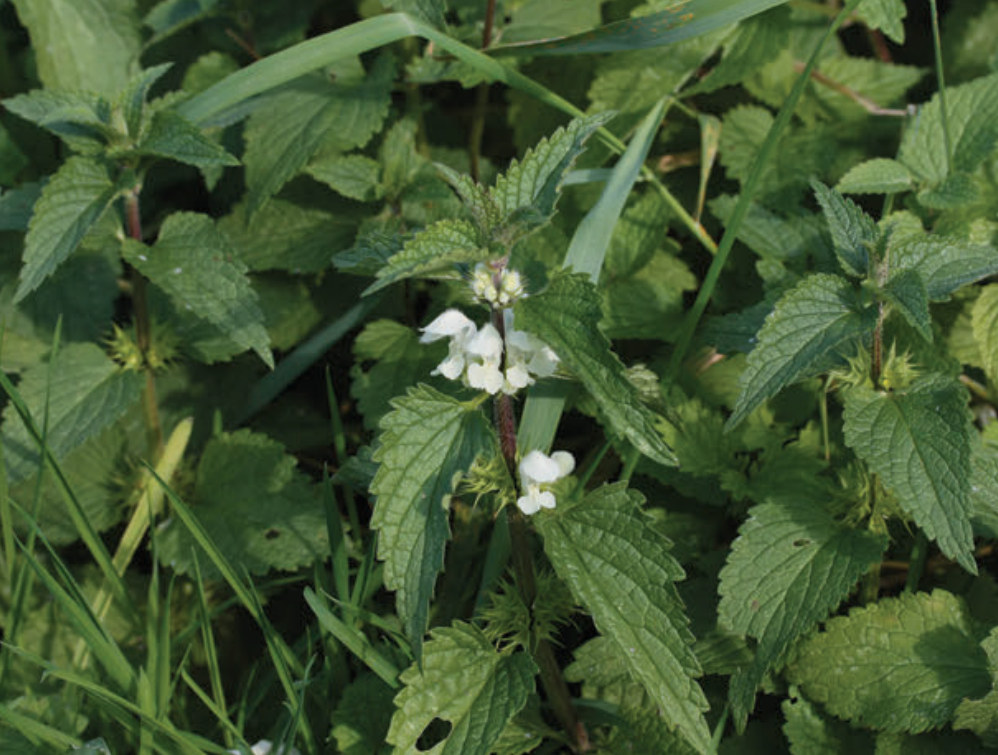
Plant name
White nettle or false nettle
Latin name
Lamium album L
Common names
White nettle or false nettle
foreign names
Eng. White dead nettle, Fr. Lamier blanc
The group
oral
Habitat and Geographic Distribution
Europe and Western Asia, and from there it was introduced to North America
Botanical description
60 cm, perennial - a downy herb with a creeping rhizome from which erect, square-sectioned aerial stems branch out.
The leaves are simple, opposite, petiolate, ovate to heart-shaped, toothed, and pinnate.
The apex is borne on the stem.
The flowers are white, about 16 cm long, in whorls around the stem, each flower forming a cluster.
The calyx is bell-shaped, ending in five equal teeth, and is neutered.
The upper lip is arched, helmet-like, and has a fringed margin.
The corolla tube is prominent and curved.
The stamens are long and in pairs.
The lower lip is flat and trifoliate, although the lateral lobes are reduced.
The male flowers have stamens, triangular, and in pairs short.
The style branches are equal.
The fruit is borne from April to May.
Before flowering, the plant resembles stinging nettle, hence its name white nettle or false nettle.
Used part
flowering plant
chemical components
Caryoptoside, alboside A, B, lamalbide: including iridoide monoterpenes (mono-iron compounds).
Lamiridosins A, B, kaempferol (tertiary saponins).
Valphenoids, including kaempferol.
Tannins and mucilage (acid). Chlorogenic acid and rosmaric acid: including caffeic acid and its derivatives.
Properties and medical uses
The plant possesses expectorant properties (due to saponins and phlegm) and astringent properties due to its high tannin content.
It is used to treat coughs, bronchitis, stomatitis, laryngitis, and dermatitis.
Research indicates that the aqueous extract of the plant's flowering tops contains antiviral iridoid isomerslamiridosins A and B, which inhibit hepatitis C virus infection.
It is used in the treatment of cytotoxicity and for cytoprotective activity.
It prevents menstrual and skeletal muscle disorders and improves lipid metabolism.
The plant is used traditionally to treat upper respiratory tract infections and digestive disorders such as gastritis and flatulence.
It is used topically to treat moderate inflammation of the oral and pharyngeal mucosa and superficial skin infections.
It is also used for menopausal and urinary tract disorders, fractures, hypertension, hemoptysis, paralysis, sepsis, shock, and some gynecological conditions such as menorrhagia, uterine bleeding, vaginitis, cervicitis, and postpartum hemorrhage.
Side effects and precautions
Allergic reactions or drug interactions may occur; self-use should be avoided by pregnant and breastfeeding women, children, and patients with chronic diseases.
Other uses
The young leaves are used in salads or cooked as a vegetable. The plant is nectar-producing and is sometimes called bee nettle.
the environment
This easy-to-grow plant thrives in diverse environments such as open meadows and forests, and is commonly found near homes, ruins, and hedges.
It prefers sunny locations (around 25°C) but can also grow in partial shade.
It tolerates low temperatures and most soil types and environmental conditions, but it prefers moisture and grows well in heavy, fertile clay soils.
Agriculture and productivity
It propagates by seed.
The plant disperses its seeds naturally and rarely needs human assistance after initial planting.
It also propagates by division in the spring and can succeed at any time during the growing season.
The divided plants are planted directly in their permanent location or left until the following spring, by which time they have developed strong roots. Once established, the plant can become a weed. Lavandula angustifolia Mill.
History and Heritage
The scientific name of the genus is derived from the Greek and Latin *lamia*, which comes from *laïmos*, meaning "throat," referring to the shape of the flower's corolla, which resembles an open throat.
The species name *albumen* means "white." The part used is the flowering plant.
Its chemical constituents include alboside, caryoptoside, lamalbide (of which iridoide monoterpenes are iridoide monoterpenes), lamiridosins A, B, A, and B (triterpene saponins), flavonoids (including kaempferol), caffeic acid and its derivatives (including chlorogenic acid), and rosmarinic acid.
Tannins (acid), hydroxycinnamic acid, secoiridoids, anthocyanins, phenylpropanoids, phytoecdysteroids, benzoxazinoids, and betaine.
Medicinal Properties and Uses: The plant possesses expectorant properties (saponins and acid) and astringent properties due to its richness in tannins.
It is used to treat coughs, bronchitis, inflammation of the mouth and throat, and skin inflammations.
Research indicates that the aqueous extract of the flowering tops of the plant contains Containing antiviral compounds iridoid isomerslamiridosins A and B, it inhibits hepatitis C virus infection.
It is used in the treatment of cytotoxicity and cytoprotective activity.
It prevents menstrual and skeletal muscle disorders and improves lipid metabolism.
The plant is used traditionally to treat upper respiratory tract infections and digestive disorders such as gastritis and flatulence.
It is used topically to treat moderate inflammation of the oral and pharyngeal mucosa and superficial skin infections.
It is also used for menopausal and urinary tract disorders, and in the treatment of fractures and hypertension.
Bleeding, paralysis, sepsis, shocks, and some women's diseases such as heavy menstrual bleeding, uterine bleeding, vaginitis and cervicitis, and postpartum hemorrhage
Medical note
This information is for educational purposes only and does not constitute medical advice.
Poisonous or potent plants should only be used under the supervision of a qualified physician or pharmacist.
Related images


