Strawberry | A medicinal plant in the Akhdar encyclopedia
The plant possesses astringent (tannin) and diuretic properties. The leaves and roots are used traditionally to treat diarrhea, especially in children. It is also used as a gargle to treat respiratory tract infections (sore throat, inflammation of the oral mucous membranes and gums), gastrointestin…
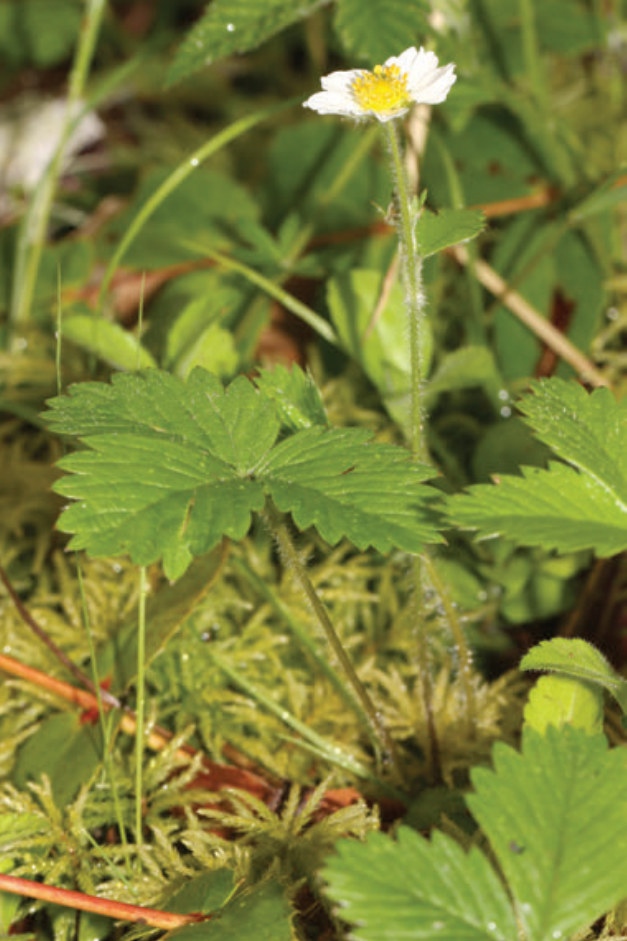
Plant name
Strawberries
Latin name
Fragaria vesca L
Common names
Strawberries, strawberries, slaw, ground strawberries, wild strawberries
foreign names
Eng. Strawberry, Fr. Fraisier
The group
Pink
Habitat and Geographic Distribution
This species is native to North America, extending to Guatemala and Micronesia, and Europe, extending to Siberia.
It grows wild in the forests of southern Europe, North Africa, and the Near East.
It is cultivated in many countries worldwide, either in greenhouses or in open fields, depending on the growing season.
Botanical description
A perennial herb propagated by rhizomes, forming long stalks that give rise to erect stems.
The leaves are basal or 30-leaf-long, leaf-toothed, petiolate, with very long, stem-like petioles.
The stipules are uterine, acuminate, and reddish-brown.
The flowers are hermaphroditic, small, white, and arranged at the ends of dichotomously branched inflorescences.
The calyx has five sepals, triangular, pubescent, and acuminate.
The corolla has five petals, rounded or ovate.
The male is a stamen.
The female is a large number of carpels, 0.8-1.5 mm long, within a fleshy, red receptacle.
These carpels are easily released after pollination, becoming aconites.
The aconites, together with the receptacle, form a false fruit, the length of which varies from cultivar to cultivar. Flowering occurs from April to July.
Used part
The leaves, the market, and the roots.
chemical components
The leaves and stems contain organic acids, including: cinnammic acid (cinnamon), salicylic acid (willow acid), chlorogenic acid (chlorogenic acid), caffeic acid (coffee), quercetin, and flavonoids such as quercetin, rutin (rutosides), ellagic acid (like ellagic acid), and tannins such as catechins, geraniol, agrimonin, and pyridin.
In addition, there are condensed tannins (procyanidins).
The roots contain organic acids (the same components as the leaves, and the same compounds, at 0.9%), including flavonoids such as rutosides and tannins similar to those found in the leaves.
Properties and medical uses
The plant possesses astringent (tannin) and diuretic properties.
The leaves and roots are used traditionally to treat diarrhea, especially in children.
It is also used as a gargle to treat respiratory tract infections (sore throat, inflammation of the oral mucous membranes, and gingivitis), gastrointestinal bleeding, liver diseases, biliary obstruction (Gilbert's disease), urinary tract and kidney diseases, kidney stones, rheumatism, and gout.
It has blood-purifying properties and is used to treat hemorrhoids and high blood pressure.
Blood.
A decoction of the herbaceous parts is used as a nerve relaxant and anti-atherosclerotic agent.
Its leaves have been shown to possess antiseptic, emollient, and protective properties for the skin, and are used as an eyewash and for conjunctivitis.
Studies have shown that strawberry leaf extracts have antioxidant activity. Precautions: It can cause allergic reactions in some individuals.
Side effects and precautions
It can cause allergic reactions in some people.
the environment
Strawberry plants prefer sunny locations and fertile, slightly acidic soils.
They can be grown in various soil types, but the best are light yellow soils that are free of salts and well-drained, as high salinity leads to leaf burn and plant death, and poor drainage also leads to plant deterioration and death.
Agriculture and productivity
Strawberries are propagated by transplanting.
The land is plowed, and organic fertilizer is added during the plowing process.
It is then irrigated to eliminate weeds.
It is recommended to sterilize the soil about 15 days before planting the seedlings.
Fertilizer is added in installments, and the land is irrigated three days before planting, depending on the soil type.
Irrigation should be gentle, taking care not to allow the water to reach the top of the furrow to prevent rotting.
The seedlings are planted in suitable holes, ensuring that the terminal bud is not covered.
The land should be thoroughly irrigated and the soil kept moist, especially during the first two weeks.
Fertilizer should be applied according to the planting schedule and local conditions.
After three weeks of planting, the plants should be sprayed monthly with a foliar fertilizer rich in zinc, manganese, and iron.
(Prunus amygdalus Batsch, Prunus dulcis (Mill.) D.A.Webb., Amygdalus communis L., Amygdalus dulcis Mill., Druparia amygdalus Clairv., Prunus communis (L.) Arcang)
History and Heritage
The name means fragrant, pleasant, or aromatic, referring to the fruit's lovely scent.
The genus name "fraga" is of Latin origin and means nourishing or edible.
"Vescor" means slender, and other sources mention that it belongs to the Latin species *Vesca*.
Medical note
This information is for educational purposes only and does not constitute medical advice.
Poisonous or potent plants should only be used under the supervision of a qualified physician or pharmacist.
Related images


