The hollyhock (Awsat) | A medicinal plant in the Akhdar encyclopedia
The plant is believed to lower blood sugar and stimulate the immune system. The fruit is popularly used for its diuretic and laxative properties, and for being rich in vitamins and minerals. In traditional Chinese medicine, the plant is used to treat diabetes, lumbar weakness, tinnitus, hearing los…
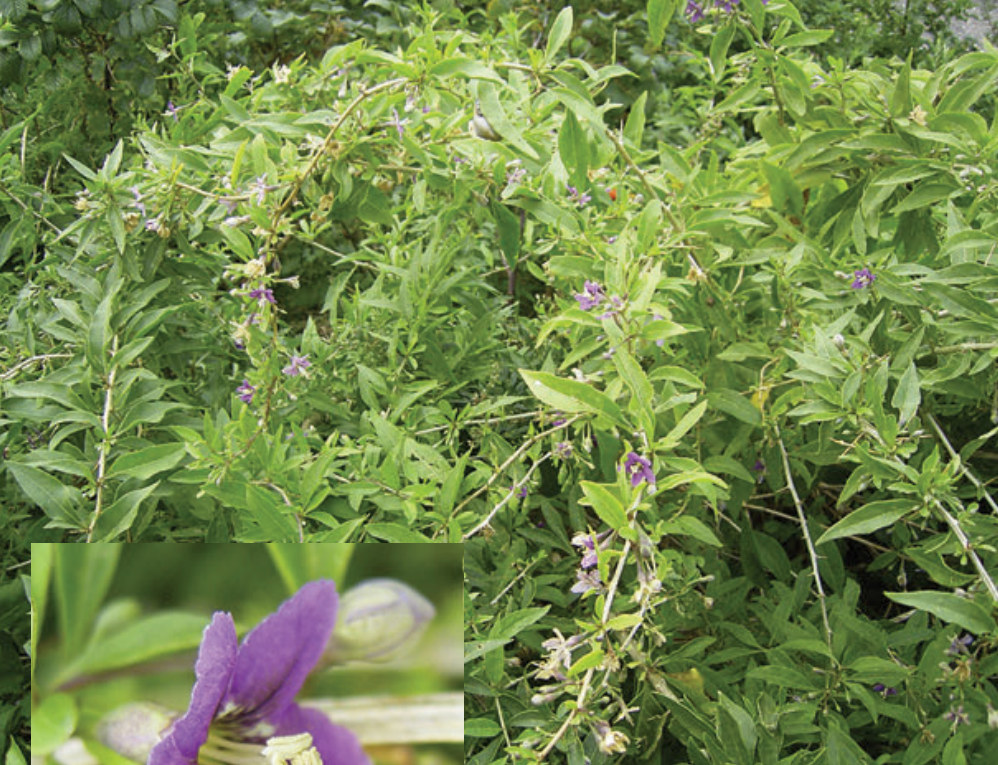
Plant name
Al-Aws J
Latin name
Lycium barbarum L
Common names
Hawthorn, Christ's Crown, European Hawthorn
foreign names
Eng. Fr. Arnivés blanc, Lycium berries, Lyciet
The group
eggplant
Habitat and Geographic Distribution
It grows naturally in China, and while its original habitat is believed to be the Arab world, recent studies suggest it may be native to the Mediterranean region.
It grows naturally throughout the Arab world, including North Africa, and Central and Southwestern Asia, and is widely distributed from Central and Southern Europe to Asia.
Botanical description
M.
2 - 0.8 shrub (or small tree when cultivated), with bare, thorny stems and branches.
Leaves are simple, solitary or in groups, uterine or longitudinal, mm.
Flowers are solitary or in groups.
6 - 3×3 - toothed dimensions.
Corolla is purple, funnel-shaped or 2 mm, semi-labial, lip 5 - cm.
Calyx is bell-shaped, 2 - 6 mm long, spur-length, lobule length mm.
6 - longer than the corolla lobes, lobes are five, flattened, with bare margins, 10 - shaped, tube yellow, oblong or ovate, - male, five stamens, slightly protruding from the corolla.
Fruit is a berry, red or orange mm.
Other species are mm.
Seeds are four to numerous, yellowish-brown in color.
They are about 10 - 5×20 - sized and resemble the previous species in structure and
Used part
fruits
chemical components
Glycoproteins, polysaccharides, and glycoproteins.
It also contains minerals and vitamins, including physalis and carotenoids, such as vitamin C.
Properties and medical uses
The plant is believed to lower blood sugar and boost the immune system.
The fruit is popularly used for its diuretic and laxative properties, and for being rich in vitamins and minerals.
The plant is used in Chinese medicine to treat diabetes, lumbar weakness, tinnitus, hearing loss, vision impairment, excessive tearing, and anemia.
In Indian medicine, it is used to treat anemia, menstrual problems, bleeding hemorrhoids, scabies, and toothache.
All parts of the plant have been used medicinally since ancient times, both as a general tonic and to treat a wide range of ailments, such as skin rashes and vision problems.
The root bark and leaves contain fatty acids and numerous active compounds.
It has positive effects on cancer, antioxidant activity, and enhances immune function and combats fatigue.
It significantly reduces cholesterol and triglyceride levels in the blood and may aid in weight loss and obesity.
Precautions: Do not use the fruit in cases of diarrhea, and do not use during pregnancy.
Side effects and precautions
Allergic reactions or drug interactions may occur; self-use should be avoided by pregnant and breastfeeding women, children, and patients with chronic diseases.
Other uses
The fruit is eaten while it is fresh and soft, with a sweet taste.
It is good for general health and a source of energy.
It is consumed fresh or picked and dried, then eaten cooked or consumed as juice. It is also used to make tea. It is rich in antioxidants and various minerals.
the environment
The plant grows in various types of soil, even poor soils.
It tolerates salinity relatively well, as well as cold, frost, and high temperatures.
Regular irrigation improves its growth.
It grows in arid and relatively humid regions, hilly and mountainous areas, plains, roadsides, and valleys, on poor calcareous soils.
It is also found in loamy, rocky, and silty soils.
It grows along the banks of intermittent streams in agricultural lands to stabilize the stones on the streambanks.
Agriculture and productivity
It is propagated by seeds collected in autumn and sown in a nursery to obtain seedlings.
These seedlings are then transplanted to the field at two years of age, where they are planted in holes 50 cm deep.
Their roots are thoroughly covered with soil and watered.
It is also easily propagated by cuttings planted in late winter or early spring.
(Solanum dulcamara L., Solanum assimile Friv., Solanum dulcamara var. dulcamara, Solanum lyratum Thunb., Lycopersicon dulcamara L.)
History and Heritage
The scientific name of the genus is derived from the Greek word lykion, which was formerly used to refer to a thorny shrub that grew abundantly in the Lycia region of Greece.
The descriptive name of the species barbarum means "barbarian" in reference to the Berber Mountains in North Africa, and it is called the Barbary holly in the Levant.
Holly species have long been used to treat certain diseases; Sumerian sources mention the use of hollyhocks, after drying, as a fumigation treatment for many diseases.
The Greeks also used it, and ancient Islamic sources mention it among the ingredients of some herbal medicines.
Medical note
This information is for educational purposes only and does not constitute medical advice.
Poisonous or potent plants should only be used under the supervision of a qualified physician or pharmacist.
Related images


