Jujube | A medicinal plant in the Akhdar encyclopedia
The juice of the fruit is used for its expectorant properties and is beneficial in treating respiratory diseases, improving the immune system, strengthening muscles, and increasing endurance. Jujube is prescribed as a liver tonic. A decoction of the fruit is used traditionally as a diuretic, a reme…
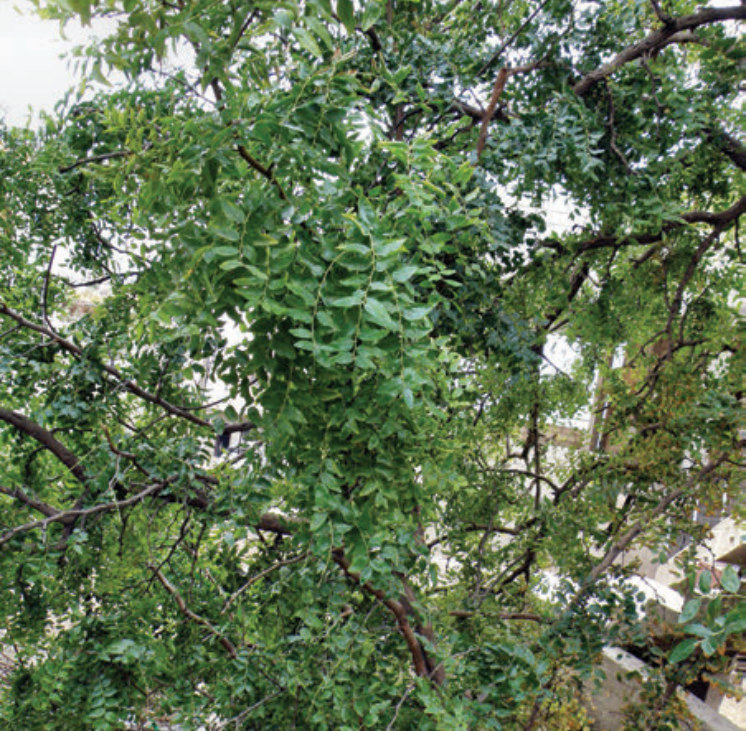
Plant name
jujube
Latin name
Zizyphus jujuba Mill
Common names
jujube
foreign names
Eng. Jujube, Fr. Juveniles
The group
Rosaceae
Habitat and Geographic Distribution
Native to China (northeast China to South Korea), it has been cultivated there for four thousand years.
It is also grown in southwest Asia and many countries in the eastern Mediterranean for its sweet fruit.
Botanical description
The branches are numerous, zigzagging, and angular.
Thorns are absent or present on secondary branches.
The leaves are 6 - shrubby or tree-like, oblong to ellipsoid, toothed, glabrous, simple, alternate, arranged in a semi-scrotal pattern, leathery, ovate.
The inflorescence is 4 - flowers, 5 - cm long.
The flowers are hermaphroditic, clustered in small groups, comprising 3 - tendrils, longer than the calyx.
The calyx is reddish-yellow.
The sepals are five, glabrous.
The petals are five, obovate, and truncated.
The stamens are five.
The ovary is slightly embedded in the disc, but superior.
The fruit is a drupe, edible, with a sweet, mucilaginous taste, ovoid to semi-spherical.
The seeds are slightly compressed, ovoid to semi-spherical, smooth, red, up to 1 - spherical, brown. Flowering occurs from May to June.
Used part
Fruit and bark.
Latin name: Zizyphus jujuba Mill. Z. vulgaris Lam., Z. sativa Gaertn., Rhamnus ziziphus L
chemical components
The fruits also contain minerals such as calcium, saponins, flavonoids, sugars, halogens, vitamins A and B, phosphorus, and iron.
Properties and medical uses
The juice of the jujube fruit is used for its expectorant properties and is beneficial in treating respiratory ailments, improving the immune system, strengthening muscles, and increasing endurance.
Jujube is prescribed as a liver tonic.
A decoction of the fruit is used traditionally as a diuretic, astringent, and to regulate blood acidity, and to treat kidney and bladder pain.
A decoction of the bark is used to treat constipation and urinary disorders.
Jujube possesses a wide range of medicinal properties affecting the nervous and cardiovascular systems, in addition to antioxidant and anticancer properties.
It is used to treat diabetes, skin aging, high cholesterol, and insomnia.
The fruit of the jujube tree (Ziziphus jujuba), commonly known as jujube or Chinese date, is consumed worldwide for its health benefits.
One of the main functions of jujube—as described in herbal medicine—is to improve sleep.
Jujube possesses neuroprotective activities, including protecting nerve cells from neurotoxin stress, stimulating neuronal differentiation, increasing the expression of neurotrophic factors, and enhancing memory and learning.
It is also beneficial in the prevention and treatment of neurological diseases.
Jujube is a medicinal fruit used to treat anemia by stimulating erythropoietin levels resulting from hypoxia, its potential to recycle heme iron during red blood cell breakdown, and its bidirectional regulation of the immune response.
Precautions for use: No side effects of jujube have been reported, even for pregnant women and children.
Side effects and precautions
There are no side effects from jujube, even for pregnant women and children.
the environment
The plant needs a long summer of 20 degrees Celsius.
The jujube tree tolerates high temperatures as well as low temperatures and even sunny conditions to grow.
It prefers deep, moist soils and tolerates alkalinity and drought. It is sometimes planted to stabilize sand dunes.
Agriculture and productivity
It is propagated by seeds, stem cuttings, or suckers.
It bears fruit at 3-4 years of age under suitable conditions.
It is preferable to sow the seeds immediately after collection, while older seeds require prolonged treatment that may take up to six months.
(Crataegus azarolus var.
aronia L., Crataegus aronia (L.) Bosc ex DC., C.
chrysoclada Gand., Azarolus crataegoides var.
dulcis M.
Roem., Azarolus maroccana M. Roem., Crataegus aronia (L.) Bosc ex DC., Fragaria vesca L.)
History and Heritage
It is a popular name for any edible fruit, zizafun, which is of Persian origin, ziziphon, from the Greek ziziphus.
The genus name is believed to be a colloquial name for the plant in its native habitat, jujuba.
This species is the jujube cultivated for its fruit.
The descriptive name for the species is [year missing].
The plant has been known for its nutritional, medicinal, and cosmetic benefits, and has been used in Chinese medicine for a longer time than ancient peoples.
It is said that the Roman soldiers who were in Jerusalem during the time of Jesus Christ made a crown from jujube thorns and placed it on his head.
They would surround their camps with it to prevent people from approaching them to avoid its thorns.
The Arabs knew of the jujube before Islam, and it was mentioned in their pre-Islamic poetry.
Ancient Arab physicians spoke about the jujube and its benefits.
It was introduced to America via Europe.
Al-Antaki and Ibn Sina mentioned it in the book "The Canon of Medicine." It was introduced to America [year missing].
Medical note
This information is for educational purposes only and does not constitute medical advice.
Poisonous or potent plants should only be used under the supervision of a qualified physician or pharmacist.
Related images


