Fragrant | A medicinal plant in the Akhdar encyclopedia
The drug possesses properties that relieve nervous tension, are antidepressant, anti-inflammatory, antibacterial, antitumor, antioxidant, stimulate the secretion of steroid hormones, lower blood sugar, and promote wound healing. The plant is used to treat depression, psychological disorders, anxiet…
Plant name
fragrant
Latin name
Pelargonium odoratissimum (L.) L'Hér
Common names
Fragrant, scented, fragrant, aromatic, myrtle
foreign names
Eng. Apple geranium, Fr. Scented pelargonium
The group
Geranioc
Habitat and Geographic Distribution
It originated in South Africa, and its cultivation has spread to many countries around the world (an ornamental houseplant).
Botanical description
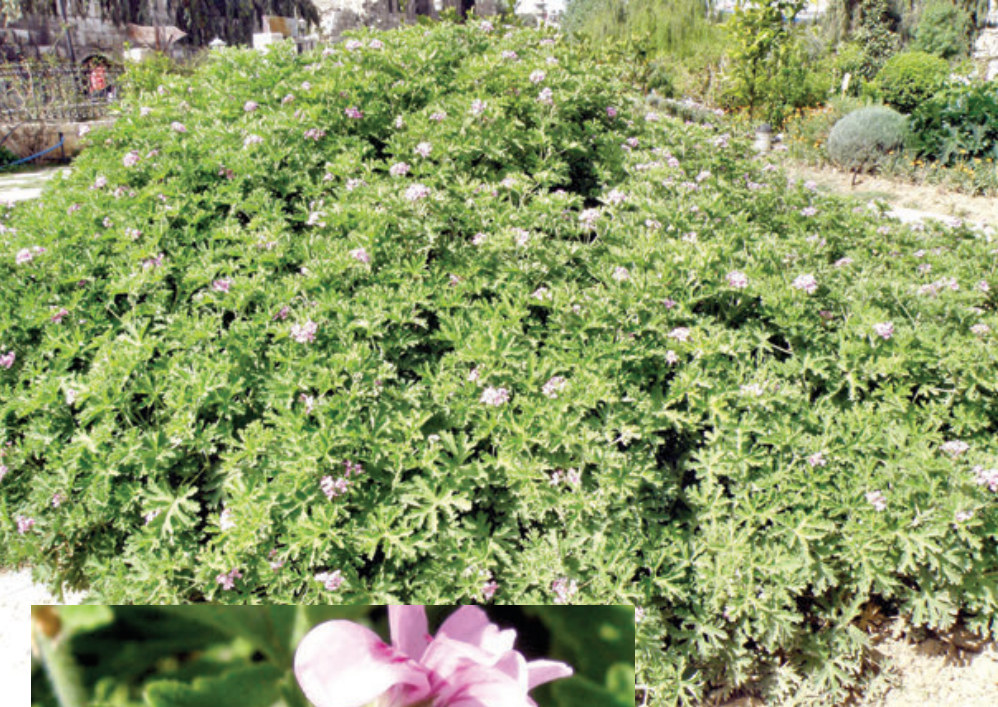
An evergreen shrub, thick and dense.
The leaves are 80 cm long, branched, alternate, thick, bright green, palmate, with a distinctive aromatic scent, and stipule-like.
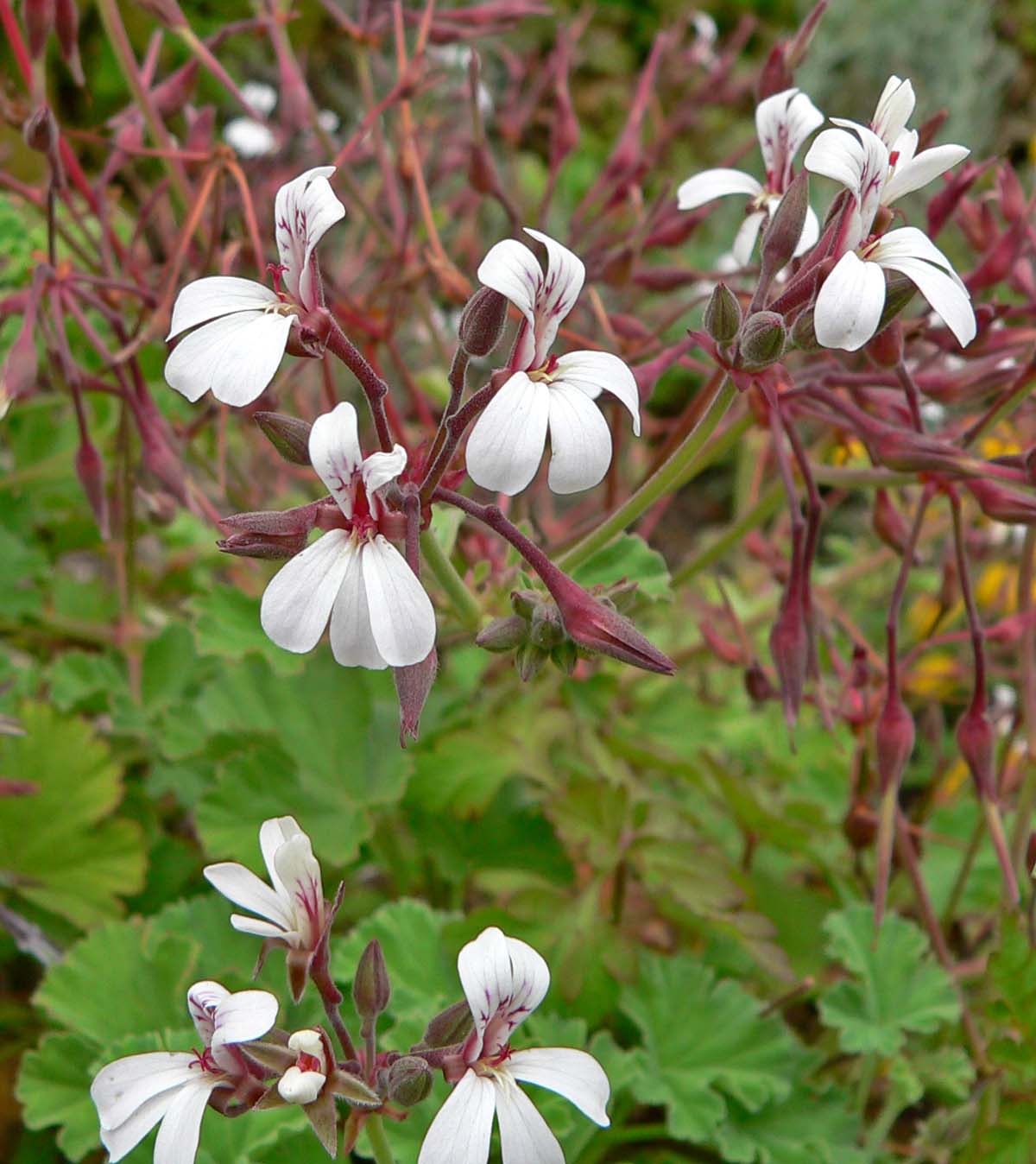
The flowers are hermaphroditic, pseudo-diploid, and arranged in free, cymose inflorescences.
The calyx is pteridophytic, hairy, and stoichiomatous.
The corolla consists of free, pink stamens.
The male is a carpel, located in a umbel.
The female has elongated tips to form a central column, which separates at maturity to form the long beak of the fruit.
The ovary is superior, ending in five free, linear stigmas.
The fruit is a monoecious carpel, which separates from the base towards the apex.
The fruit is a drupe composed of the inflorescence, which develops from April to June.
Used part
The aerial parts, especially the flowering tops
chemical components
Serotonilol 70% - its main component is geraniol 3% - the plant, especially its leaves, contains volatile oil and linalool
Properties and medical uses
The drug has properties that relieve nervous tension, are antidepressant, anti-inflammatory, antibacterial, antitumor, antioxidant, stimulate the secretion of steroid hormones, lower blood sugar, and heal wounds.
The plant is used to treat depression, psychological disorders, anxiety (tension), fear, and lack of concentration.
It is also used topically to treat dermatitis, suppurating wounds, and burns, and in the treatment of HIV and in phototherapy for psoriasis (raised, scaly patches) and warts.
The remedy is used traditionally to treat insomnia, mild to moderate depression, bronchitis, asthma, jaundice, gastritis and gastric ulcers, kidney disease, gout, rheumatism, bedwetting, burns and wounds, bleeding, insect bites, scabies, and hypothyroidism.
The main antibacterial component is hyperforin, which inhibits the growth of all types of Gram-positive bacteria but not Gram-negative bacteria.
Experiments have confirmed that methicillin-resistant Staphylococcus aureus (MRSA) and penicillin-resistant Staphylococcus aureus (PRSA), which were previously resistant to many types of penicillin and ofloxacin, are highly sensitive to hyperforin.
Clindamycin, erythromycin, cephalosporins, and gentamicin are among the compounds found in this plant.
Studies have also indicated that the flavonoid- and catechin-containing components are effective against the influenza virus.
The plant possesses anticancer properties; the compound hyperforin inhibits cancer cell growth in vitro.
The mechanism involves inducing apoptosis by activating caspases, cysteine proteases.
Hyperforin also induces cytochrome C release from isolated mitochondria.
It inhibits the growth of tumor cells, including gliomas, neuroblastomas, adenomas, mesotheliomas, melanomas, carcinomas, sarcomas, and leukemias.
Recent research shows that plant extracts reduce oxidative stress, thereby preventing neurotoxicity, inflammation, and gastrointestinal problems.
Flavonoid-rich extracts are effective against hydrogen peroxide-induced apoptosis in PC12 cells, a tumor-derived cell line.
Pheochromocytoma was found in the adrenal medulla of rats.
Extracts can inhibit DNA fragmentation and cell shrinkage resulting from hydrogen peroxide activity.
Extracts rich in flavonoids effectively treat neurodegenerative disorders associated with oxidative stress, such as Parkinson's and Alzheimer's diseases.
The plant has shown promising anti-inflammatory properties.
Rats given doses of plant extracts exhibited reduced levels of blood and intestinal enzymes associated with colitis and a lower incidence of gastric ulcers.
Lipophilic extracts were found to have greater anti-inflammatory activity than ethyl or alcoholic aqueous extracts.
Quercetin and the I3,II8-biapigenin bis-isotropic compound demonstrated anti-inflammatory and gastrointestinal protective activity.
pharmaceutical forms
St.
John's wort is available in sublingual capsules, creams, and liquid tinctures, and is sold under names such as Hypericalm, Hypericum, Kira, Mood Support, and St. John's wort. Side effects, interactions, and
Side effects and precautions
The drug can cause allergic reactions, constipation, dizziness, dry mouth, anxiety, photosensitivity, stomach upset, and sleep problems.
It should be avoided when using this drug with alcohol or other medications that slow the nervous system, such as cold, allergy, and flu medications, decongestants, narcotic or sedative pain relievers, amphetamines, and antidepressants called selective serotonin reuptake inhibitors (SSRIs) and tricyclic antidepressants.
The drug should be avoided in cases of allergic reactions, and its use should be avoided by pregnant and breastfeeding women.
When using this plant, avoid foods and drinks containing tyramine, such as wine, beer, aged cheese, chicken liver, chocolate, bananas, and meat tenderizers.
Avoid sun exposure, and verify the source before purchasing this plant, as its quality varies between producers.
High doses may cause photosynthesis in susceptible individuals.
Researchers have no information on Is this plant safe and effective for human use? Consult a doctor if any potential side effects appear, such as allergic reactions or skin irritation from contact with the plant. This plant should be avoided by pregnant or breastfeeding women.
Other uses
An insecticide (it can be used as a natural insecticide in gardens), its essential oil is used in the perfume and cosmetics industry (to prepare tablets and creams).
Its fresh leaves are added to Damascene (Syrian) cuisine when preparing rice pudding with starch to give it a fragrant flavor.
the environment
This plant thrives in semi-arid, semi-humid, and humid bioclimatic zones with moderate and warm climates, and even in freshwater climates if protected from frost.
It grows in various soil types, including sandy and clay soils with high calcium carbonate content, but it does not tolerate waterlogging or salinity.
Agriculture and productivity
The plant is propagated by seeds and division.
It is also propagated by terminal cuttings without hormonal treatment during spring and until mid-summer. The tender parts of the plant are harvested after 50% of the plant has opened.
History and Heritage
The genus name Hypericum is derived from the Greek words hypo, meaning "close" or "similar," and ereike, meaning "heather," thus referring to a plant similar to heather.
The species name perforatum refers to the characteristic perforated leaf.
The plant's English name, St.
John's wort, comes from the Knights of St.
John of Jerusalem, who used it to treat wounds on the battlefield.
Ancient Egyptians used it to treat various ailments, calling it "balm for wounds." The Greeks and Romans also used it, and it was popularly believed to ward off evil spirits, leading to the common practice of hanging a bunch of the plant on doorways.
It was used as a diuretic, to treat menstrual disorders, intestinal worms, and snakebites.
It was also used to relieve pain, anxiety, depression, water retention, and gastritis.
Extracts of the plant are used to treat sores, wounds, and minor burns, especially those involving nerve damage.
Medical note
This information is for educational purposes only and does not constitute medical advice.
Poisonous or potent plants should only be used under the supervision of a qualified physician or pharmacist.
Related images