Juniper (Panicum) | Medicinal Plant in the Akhdar Encyclopedia
Cadbury oil possesses antioxidant, antiseptic, antimicrobial, antiparasitic, and wound-healing properties. It is an ingredient in topical preparations used to treat hemorrhoids, wounds, and dermatitis, such as eczema, ulcers, chronic eczema, acne, and psoriasis. Research has demonstrated the proper…
Plant name
Juniper pandanus
Latin name
Juniperus oxycedrus L
Common names
Juniper, Pandanus, Juniper, Prickly Juniper, Prickly Cedar
foreign names
Eng. Prickly juniper, Fr. Genievre
The group
Cypress
Habitat and Geographic Distribution
Native to the Mediterranean, southern East Asia, and southern Europe, caddisflying in the forests of the eastern Mediterranean basin as a mountain shrub from Syria and Lebanon to North Africa.
The parts used are the fruits, leaves, and caddisfly oil.
Caddisfly oil is a thick, dark brown liquid with a strong odor and a pungent, bitter taste.
It is extracted from the wood of the caddisfly tree using dry distillation, and the remaining asphaltic residue is discarded. The term "tar" refers to the tar itself.
Botanical description
Dioecious trees or shrubs, reaching up to [number] meters in height.
Young branches are irregularly triangularly crossed.
The bark of the stem is rough and grayish-brown.
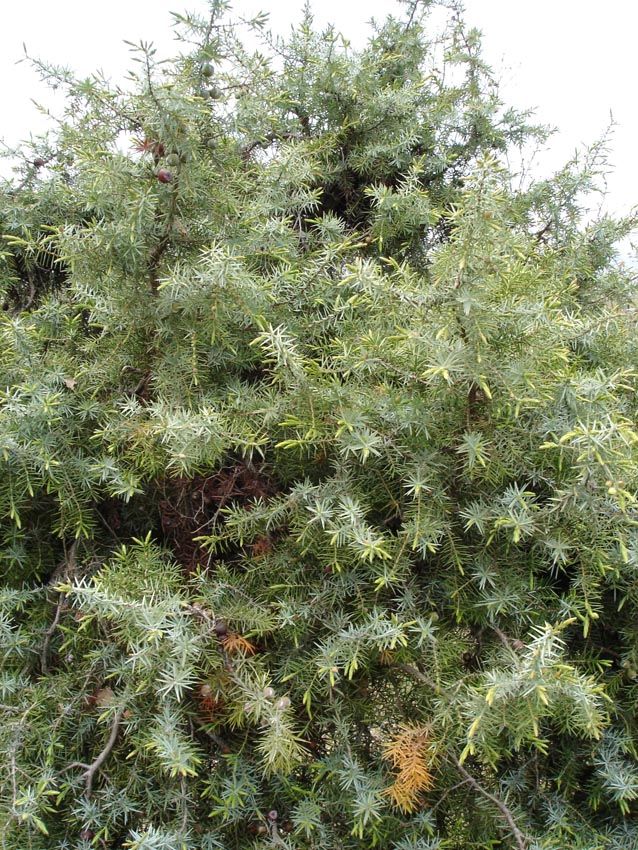
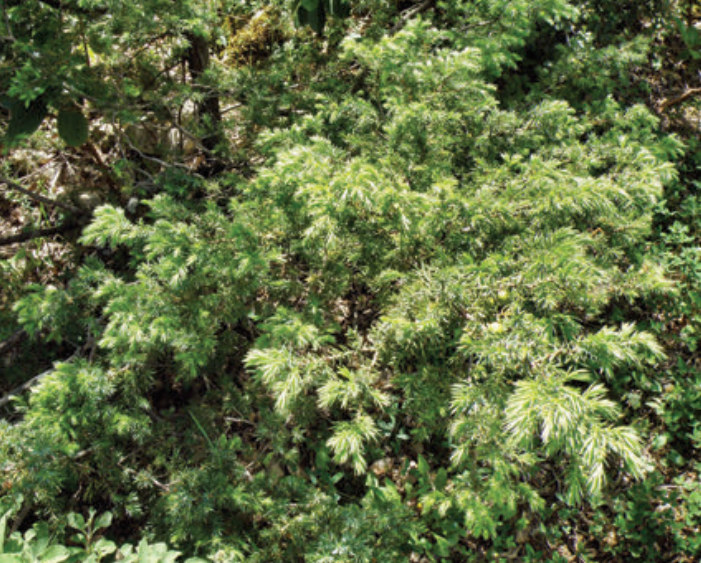
The leaves are pinnate, semi-inflected, 2-2 mm long, green, and broad: bluish, stiff, fused every third, and distinguished by two white lines on the upper surface.
The male cones are solitary, semi-spherical, or ovate.
The female cones are brown to brown, 10-3 mm long, reddish-brown when mature, and spherical in diameter.
The fruit is covered by a 3-6 mm layer of scales (rarely 3-3 mm), which are lightly slender and bluish in color. The seeds mature in the following year. Flowering occurs from March to April.
Used part
The part used varies depending on the type and preparation; a reliable or competent reference should be consulted before use.
chemical components
The plant parts contain resins, volatile oils, flavonoid glycosides, tannins, organic acids, and other compounds...
acetic acid, pyroligneous acid: terpenes, 12% guaiacol, the most important of which is guaiacol; 17-26%: mainly composed of phenolic compounds; Cadbury oil and terpene alcohols: 5% α-muurolene, 9% cis-thujopsene, 14.5% δ-cadinene, sesquiterpenes, the most important of which are cadinene, cardinol, cresol; tar: mainly composed of cadinene, guaiacol, cresol, 19% β-myrcene, 27% α-pinene.
The fruits contain a volatile oil, the most important components of which are alpha-germacrene, 2.2% δ-cadinene.
Cadenine (7%), limonene (7%), α-phellandrene (7%), and α-pinene (57-40%).
The leaves contain a volatile oil composed mainly of monomeric compounds: α-sabinic acid. In addition, there is 10-5% manoyl oxide.
Properties and medical uses
Cadbury oil possesses antioxidant, antiseptic, antimicrobial, antiparasitic, and wound-healing properties.
It is an ingredient in topical preparations used to treat hemorrhoids, wounds, and dermatitis, such as eczema, ulcers, chronic eczema, acne, and psoriasis.
Research has demonstrated the anti-inflammatory properties of the leaves (essential oil).
Side effects and precautions
The use of senna oil or its fruit is not recommended for pregnant women or those suffering from intestinal inflammation or kidney problems, due to the presence of compounds in the oil and fruit that can be harmful to the kidneys and urinary tract if used in excessive doses and for prolonged periods.
Other uses
Cadbury oil is used in the manufacture of perfumes, soaps, and shampoos designed for scalp care, hair strengthening, preventing hair loss, and eliminating scalp dandruff.
In some countries, the fruit is ground into a powder that is used as a coffee substitute.
the environment
It is a light-loving species, tolerant of drabness and adapted to the mountain environment.
It lives on various types of soils, even dry and surface soils, with a preference for non-calcareous soils.
Agriculture and productivity
Common juniper is propagated by seeds, which require alternating hot and cold water treatment to develop.
History and Heritage
The name cedrus means "sharp" due to its sharp leaves, and the suffix "oxy" comes from the Greek word oxycedrus, meaning "prickly cedar." The plant was historically valued for its burning, believed to ward off evil spirits and repel lice and fleas. Its Latin name is Juniperus oxycedrus L.
Medical note
This information is for educational purposes only and does not constitute medical advice.
Poisonous or potent plants should only be used under the supervision of a qualified physician or pharmacist.
Related images