Oats | A medicinal plant in the Akhdar encyclopedia
Oats are an important source of dietary fiber, which helps reduce the risk of heart disease and constipation after surgery. They also aid in the healing of skin irritations. Oat preparations (the aerial part) are used to treat chronic neurosis, anxiety, tension, neurasthenia, symptoms of aging, kid…
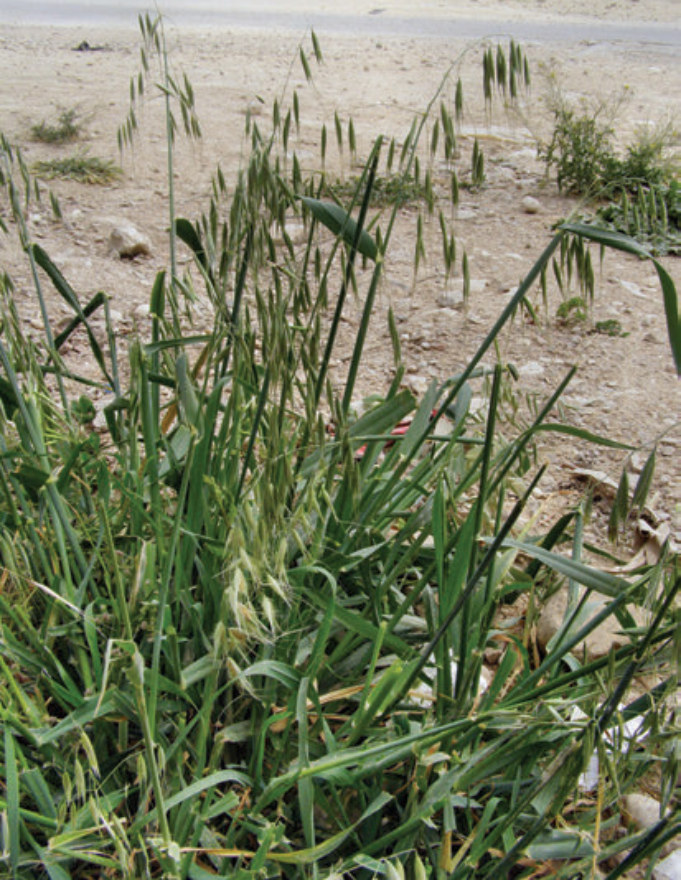
Plant name
oats
Latin name
Avena sativa L
Common names
Oats, khattal, saboul, zewan, zemri
foreign names
Eng. Oats, Fr. Avoine
The group
kidney
Habitat and Geographic Distribution
Oats have been known since ancient times in northwestern Europe, and their cultivation later spread to Russia, Turkey, the Levant, and the United States.
Oat grains have been found in various locations in Switzerland, Germany, Denmark, and France, dating back 2000 years BC.
Oats were also cultivated in Egypt and India.
Cultivated oats emerged from the hybridization of wild oat species such as *A.
fatua*, *A.
barbata*, and *A.
sterilis*, which have a wide global distribution due to their extensive adaptation to various conditions.
Botanical description
100 cm - A perennial herb, densely cultivated.
The stem is erect, smooth, glabrous, and unbranched.
The leaves are linear, alternate, narrow, sheath-like, arranged in two rows, with short, ovate, and toothed lobes.
The leaf length is approximately 4 mm.
The spikelets are gathered in racemes, drooping at the end of flowering.
Each spikelet contains 12 to 7 flowers, 15 cm wide and 45 mm long. The fruit is an oblong, hairy capsule. Flowering occurs from April to May.
Used part
Aerial parts (harvested before full flowering), fresh or dried grass, and the fruit.
chemical components
Newkestose and kestose.
The herb contains sugars including: common sugar (7% sucrose), kestose, silicic acid, lactorabinoxylans, beta-glucans, avenacosides (including avenacosides), steroid saponins, tricinglycosides, vitexin, isovitexin, apigenin, and flavonoids.
The fruits (the herb) contain sugars, the most important of which are beta-glucans, gramine, amines (including gramine), avenalin, avenin, and avenini, glyadin, proteins (including gliadin), alpgia, avenothionine, and avenothionine, and peptides (similar to those found in the herb).
Steroidal saponins. B. Starch, fixed oil, and a group of vitamins, including beta-sitosterol.
Properties and medical uses
Oats are an important source of dietary fiber, which helps reduce the risk of heart disease and constipation after surgery.
They also help heal skin irritations.
Oat preparations (the aerial part) are used to treat chronic neurosis, anxiety, tension, neurasthenia, and symptoms of aging.
They are also used to treat kidney problems, bladder weakness, gout, and withdrawal symptoms resulting from cessation of tobacco use and rheumatism.
Oat grains possess cholesterol-lowering properties and inhibit prostaglandin formation.
The ability of oat grains to lower cholesterol is believed to be due to the presence of polysaccharides, particularly beta-glucans.
The grains are used to treat digestive and gallbladder disorders, minor and chronic heart conditions, constipation and diarrhea, diabetes, muscle fatigue, rheumatism, and chest and throat ailments.
Barley bran is used topically (in water baths) to treat skin inflammations, especially those accompanied by itching.
It is also used for bladder disorders, rheumatism, gout, impetigo, eye complaints, and as a digestive aid.
Additionally, it is used for influenza and coughs.
The grains are traditionally used to treat gastrointestinal diseases, nervous and physical exhaustion, and rheumatic conditions.
It acts as a diuretic and regulates bowel movements (in cases of constipation and diarrhea), and helps lower blood sugar and cholesterol.
It is also used in the production of furfural (a solvent used in the refining of vegetable oils and as a solvent for removing dyes).
Food products made from oat kernels are high in nutritional value, easily digestible, and of great importance to those suffering from infectious diseases.
pharmaceutical forms
Oats are available in tablet, grain, bar, soap, tea, halves, powder, bath lotions, and washes (such as Oats and Honey, Aveeno oilated bath, Aveeno cleansing, and Aveeno colloidal), and are sold under names like lotions. Other uses: It is an ingredient in some cosmetic products.
Side effects and precautions
Oat products may cause persistent bowel movements, bloating, and irritation around the genitals or buttocks.
When consuming oats, drink plenty of water to regulate bowel movements.
Avoid using them if you have celiac disease, as they contain gluten.
Caution should be exercised when bathing with colloidal oat products because they can irritate the inflamed skin surface. Avoid contact with the eyes or eyes.
the environment
Its seedlings tolerate temperatures of 3°C - Oat cultivation thrives in temperate and humid regions.
Its seeds begin to germinate at temperatures that are very dangerous during flowering, and the plant has low tolerance to spring frosts, while summer temperatures are relatively low.
Oats tolerate poor soil types and those with a tendency towards acidity, as well as high lime content, but not high salinity.
Agriculture and productivity
It is propagated by seeds, which are preferably large in size; therefore, it is recommended to collect
History and Heritage
Oat is a common word to refer to this genus.
The scientific name for the genus is the ancient altinoid of cultivated oats.
Avena sativa dates back to 1500 BC, and Roman writers noted its use in medicine.
Oats were known in Europe before 1500 AD, and John Gerard noted that Indians used a poultice made from the stem, leaves, and seeds to treat smoking addiction.
Researchers have also mentioned oats as beneficial for skin diseases (itching, leprosy).
Medical note
This information is for educational purposes only and does not constitute medical advice.
Poisonous or potent plants should only be used under the supervision of a qualified physician or pharmacist.
Related images


