Evergreen cypress | Medicinal plant in the Akhdar encyclopedia
The essential oil possesses antiseptic, antispasmodic, and vasoconstrictive properties. The female cones have astringent properties due to their tannin content and are used internally in the form of aqueous extracts to treat diarrhea. They are also used topically in the form of ointments or baths f…
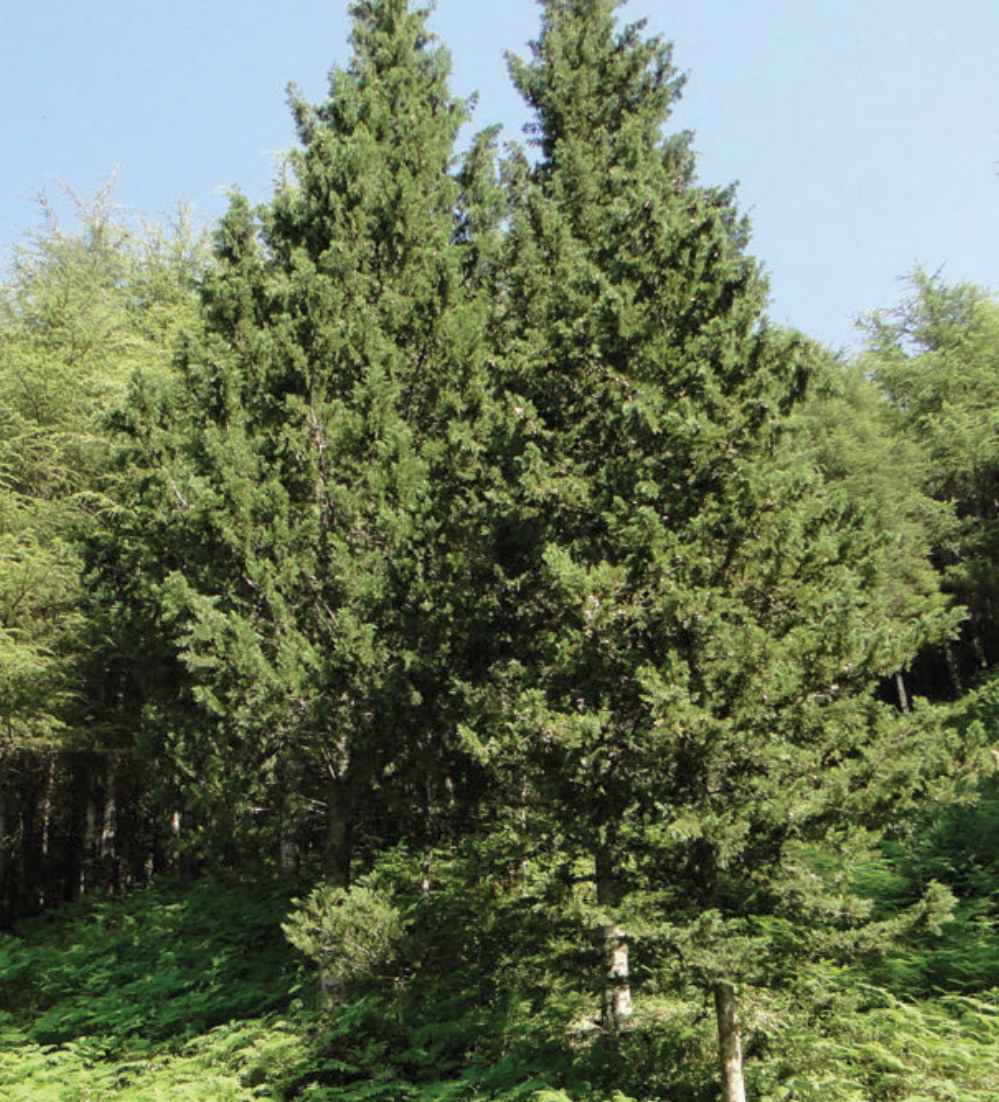
Plant name
evergreen cypress
Latin name
Cupressus sempervirens L
Common names
evergreen cypress
foreign names
Eng. Cypress, Fr. Cyprès
The group
Cypress
Habitat and Geographic Distribution
The eastern Mediterranean and southwestern Asia Minor regions, from where it spread to other countries to occupy areas much wider than its natural range, naturally occurring in Iran, Turkey, Syria, Lebanon, Jordan, Cyprus, Greece, Italy, Libya, Tunisia, and Morocco.
Botanical description
The branches are very dense, erect, or spreading.
The trunk can reach a diameter of about 30 cm.
It is an evergreen tree with horizontal spreading.
The leaves are scale-like, cross-shaped, triangular, convex, and often have a recessed resin gland at the back.
The flowers are unisexual and monoecious.
The male flowers are gathered in small inflorescences that develop at the ends of branches.
The female flowers are gathered in spherical inflorescences about 14 cm in diameter, composed of 3 mm scales.
The seeds have a wing-like margin and mature within a year after pollination. Flowering occurs from March to May.
Used part
The female cones (collected before full maturity) and the young, leafy branches. The essential oil extracted from them.
chemical components
The female cones and young, leafy terminal branches contain a volatile essential oil composed mainly of cedrol, cadinene, p-cymene, silvestrene, camphene, alpha-pinene (terpene hydrocarbons and alcohols, the most important of which are valvone and 5-3%). It also contains tannins (cedrol, cedrol, furfurol, and furfurol alcohols).
Properties and medical uses
The essential oil possesses antiseptic, antispasmodic, and vasoconstrictive properties.
The female cones have astringent properties due to their tannin content and are used internally in the form of aqueous extracts to treat diarrhea.
They are also used topically in the form of ointments or baths for uterine bleeding, hemorrhoids, HSV-1, and varicose veins.
Alcoholic extracts of the female cones also have antiviral effects (against the herpes simplex virus).
A decoction of the cones is popularly used as an expectorant, to treat coughs, bronchitis, and colds, and as a vermifuge.
A foot bath infused with the cones is also beneficial for cleansing the feet and combating excessive sweating.
Side effects and precautions
Using it in high doses can cause kidney irritation.
Other uses
The essential oil is used in the manufacture of perfumes, soaps, and detergents, giving them their distinctive fragrance.
The wood, being very hard, is used in the manufacture of cabinets and wardrobes because it retains its scent, repels moths, and is resistant to woodworms. It is also used in the manufacture of frames for sieves and winnowing forks.
the environment
Cypress trees are found in several bioclimatic zones, from semi-humid to semi-arid and upper arid.
They are tolerant of low temperatures and high winds, making them desirable for hedges and windbreaks.
They are also adaptable to varying rainfall patterns and are widespread in Mediterranean countries, with varying annual rainfall amounts.
They are found on brown soils formed from marl and on limestone soils (1300-200 mm of marl rainfall), which are calcareous clay soils.
They can also grow on sandy soils formed from sandstone.
They can survive on shallow, poorly drained soils but do not tolerate salinity or waterlogged conditions.
Agriculture and productivity
Cypress trees are propagated by winged seeds sown in nursery bags in the fall, at a rate of three seeds per bag.
After germination, the seedlings are thinned and selected, leaving one seedling per bag.
These are then transplanted to their permanent location after a year, planted at spacings that vary depending on the planting purpose, and provided with the necessary care, including watering, fertilization, and pest control.
(Juniperus communis L., Juniperus borealis Salisb., Juniperus communis subsp.
eucommunis Syme, Juniperus communis var. vulgaris Aiton, Juniperus vulgaris Bubani, Cupressaceae)
History and Heritage
The Arabic name for the genus "7rsu" is derived from the Sumerian name Cupressus, meaning "evergreen" in Latin.
The ancient tree, known as sempervirens, was considered by the Romans to be a symbol of fertility.
The ancient Greeks used it to treat certain ailments such as dysentery, asthma, and coughs.
The cypress was considered a funerary tree by the ancient Romans and was often planted in their tombs. It was mentioned by Dioscorides, Ibn al-Baytar, Ibn Sina, and al-Antaki.
Medical note
This information is for educational purposes only and does not constitute medical advice.
Poisonous or potent plants should only be used under the supervision of a qualified physician or pharmacist.
Related images


