Linden | A medicinal plant in the Akhdar encyclopedia
The flowering plant is used to treat diarrhea and digestive disorders (it has digestive and carminative properties). The oil possesses beneficial properties in treating nervous exhaustion (anti-stress), in addition to its diaphoretic, expectorant, antibacterial, and antioxidant properties. It is us…
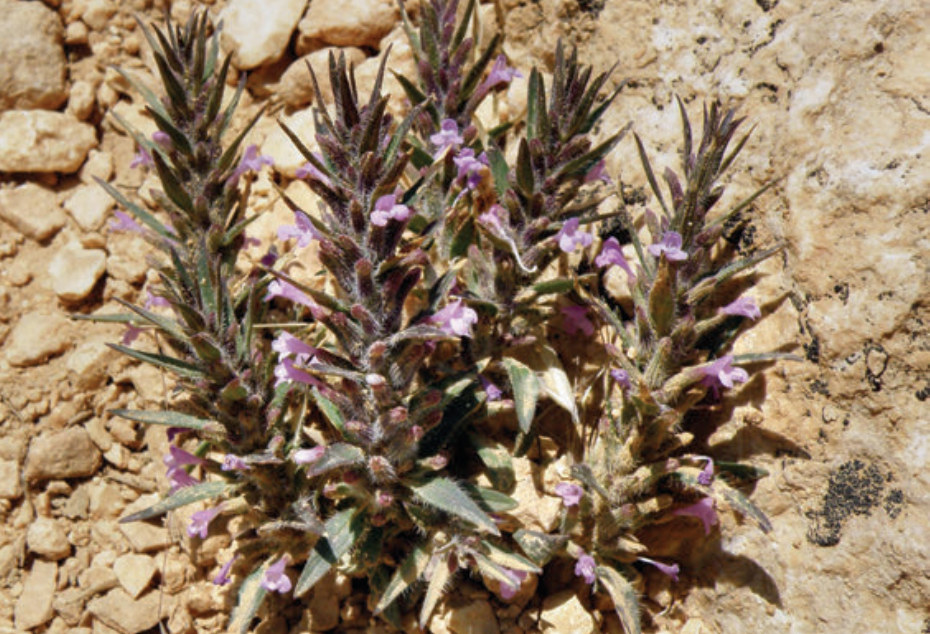
Plant name
linden
Latin name
Ziziphora tenuior L
Common names
Lime, mint
foreign names
Eng. Spear-leaved ziziphora, Fr.La ziziphora
The group
oral
Habitat and Geographic Distribution
Iranian-Turani
Botanical description
cm, covered with grayish down.
The stem is slender, simple or branching from the base, and the branches are 15 - a biennial herb, ranging in length from 1 mm, brown, few in number and spaced apart at the base, 20-4x7-1, erect or ascending.
The leaves are simple, entire, rough, their (sterile) dimensions from the stem, elliptical to ovate, gradually tapering at the base.
The flowering leaves are more numerous and closely packed, uterine to linear in shape, acutely apex, fringed margin, prominently venous, and exceed the flowers in length.
They are erect (semi-subsidiary, 10-12 mm) to varying degrees, bearing glands that are not clearly visible.
The flowers are hermaphroditic, bilaterally symmetrical, small, supported by some leaves, and together they form an elongated, semi-spis inflorescence.
They are gathered in small, sparsely flowered carpels, covered with flat hairs and glands.
The calyx is tubular, narrow, five-toothed, and triangular in dimensions.
The corolla is five-petaled, pink (rarely white), bilipped, and the tube is not prominent.
The teeth are short, ovate except for a small part.
The upper lip is erect, the lower lip is flat, and the trilobed lobe is slightly larger than the two lateral lobes.
The male is composed of Two fertile stamens are embedded in the corolla, bearing true anthers resembling a ball-shaped ridge.
The female is bicarpele, bistomous, divided by a false septum into four locules, each containing one ovule.
The fruit is an ovoid, smooth zygote.
Flowering occurs from March to May.
Z.
capitata is one of several species found in the Mediterranean region, similar in their popular usage, such as Z. canescens and Z. tenuior.
Used part
The flowering plant (which has a strong aromatic scent) contains the following chemical constituents: iso-, thymol, and Pulegone (85%).
All parts of the plant contain 2% volatile oil rich in terpene compounds: myrcene, pinene, p-menth-3-en-8-ol, limonene, and menthone.
Only three monoterpene compounds and one and a half oxygenated sesquiterpenes have been identified in the oil as minor components: caryophyllene oxide, spatholinol, ferridifluorol, and mannol diterpene. The plant also contains traces of tannins and flavones.
chemical components
All parts of the plant contain volatile oil (thymol, 85% Pulegone) rich in terpene compounds.
It contains limonene, pinene, myrcene, and isomenthone. The plant also contains traces of tannins and valphones.
Properties and medical uses
The flowering plant is used to treat diarrhea and digestive disorders (digestive and carminative properties).
The oil possesses beneficial properties in treating neurasthenia (anti-stress), in addition to its diaphoretic, expectorant, antibacterial, and antioxidant properties.
Its use is beneficial for colds and coughs.
In folk medicine, it is used to treat certain heart conditions due to its ability to improve blood circulation.
It is a medicinal plant included in many antimicrobial, antiseptic, expectorant, and wound-healing preparations.
It is used to treat fever, cough, stomach aches, dysentery, bladder stones, uterine inflammation, enteritis, and painful menstruation.
The plant has an antifungal effect, which justifies and strengthens its use in traditional medicine and opens new avenues for developing healthcare products.
In the folk medicine of the Qalamoun Mountains region of Syria, it is used against coughs, stomach aches, and dysentery.
In ethnopharmacology, the essential oils are used to treat edema, insomnia, lung abscesses, bronchitis, hemorrhoids, and hypertension.
The methanolic extract has shown significant antimicrobial activity against microbes such as Morganella morganii and Candida albicans.
The essential oil has demonstrated antibacterial activity.
The essential oil is a promising candidate for treating [unspecified condition].
Candida.
The study showed that the concentrations of oil used were non-toxic to many mammalian cell types and exhibited anti-inflammatory activity, therefore the oil is suggested as a treatment for colorectal cancer.
The results also showed the presence of anticancer compounds that induce apoptosis in HT-29 cells.
Side effects and precautions
The plant exhibits low toxicity, and can cause some disturbances if Dahlia is used in large doses.
Other uses
The essential oil of this plant repels insects and is an ingredient in some insect repellents. The essential oil is also used in some food industries to impart flavor.
the environment
The plant spreads in dry and semi-dry areas and grows in steppes, on slopes, and at foothills and plateaus with sandy loamy layers. Its spread indicates overgrazing.
Agriculture and productivity
It can be propagated by seeds.
Laurus nobilis L.
Laurus angusta Raf., Laurus nobilis var.
angustifolia Nees, Laurus papillosa Demoly, Laurus salicifolia Nees, Laurus tenuifolia Mill., Laurus undulata Mill
History and Heritage
The plant has been known since ancient times as a spice, and was popularly used in some West Asian countries as a calming herb.
Medical note
This information is for educational purposes only and does not constitute medical advice.
Poisonous or potent plants should only be used under the supervision of a qualified physician or pharmacist.
Related images


