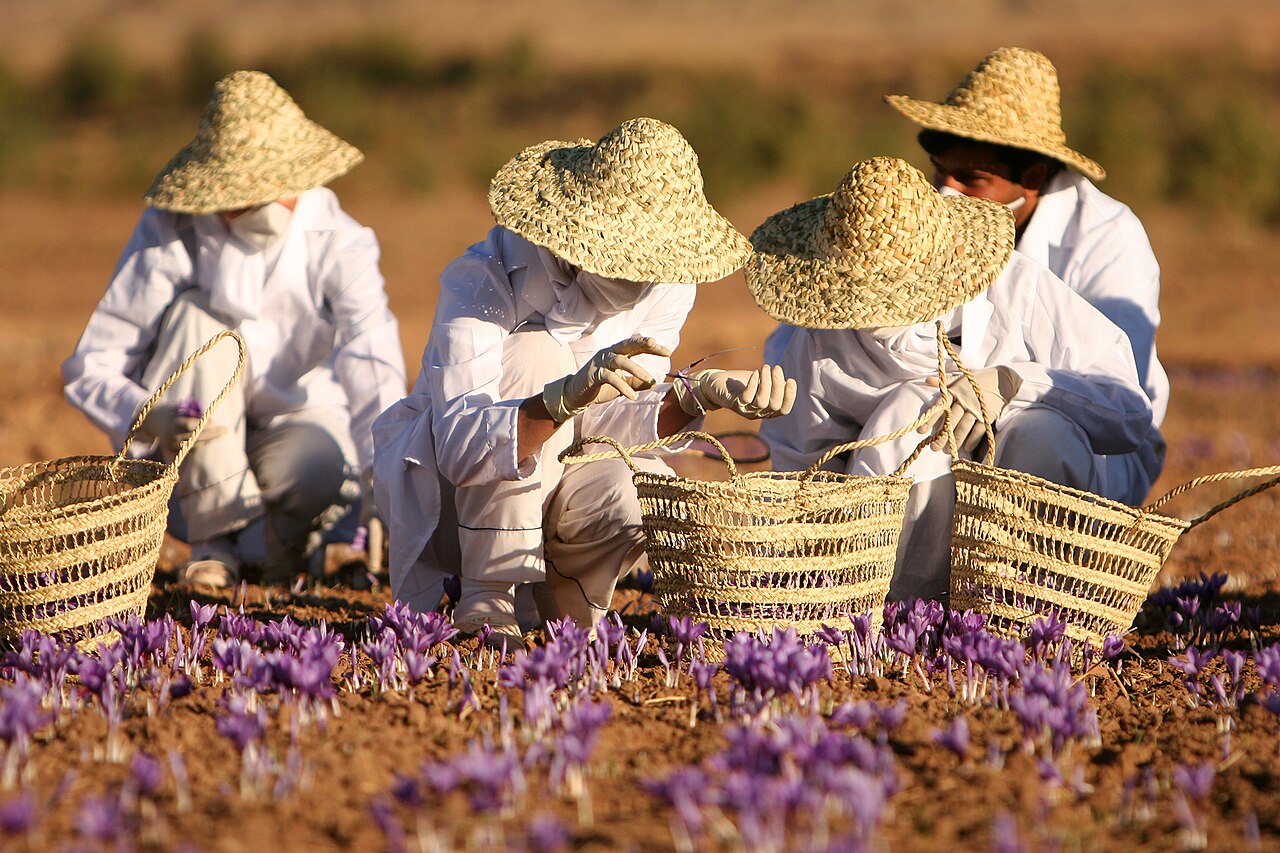
Saffron | A medicinal plant in the Akhdar encyclopedia
Saffron possesses digestive properties, stimulating the secretion of digestive juices and expelling intestinal worms. It is used to treat depression and psychological disorders, improve physical energy, enhance hearing and memory, and acts as a cardiac stimulant and central nervous system tonic. St…
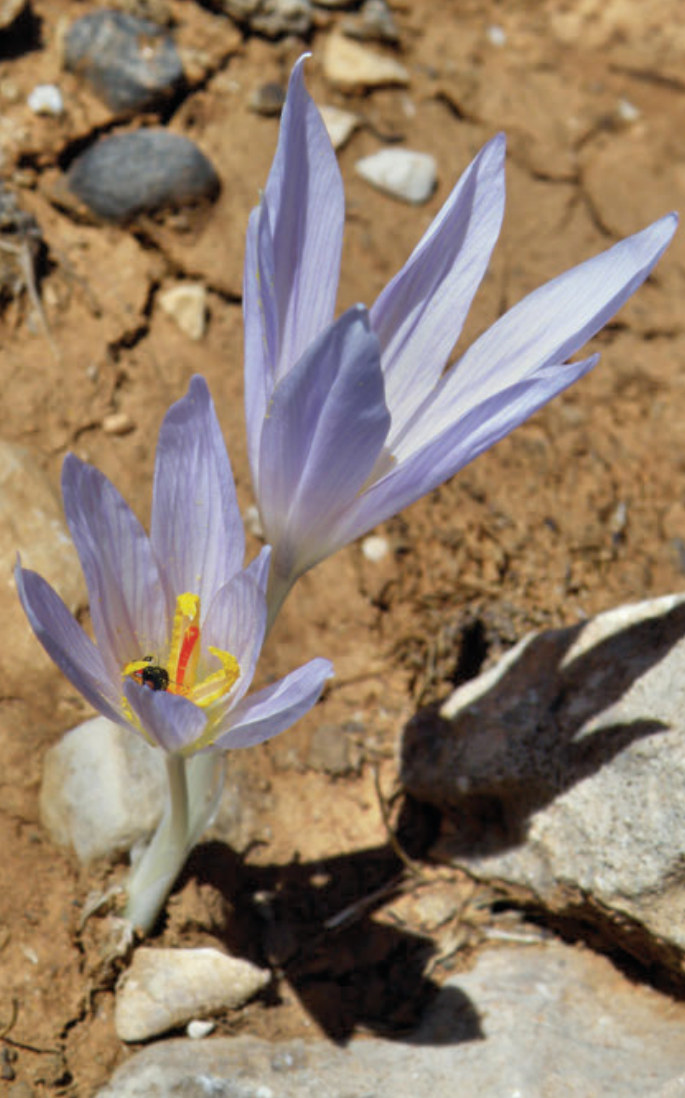
Plant name
saffron
Latin name
Crocus sativus L
Common names
Saffron, saffron hair, saffron head, jade
foreign names
Eng. Saffron, Fr. Safran cultivé
The group
iris
Habitat and Geographic Distribution
Its original habitat is southwest Asia, and its cultivation has spread to Iran, Greece, France, Italy and Spain.
Botanical description
cm, covered with silky brown, scaly leaves whose surface consists of 3-1.5 mm.
A small, perennial herb propagated by a bulbous corm, cm in diameter.
The leaves are basal, erect, long, and narrow, with a network of fine fibers extending over the corm stalk for a distance of mm, appearing at the end of inflorescence.
Parallel nerve endings.
The flowers are single or double.
The calyx is six-segmented, lilac-violet, with segments fused at their bases.
The stamens are lobed, mm in diameter.
The male flowers are 10-12 mm long, with yellowish-white, short filaments.
The ovary has three-lobed anthers, a long, pink style, divided into three long, reddish-orange branches.
The fruit is a spindle-shaped capsule, cm in length.
Inflorescence occurs from October to November.
Among the types of saffron are: Akhdar yellowish, netted, and Damascene, which is called "Harsanini" in Damascus and "Halouz" in Mount Hermon in Syria, where its underground nodes, the size of a hazelnut, are eaten.
Used part
The stigma, the tip of the pen, has an aromatic scent and is reddish-orange or red in color.
chemical components
The stigmas contain α-crocin, and especially the crocin compound, apocarotenoid glycosides (crocin is a water-soluble carotenoid pigment, β--gentiobiose and crocetin from the reaction of the crocetin family, which constitutes 4% of the weight of the stigmas).
These are responsible for giving saffron its orange-yellow color.
Picrocrocin constitutes 4% of the weight of the stigmas and is produced by the combination of picrocrocin: a bitter glucoside.
It also contains a bitter glycoside.
Zeaxanthin and the carotenoid safranal are the aldehyde compounds responsible for saffron's distinctive flavor.
Pycrosene is the compound responsible for saffron's characteristic aroma.
Heat and enzymatic activity affect the saffron, causing it to break down into glucose and the free safranal molecule present in the volatile oil.
Safranal and saffron are sensitive compounds, the most important components of which are safranal aldehyde (0.4-3%), in addition to volatile oil.
They are sensitive to pH changes and decompose rapidly in the presence of light and oxidizing agents, necessitating their storage away from light and oxygen.
Pycrosene compounds, safranal aldehyde, and saffron are the compounds responsible for saffron's aroma.
(Cancer prevention and treatment).
Beta-carotene, lycopene, and carotenoids are also present, in addition to fatty oils and starch.
Properties and medical uses
Saffron possesses digestive properties, stimulating the secretion of digestive juices and expelling intestinal worms.
It is used to treat depression and psychological disorders, improve physical energy, enhance hearing and memory, and acts as a cardiac stimulant and central nervous system tonic.
Studies have shown the potential of saffron as a preventative and treatment agent against cancer.
It has been found that saffron not only prevents the formation of cancerous tumors but also contributes to the shrinkage and reduction of existing tumors.
These properties may be partly attributed to its content of carotenoids, including lycopene and beta-carotene.
Lycopene is believed to help reduce damage caused by harmful free radicals that contribute to age-related diseases.
Research has shown saffron's benefits in reducing age-related vision loss and its potential to improve vision in some individuals suffering from blinding eye diseases.
A clinical trial treating patients with age-related macular degeneration using saffron supplements showed early indications of the potential for healing and regenerating damaged eye cells.
The plant's active components have numerous beneficial pharmacological effects, such as anticonvulsant, antidepressant, anti-inflammatory, and antitumor properties, and they also aid in learning and memory improvement.
Clinical trials have shown that saffron is more effective than a placebo in Alzheimer's disease, with efficacy comparable to that of the drug donepezil.
Studies have confirmed saffron's anti-itch effects.
The plant is used for weight loss, as it can reduce the frequency of snacking.
It can also alleviate symptoms of premenstrual syndrome.
Saffron has effects on erectile dysfunction, allergies, the heart, blood vessels, and the immune system.
The results indicated that saffron significantly reduced blood glucose levels, waist circumference, diastolic blood pressure, total cholesterol and LDL cholesterol concentrations, and alleviated symptoms of depression, cognitive function, and sexual dysfunction.
The compound crocin was shown to regulate glutamate levels, reduce oxidative stress, and modulate the accumulation of Aβ and tau proteins.
A decoction of saffron powder is traditionally used for chest tightness, colds, asthma, coughs, bronchitis, to soothe intestinal colic, and indigestion.
It is also known for its stimulating effect on the circulatory system, spleen, liver, and heart, and for lowering blood pressure.
Moderate use is beneficial in relieving menstrual cramps and uterine bleeding.
Saffron oil or tincture is used topically for arthritis and to soothe teething pain in children.
Its powder is an ingredient in some types of kohl used to remove cloudiness from the eyes.
Regarding its culinary and industrial uses, it is said that one gram of saffron stigmas is sufficient to color one hundred liters of water yellow.
The powdered stigmas are used to give food and beverages an amber-yellow color, as well as a distinctive aromatic flavor and taste.
A hot infusion made from saffron is consumed in cold countries.
Saffron is used industrially to color carpets, upholstery, clothing, and other items, and in the perfume industry.
Precautions for use: Do not give to pregnant women, as it causes miscarriage in doses of 10 grams, while larger doses (12-20 grams) may cause death.
Symptoms of saffron poisoning include dizziness, vomiting, uterine bleeding, intestinal cramps, diarrhea, bloody urine, bleeding from the lips, nose, and eyelids, numbness, paralysis, and jaundice.
Side effects and precautions
It should not be given to pregnant women, as it causes abortion at doses of 10 grams, while larger doses (12-20 grams) can be fatal.
Symptoms of saffron poisoning include dizziness, vomiting, uterine bleeding, intestinal cramps, diarrhea, bloody urine, bleeding from the lips, nose, and eyelids, numbness and paralysis, and jaundice.
the environment
Saffron prefers cold winter and warm summer regions, with rain in autumn, winter and spring.
It thrives in most soils, especially light, well-drained, and well-aerated soils with a pH between 6 and 7.
Cultivation and Productivity: Saffron is propagated vegetatively.
Newly grown corms are planted during September and October in temperate and Mediterranean regions, and in March and April in colder regions for flower production.
Planting is done earlier, during August, to produce large, high-quality corms with a diameter of at least 3.5 cm, spaced 52 cm apart.
The corm and the other.
It is irrigated immediately after planting.
It requires organic fertilizer when preparing the soil for planting, and small amounts of potassium in particular.
Saffron cultivation is financially costly.
The economic value of saffron: Saffron is considered one of the most expensive spices in the world, and it is usually bought by the gram, hence its nickname "red gold." Global production of saffron is about 300 tons annually.
Obtaining 100 grams of dried stigmas requires 1,000-2,000 flowers, i.e., 150-200 flowers.
To obtain one gram of dried stigmas, the most important saffron-producing countries currently are Kashmir, Iran, Spain, and Morocco.
(Iris germanica L., Iris spectabilis Salisb., Iris alba Savi., Iris australis Tod., Iris cypriana Baker & Foster., Iris amoena DC., Iris atroviolacea Lange, Iris glauca Salisb., Iris humei G.Don)
Agriculture and productivity
Saffron is propagated vegetatively.
Newly grown corms are planted during September and October in temperate regions and the Mediterranean basin, and in March and April in colder regions for production.
History and Heritage
The scientific name of the genus is derived from the Greek word krokos, meaning saffron, and the species name sativus means "cultivated." The plant is known for its purple flowers and large, fragrant, orange stigmas, which are the part used and called saffron.
It has been used to color foods and beverages and is believed to have been known for over 4,000 years.
Saffron was cultivated in Iran in the 10th century AD.
It was and still is cultivated in the Kashmir region.
With the Mongol invasion of Iran, saffron found its way to China, and in the 10th century AD, the Arabs carried it to Andalusia.
Medical note
This information is for educational purposes only and does not constitute medical advice.
Poisonous or potent plants should only be used under the supervision of a qualified physician or pharmacist.
Related images