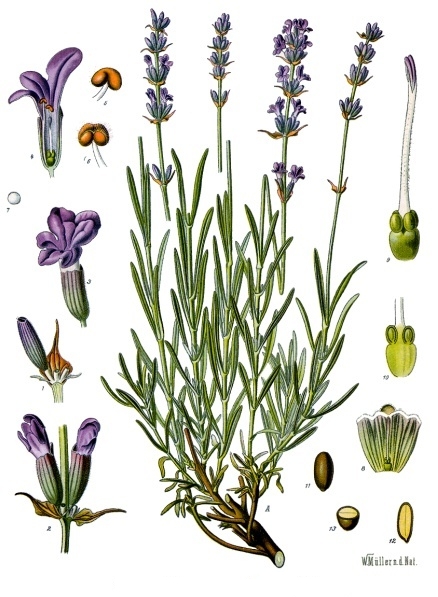
Lavender | A medicinal plant in the Akhdar encyclopedia
The drug possesses anti-inflammatory, lipid-lowering, cholesterol-lowering, antimicrobial, antitumor, central nervous system-calming, and carminative properties. It is used for loss of appetite, digestive disorders, nervous conditions, insomnia, and circulatory problems. The essential oil is used f…
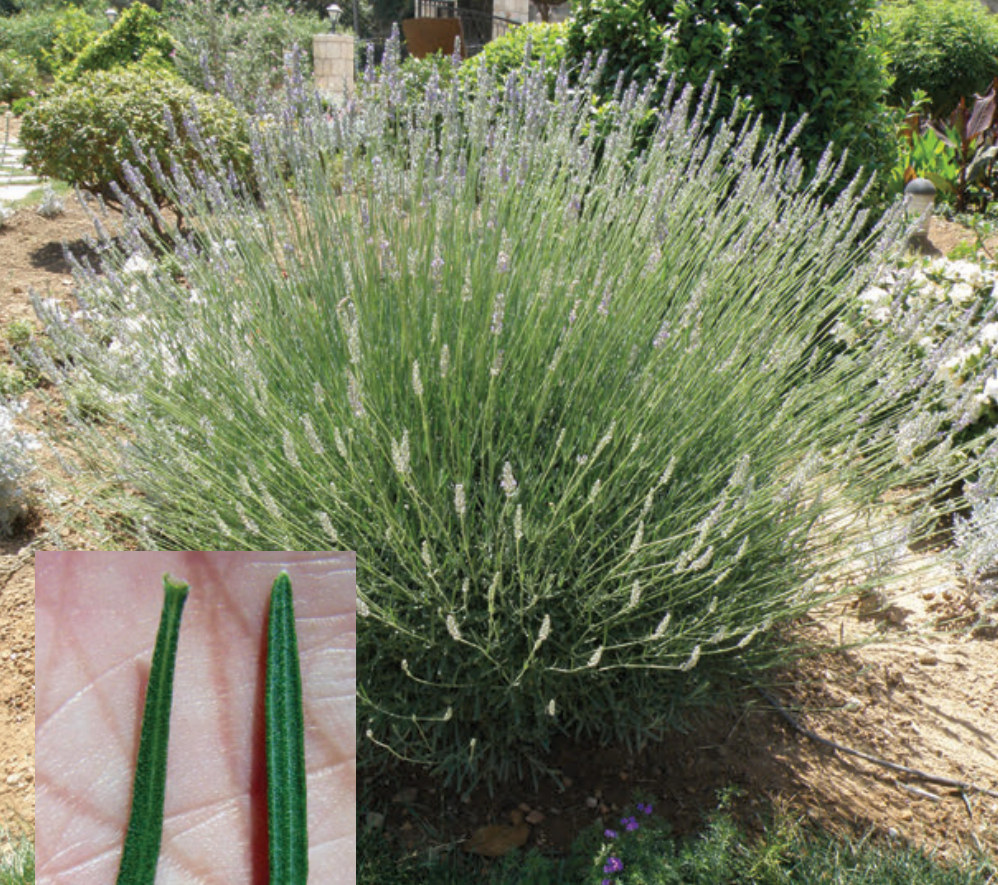
Plant name
lavender
Latin name
Lavandula angustifolia Mill
Common names
lavender
foreign names
Eng. Lavender, Fr. Lavande
The group
oral
Habitat and Geographic Distribution
The sunny Mediterranean coast and mountains up to an altitude of 1800m
Botanical description
The branches are upright, 80 cm long, aromatic, highly branched, grayish in length, with the flowering branches noticeably longer than the leafy ones.
The leaves are simple, opposite, short-petioled, linear to linear-uterine, 5 mm in length, initially downy, then glabrous, green, 3 x 5 cm, grayish, with a strong aromatic scent, entire margins; the leaves of the flowering branches are widely spaced, while those of the non-flowering branches are in groups.
The flowers are in panicles, forming spikes, 10 mm long, blue, clustered in rounds containing ovate-long bracts.
The bracts are small, rhomboid-red.
The calyx is tubular, 4 mm long, ending in five teeth, 5 mm long, the fifth forming a small lip of nerve, growing ovate or heart-shaped, bearing few fruits.
The petals are blue, several in number, fused into a tube protruding from the calyx, then longitudinal stamens that divide into two lips.
The male reproductive organ is ectophytic, enclosed in the corolla tube.
The ovary is bisectoral, with each lobe divided into two by a pseudo-septate, each containing a single ovule.
The fruit is smooth.
Flowering occurs at the end of summer. Another dispersing and used species is L. multifida in North Africa.
Used part
The flowers, leaves, and the essential oil extracted from them.
Chemical constituents: The flowers and leaves contain 3% essential oil, the main components of which are linalool, linalyl acetate, lavanulyl acetate, and ocimene.
Hydroxycoumarins, including herniarin and umbelliferone, are also present.
Tannins, caffeic acid, and rosmarinic acid are also found in the flowers, along with sterols and triterpenes, in addition to tannins and phenolic acids.
The plant is rich in polyphenols, sugars, and biologically active polar compounds such as polyphenols and coumarins.
HPLC analysis revealed the presence of rosmarinic acid (2.52-10.82 mg/g), ferulic acid, caffeic acid (1.70-3.10 mg/g), morin (1.02-13.63 mg/g), coumarin (1.01-5.97 mg/g), and herniarin (1.05-8.02 mg/g).
Properties and medical uses
The drug possesses anti-inflammatory, lipid-lowering, cholesterol-lowering, antimicrobial, antitumor, central sedative, and carminative properties.
It is used for loss of appetite, digestive disorders, nervous conditions, insomnia, and circulatory disorders.
The volatile oil is used for nervous tension and sleep disturbances.
The flowers have expectorant and cholagogue properties and are used to treat functional disorders of the upper digestive tract, anxiety, restlessness, and sleep disturbances.
The flowers are used traditionally for spasms, migraines, bronchial asthma, and for massage in cases of rheumatism, for relaxation, and for poorly healing wounds.
The essential oil is used traditionally to treat bronchitis, rheumatism, migraines, and menstrual disorders.
It is used topically in the form of water baths to relieve tension and promote relaxation, treat slow-healing wounds, and treat chronic anal and perineal eczema.
It is also used to prevent colds and stimulate the circulatory system.
Side effects, interactions, and precautions: The use of this form of the drug can cause digestive disturbances, skin irritation, and a decrease in estrogenic activity.
No more than two drops of the essential oil should be taken.
High doses can cause central nervous system depression, constipation, respiratory depression, headache, vomiting, and narcotic-like effects.
It should not be taken with alcohol or sedatives such as dalmane, halcyon, and valium, or with narcotic analgesics. Its use should be avoided by pregnant and breastfeeding women.
Side effects and precautions
The use of this medication can cause gastrointestinal disturbances, skin irritation, and decreased estrogenic activity.
No more than two drops of the essential oil should be taken.
High doses can cause central nervous system depression, constipation, respiratory depression, headache, vomiting, and narcotic-like effects.
It should not be taken with alcohol or sedatives such as dalmane, halcyon, and valium, or with narcotic analgesics. Its use should be avoided by pregnant and breastfeeding women.
Other uses
Essential oils are used in the manufacture of fragrances, perfumes, and cosmetics such as ointments, soaps, shampoos, and deodorants.
They are also used in the food industry, particularly in beverages, to impart pleasant aromas and flavors.
Essential oils are used in cosmetics, pharmaceuticals, food, and environmental and agricultural applications.
the environment
This plant grows wild in neglected fields and semi-forest areas with a Mediterranean climate.
It tolerates drought and heat, as well as short-term frost, and thrives in moderately warm and humid conditions.
It grows in various soil types, but prefers loamy soils, and is tolerant of salinity.
Agriculture and productivity
The plant is propagated by seeds, stem cuttings (terminal or mid-term), or division, although vegetative propagation is preferable.
Seeds are sown in beds or rows in the nursery at the beginning of spring, and seedlings are transplanted to their permanent location during autumn and early winter.
Older plants can be divided with their roots into seedlings and replanted.
Stem cuttings are best sown in the nursery in autumn in narrow rows, 50 cm wide, with 10 cm between cuttings.
Within a single row, the plants are transplanted to their permanent location after 4-5 months.
Maintenance practices include fertilization and moderate irrigation.
The plant blooms in the summer.
At the end of summer, after flowering, the plants are cut back to a height of 10 cm from the soil surface to strengthen them and increase branching for winter resistance.
Lavender production varies depending on the variety, environmental conditions, and plant part.
One ton of green lavender leaves yields 5-6 kg of oil. Pilot. Lavandula stoechas L. Stoechas officinarum Mill
History and Heritage
Which means washing, indicating that these plants were used to perfume clothes when washing them and bath waters.
It is also one of the most popular medicinal herbs since ancient times, as Tabernaemontanus, one of the most famous ancient physicians, recommended using the flowers to restore speech to the tongue after it was afflicted with cerebral palsy.
Types of lavender were used in Arabic medicine as an expectorant, antispasmodic, heart and brain tonic, and to purify the chest, and nothing equals it in purifying the kidneys, spleen, stomach and liver.
Medical note
This information is for educational purposes only and does not constitute medical advice.
Poisonous or potent plants should only be used under the supervision of a qualified physician or pharmacist.
Related images