Henna | A medicinal plant in the Akhdar encyclopedia
Henna preparations relieve the pain of burns, help stop bleeding and heal wounds, especially chronic ulcers and eczema, and treat warts and foot ulcers, particularly in diabetic patients. Henna also has antibacterial properties, purifies the scalp of microbes and parasites, and reduces sweating and…
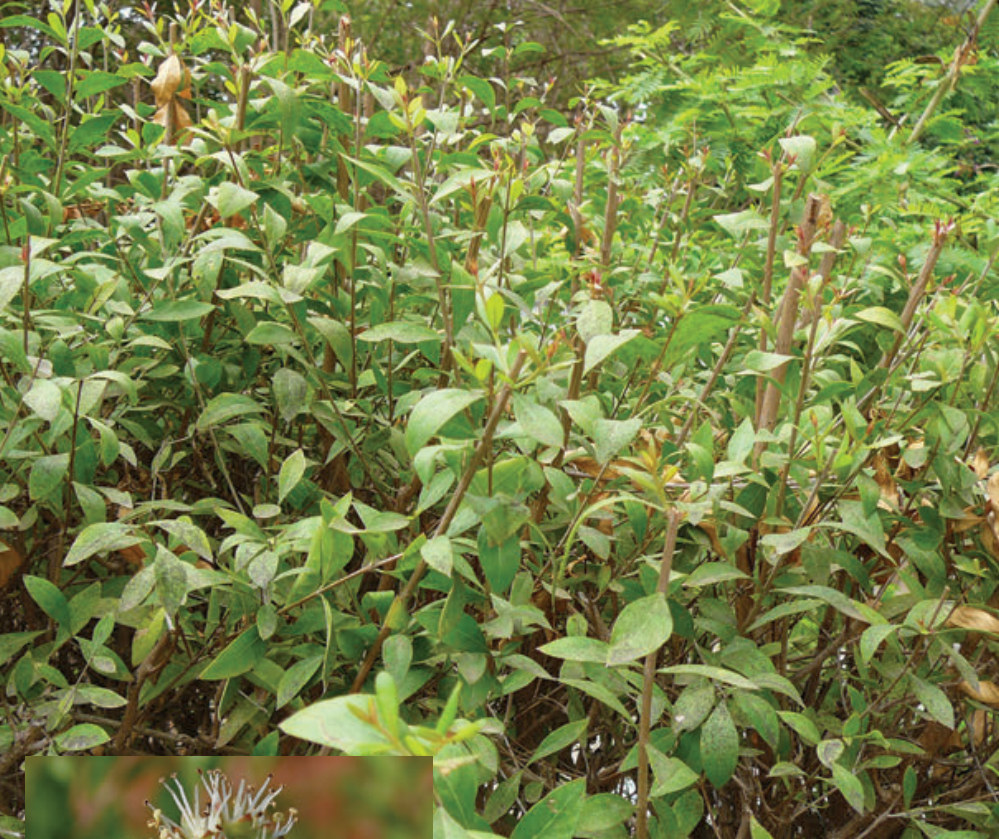
Plant name
henna
Latin name
Lawsonia inermis L.
Common names
henna
foreign names
Eng. Henna, Egyptian private, Fr.Jalousie
The group
henna
Habitat and Geographic Distribution
The original habitat of the henna plant is unknown.
It grows in the hot, tropical regions of southwestern Asia, particularly in the southern Arabian Peninsula, from where its cultivation spread to many countries around the world.
The most important producing countries today are Egypt, Sudan, India, and China.
Botanical description
M, its branches 2.5 are fragrant, bare, reaching a foot in length and becoming thorny.
The leaves are simple, opposite, entire, semi-piled, elliptic, ovate or obovate, acute or 20 mm - 44 mm rough: blunt apex, cm long.
The flowers 22 - the inflorescence is terminal: squamous, mm long.
The sepals are ovate, fused with the fruit.
The petals 3.5 - hermaphroditic, radially symmetrical, four-segmented, the stamens are in pairs, mm long.
The male 5 - 4 mm rough: wrinkled, obovate, white to yellowish in color, mm long.
The ovary is semi-spherical, tetranodal.
The filaments are about mm long, their walls bear a network of nerves, they open irregularly.
The seeds are numerous, pyramidal 9 - the fruit is a capsule, the diameter of which is [missing information].
Flowering occurs from October to November.
The Miniata variety has white flowers, and the Alba variety of henna has two cultivars that differ in flower color; the purple variety...
Used part
The aromatic flowers, fruits, bark, powdered leaves, and tender twigs.
Chemically, henna leaves and tender stems contain tannins at a rate of 5-10%, known as henna tannins.
Various glycosides (hennosides) are enzymatically hydrolyzed into sugars and genin.
The non-sugar radical (genin) then undergoes auto-oxidation, yielding a water-soluble, reddish-orange crystalline compound called lawsone (2-hydroxy-1,4-naphtoquinone).
Other components include coumarins, flavones, gallic acid, and sterols (sitosterol).
Sugars and resins comprise approximately 1% of the plant's composition.
The amount of these substances, particularly lawsone, increases in henna leaves as the plant matures.
The flowers contain a volatile oil, the main components of which are alpha- and beta-ionones (α,β-ionones).
Properties and medical uses
Henna extracts relieve the pain of burns, help stop bleeding and heal wounds, especially chronic ulcers and eczema.
They treat warts and ulcers affecting the feet, particularly in diabetic patients.
Henna has antibacterial and antifungal properties.
It purifies the scalp of microbes and parasites, reduces sweating and excess sebum, and is beneficial in treating scalp infections and inflammation.
It nourishes the hair, giving it vitality and strength.
The astringent substances in henna prevent skin cracking and promote skin health.
Studies have proven the effectiveness of henna in combating cancer.
Studies have shown the effectiveness of henna in treating bleeding duodenal ulcers.
It is also used as an enema in the treatment of ulcerative colitis.
An infusion of the leaves is used as a poultice to treat headaches, skin diseases, and burns.
It is also used as an astringent and antiseptic gargle to treat mouth, gum, and tongue ulcers.
Industrial uses: Henna is used to dye wool, cotton, and silk textiles, imparting color and cleaning them of grease and stains.
It is also used in tanning leather.
Additionally, a fragrant essential oil is extracted from its flowers and used in perfumery, including the popular perfume known as "al-Tamrahna." Cosmetic benefits of henna: Henna paste is used in hair dyes and to decorate hands and feet with various designs and patterns according to taste and preference.
Dye preparation: An orange and red dye is obtained by crushing the leaves and young buds into a powder. This powder turns orange-red upon exposure to air.
Side effects and precautions
Sneezing, allergic reactions to its components, henna is an abortifacient plant, it should not be used by pregnant women.
the environment
Henna is widely cultivated in gardens, parks, the edges of lawns, and ponds in warm regions.
It thrives in all bioclimatic zones of temperate and warm climates, and rarely in arid climates where it is susceptible to frost damage.
Henna requires ample light and rarely tolerates shade.
It grows well in loamy and sandy soils, but tolerates clay and silty loam soils.
It rarely tolerates salinity exceeding one part per million in irrigation water and is relatively drought-tolerant.
Agriculture and productivity
Henna is cultivated for its fragrant flowers and for the dye obtained from its leaves. The plant is easily propagated by
History and Heritage
(M).
He funded the book "The System of Nature," which commemorates Dr.
Isaac Lawson (Lawsonia inermis, genus, meaning thorny).
The plant has been cultivated since ancient times in the countries of the eastern Mediterranean, Cyprus, the Arabian Peninsula, Iraq, Iran, and India.
Parts of it were found on Egyptian mummies.
The Arabs called it henna and used it extensively on the henna night for the bride to paint her hair and limbs before the wedding night.
Ancient Islamic sources mention the use of henna to treat many diseases.
It was believed that extracts taken from this plant were effective in protecting the person who applied them from the influence of evil spirits.
The ancients used henna flowers and placed them in the folds of their clothes to perfume them and protect them from moths.
Medical note
This information is for educational purposes only and does not constitute medical advice.
Poisonous or potent plants should only be used under the supervision of a qualified physician or pharmacist.
Related images


