Sorrel | A medicinal plant in the Akhdar encyclopedia
Which affects the bladder, acting as a diuretic. The green parts contain small amounts of copper oxide. The fresh plant is a rich source of vitamin C. The plant is popularly used to treat digestive and liver disorders. A decoction of the green leaves was also used in ancient times. Crushed leaves a…
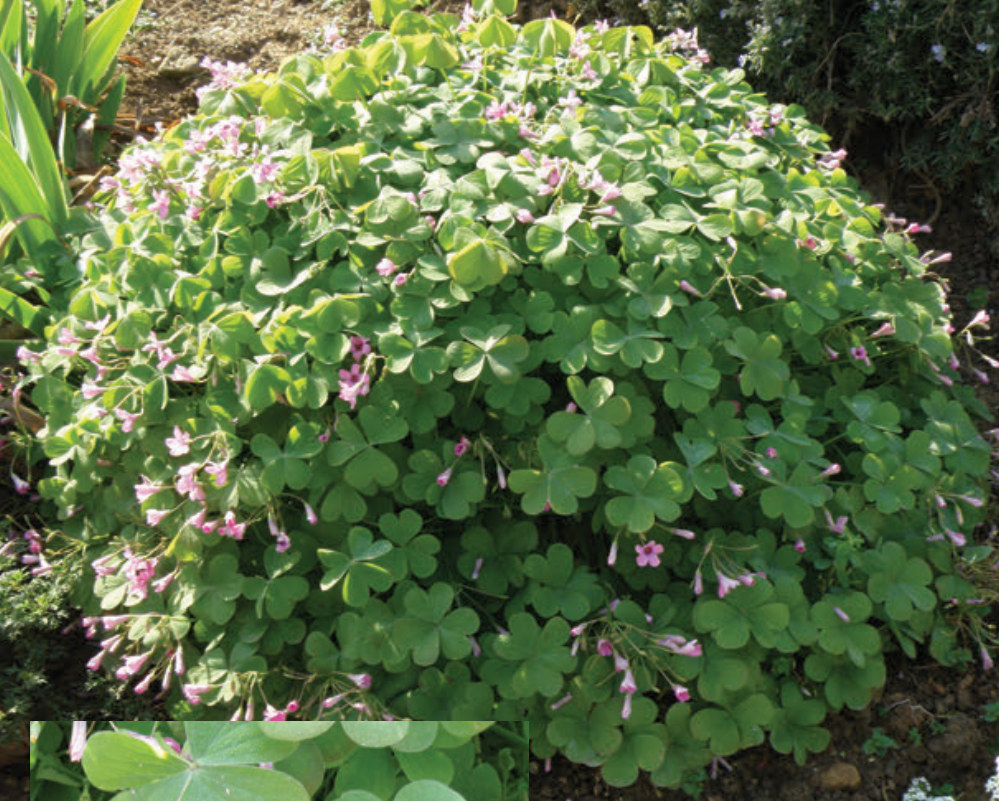
Plant name
acidosis
Latin name
Oxalis acetosella L
Common names
Sorrel, a Khorasani herb
foreign names
Eng. Common sorrel, Fr. Surelle
The group
Acidity
Habitat and Geographic Distribution
Around: the Mediterranean Sea, and it is widespread in Europe, Africa, and Western Asia.
Botanical description
Perennial herb propagated by rhizome.
Stem is reddish.
Leaves are 50 cm - brown, highly branched, alternate in height, trifoliate (resembling clover leaves), long-petioled, leaflet heart-shaped, folded along the midrib.
Leaflets and flowers contract at night or during rain.
The flowers are white or pinkish-purple, solitary, striated, or self-pollinating.
The sepals are free, compound, about 5 cm long.
The calyx is free, about 5 cm long.
The corolla is a 5+5 cm long external stamen, filaments slightly fused to their bases.
The male stamens are fused carpels, the ovary is superior, five-lobed.
The fruit is a capsule that opens stone-like. The filaments are disc-shaped. The female flowers from May to June.
Used part
green parts
chemical components
The plant has not been adequately studied yet.
It contains C, which is represented as a potassium salt, and vitamin C at a concentration of 0.3-1.25%. The plant also contains oxalic acid.
Properties and medical uses
Which affects the bladder, acting as a diuretic.
The green parts contain small amounts of copper oxide.
The fresh plant is a rich source of vitamin C.
The plant is popularly used to treat digestive and liver disorders.
A decoction of the green leaves was also used in ancient times.
Crushed leaves are used topically to treat gingivitis and wounds.
It is also used to treat scurvy (vitamin deficiency) and boils (it has an astringent effect).
Side effects and precautions
No adverse health effects or side effects have been reported with the correct administration of the prescribed dose. Oxalic acid poisoning is only possible with the ingestion of large quantities.
Other uses
The leaves are used in the kitchen, either fresh by adding them to salads, or cooked in soups or other dishes, giving the dish a delicious sour taste.
the environment
The plant grows along riverbanks, streams, forests, and damp, shady areas.
It thrives in humus-rich soils, preferably very heavy and waterlogged ones.
It tolerates low temperatures.
Planting and yield: 6 cm, taking care to thin out the seedlings after germination.
It is propagated by seeds sown immediately upon ripening or in spring in shallow beds spaced a few weeks apart.
It is also propagated by root cuttings taken from the roots and watered regularly.
Harvesting of the leaves begins after 10 cm, and they are buried in the soil at a depth of 10 cm, after cutting the leaves above the surface of the soil.
Plant 3 cm tall plants within a row.
The plant can disperse its seeds and spread spontaneously if suitable conditions and spacing are provided.
Seeds germinating in early spring have lower viability than those germinating in summer.
Agriculture and productivity
It is propagated by seeds sown immediately upon ripening or in spring in beds spaced 25 cm apart, ensuring thinning after germination and regular watering.
Harvesting of the leaves begins after 10 weeks, starting lightly.
It is also propagated by root cuttings taken from the roots of 3-year-old plants.
These cuttings are taken after cutting the leaves above the soil surface to a height of 10 cm and buried in the soil at a depth of 3 cm, spaced 25 cm apart within a single row.
The plant can disperse its seeds and spread spontaneously if suitable conditions are present.
Seeds produced in early spring have less viability than those produced in summer. Fumaria officinalis L
History and Heritage
The scientific name of the genus is the ancient Greek name for a plant with a sour taste.
The Arabs applied this name to this genus and to plants of the genus Rumex.
The descriptive name for the species, acetosella, means "taste cell" from acetum. The part used is the green parts.
Medical note
This information is for educational purposes only and does not constitute medical advice.
Poisonous or potent plants should only be used under the supervision of a qualified physician or pharmacist.
Related images


