Black seed | A medicinal plant in the Akhdar encyclopedia
Black seed and its essential oil possess immune-boosting properties, increasing the number of T lymphocytes and natural killer cells. They also exhibit antiviral and antibacterial properties (against bacteria of the respiratory, digestive, and urinary systems). Research has demonstrated the antioxi…
Plant name
black seed
Latin name
Nigella sativa L
Common names
Black seed, cultivated nigella sativa, common nigella sativa, black cumin
foreign names
Eng. Black cumin, Fr. Nigelle
The group
The buttercup
Habitat and Geographic Distribution
Native to the Mediterranean and Asia Minor, its cultivation spread to many countries in Africa and the Americas.
It is grown in Syria, Iraq, and Egypt in large quantities. (Meaning: cultivated.) Sativa
Botanical description
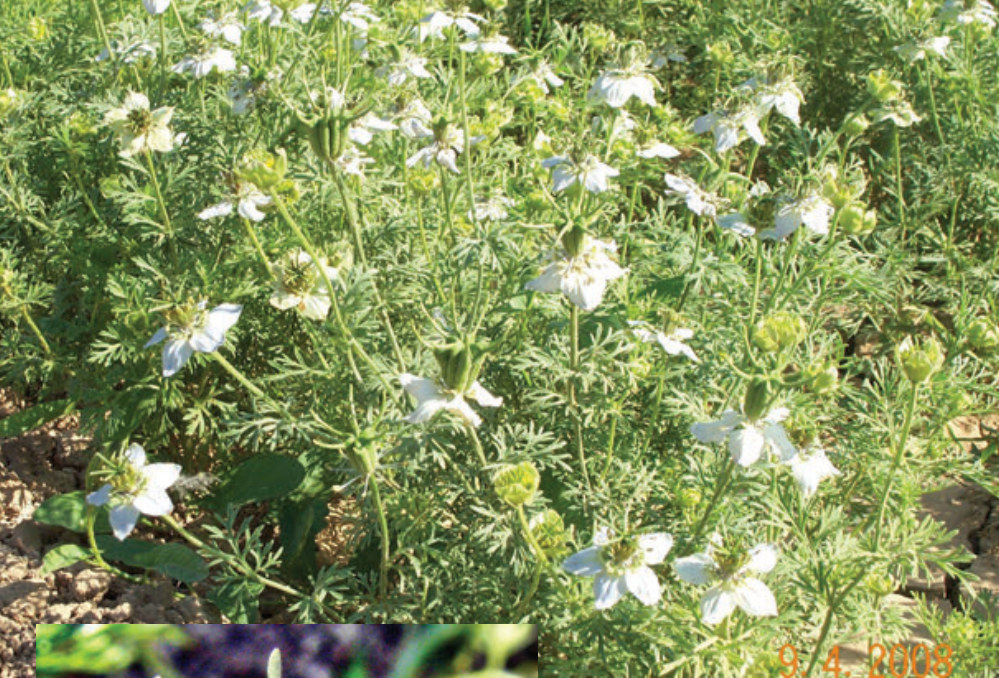
An erect, glabrous or slightly hairy perennial herb, angular in length.
Leaves - cm.
Stem erect, ribbed - 60, alternating, deeply divided into flat, thread-like lobes.
Flowers hermaphroditic, solitary at branch ends, bluish-radial.
Septates ovate, symmetrical, usually white, petalized, consisting of a nail and a blade.
Petals are flattened.
Stamens are numerous, initially erect, then curved inwards; anthers are almost apex.
Carpels are fused, forming a semi-spherical capsule, the surface of which is covered with whitish vesicles, ending in a head the same length as the carpel.
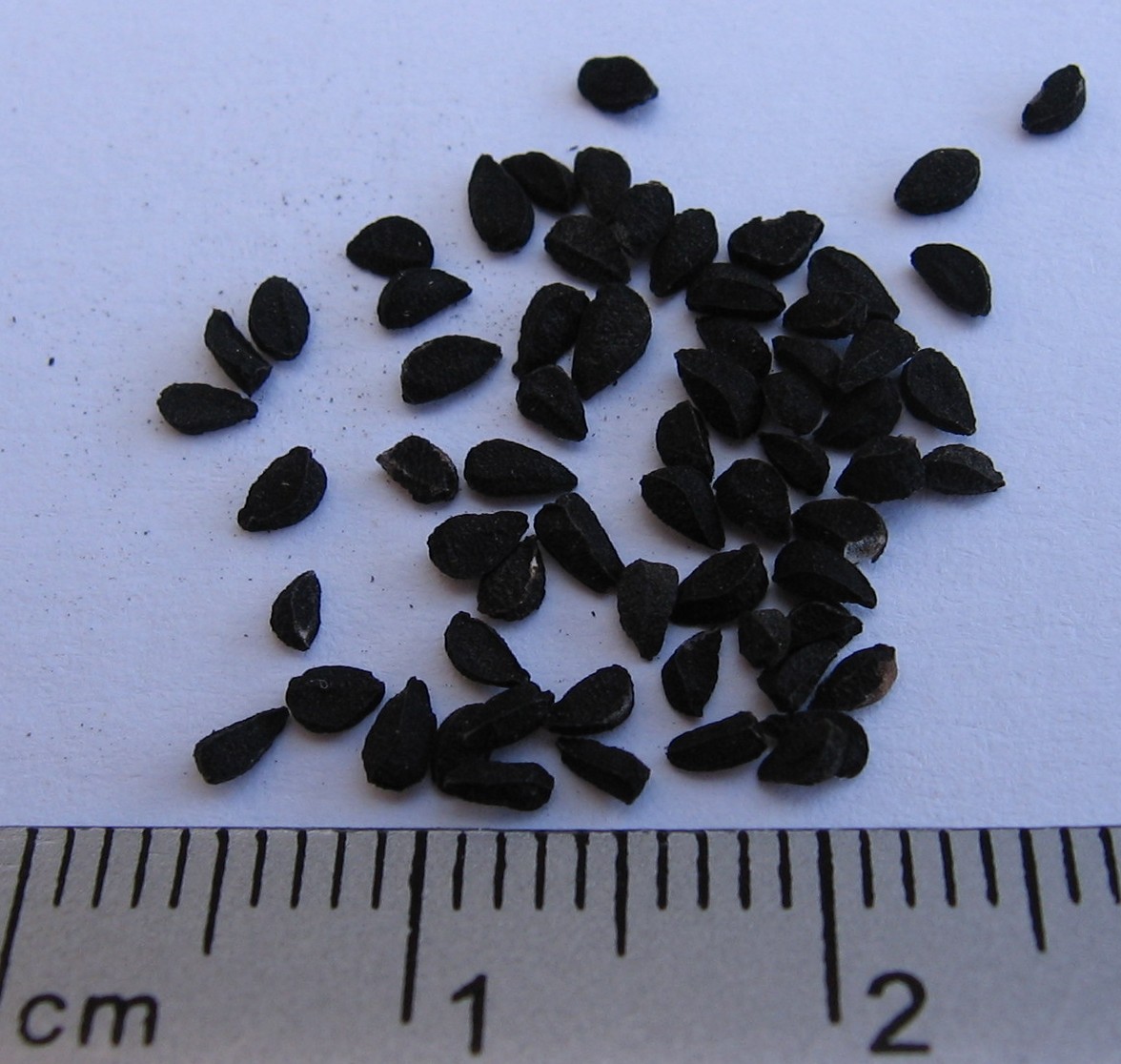
The fruit consists of several follicular drupes (their number equal to the number of carpels), each containing several black seeds, angular in length - mm.
Flowering occurs from April to June.
Other known varieties of black cumin include: N.
damascene L.
(Damascus black cumin), which is toxic due to its alkaloid content; N. orientalis; and Nigella sativa.
Used part
Mature seeds, and the volatile oil extracted from the seeds
chemical components
It contains 20-24% oleic acid, several unsaturated fatty acids (40% oleic acid - fixed oil) and some saturated fatty acids.
7% linolenic acid, 50% linoleic acid.
Linalool (the active ingredient in black seed), a small amount of dithymoquinone, the most important component of which is thymoquinone 0.5-1.5% volatile oil, alpha-pinene, paracymene (a natural antioxidant), para-aminonigellone, hydrothymoquinone, and nigellone.
Carvone, carvacrol, citronellol, limonene, alpha-pinene, and arginine (an acid essential for children's growth), along with a small percentage of melanthin saponin glycoside from sterols, vitamins such as vitamin E and carotene (which has proven effective in treating cancer cells), proteins, and minerals such as phosphorus, iron, and calcium, in addition to hormones and digestive enzymes that neutralize acidity. 21%
Properties and medical uses
Black seed and its essential oil possess immune-boosting properties, increasing the number of T lymphocytes and natural killer cells.
It also exhibits antiviral and antibacterial properties (against bacteria of the respiratory, digestive, and urinary systems).
Research has demonstrated the antioxidant properties of the essential oil, which contribute to protecting the colon, liver, and kidneys from carcinogenic compounds and some types of liver toxicity.
It has also been found to inhibit the growth of breast cancer cells.
Research indicates the importance of nigellone in protecting the body from harmful compounds it may be exposed to.
Black seed oil reduces the rate of lipid oxidation.
It raises the level of beneficial cholesterol.
Research has also shown that black seed oil (thymoquinone) protects the heart and arteries from the harmful effects of elevated homocysteine and its associated adverse effects such as high triglycerides, high cholesterol, atherosclerosis, and high blood pressure.
Studies conducted on laboratory mice have shown that thymoquinone inhibits the excretion of protein and albumin in urine, and that its antioxidant activity inhibits the negative effects that may affect the kidneys.
This highlights the potential role of thymoquinone in preventing kidney disease.
Research has also demonstrated the effectiveness of black seed oil, or thymoquinone, in protecting the stomach lining from the irritating effects of alcohol and other harmful substances.
Black seed is used in the prevention and treatment of allergic diseases such as asthma.
Studies have shown the effectiveness of black seed oil in treating allergic conditions like coughs and asthma, and the study confirmed the laxative effect of the compound thymoquinone.
For bites and as a dilator for the trachea and bronchi.
Studies have shown the blood sugar-lowering properties of black seed oil in laboratory mice, as well as an increase in blood insulin levels (pancreas stimulation), suggesting that black seed may help treat diabetes.
Research has shown the analgesic effect of black seed on arthritis and rheumatic pain.
The fatty acids in the oil have effects on the health of the skin, hair, and mucous membranes, hormone production in the body, and other important vital functions.
A decoction of the seeds or the essential oil is used traditionally.
A general tonic, purifier, and analgesic, it is beneficial in expelling gas, improving digestion, and relieving stomach cramps and acidity.
It is also used to expel phlegm, treat chest congestion caused by cold, act as a diuretic, and treat inflammation of the kidneys, liver, and gallbladder.
The essential oil is used topically to treat acne and skin diseases such as itching, warts, boils, vitiligo, and leukoderma.
In food use, the seeds are used as an appetite stimulant and flavoring agent, and are often added to bread, cheeses, and pickles.
To give it its distinctive aroma and taste. Studies have shown the importance of black seed oil in food preservation.
Side effects and precautions
Allergic reactions or drug interactions may occur; self-use should be avoided by pregnant and breastfeeding women, children, and patients with chronic diseases.
the environment
Black cumin thrives in temperate regions and some hot, low-humidity areas.
High humidity and heat increase the risk of diseases and weeds, thus reducing yield.
It can be grown in most soil types, especially lighter ones, but it does not tolerate saline or acidic soils.
Agriculture and productivity
It is propagated by seeds.
A winter crop is sown in late autumn, and the sowing is done by broadcasting in 5x5 m basins or the land is divided with a distance of 50-60 cm between the row and the other, and 25-30 cm between the holes inside the row, and 2-3 seeds are sown in each hole at a depth of 1 cm, then the land is irrigated immediately.
One hectare requires 10-12 kg of mature seeds (one year old or not stored for more than 3 years).
Thinning is carried out when the seedlings reach a height of 8-10 cm, leaving the strongest plants in each hole.
Moderate irrigation is required, with watering to be stopped upon maturity.
It responds well to fertilization with essential nutrients and some trace elements (zinc and iron).
Harvesting takes place when most of the leaves on the basal part have turned yellow-brown and the fruit is fully ripe.
Its color is light brown.
Harvesting is done by cutting the plant at ground level in the morning, then it is dried, threshed, winnowed, and stored away from light.
One hectare yields approximately 1.1-1.8 tons of dry seeds.
(Ranunculus ficaria L., Ficaria verna Huds., Ficaria vulgaris J. St.-Hil., Ranunculus claviformis Dulac)
History and Heritage
The genus name of the plant was mentioned in the previous section. As for the species descriptor,
Medical note
This information is for educational purposes only and does not constitute medical advice.
Poisonous or potent plants should only be used under the supervision of a qualified physician or pharmacist.
Related images