Walnut | A medicinal plant in the Akhdar encyclopedia
Walnut leaves and husks possess astringent (tannins) and antifungal (juglone and essential oil) properties. Research has indicated that both the bark and leaves have shown high efficacy against tuberculosis bacteria. A study conducted on mice demonstrated that the alcoholic extract of walnut leaves…
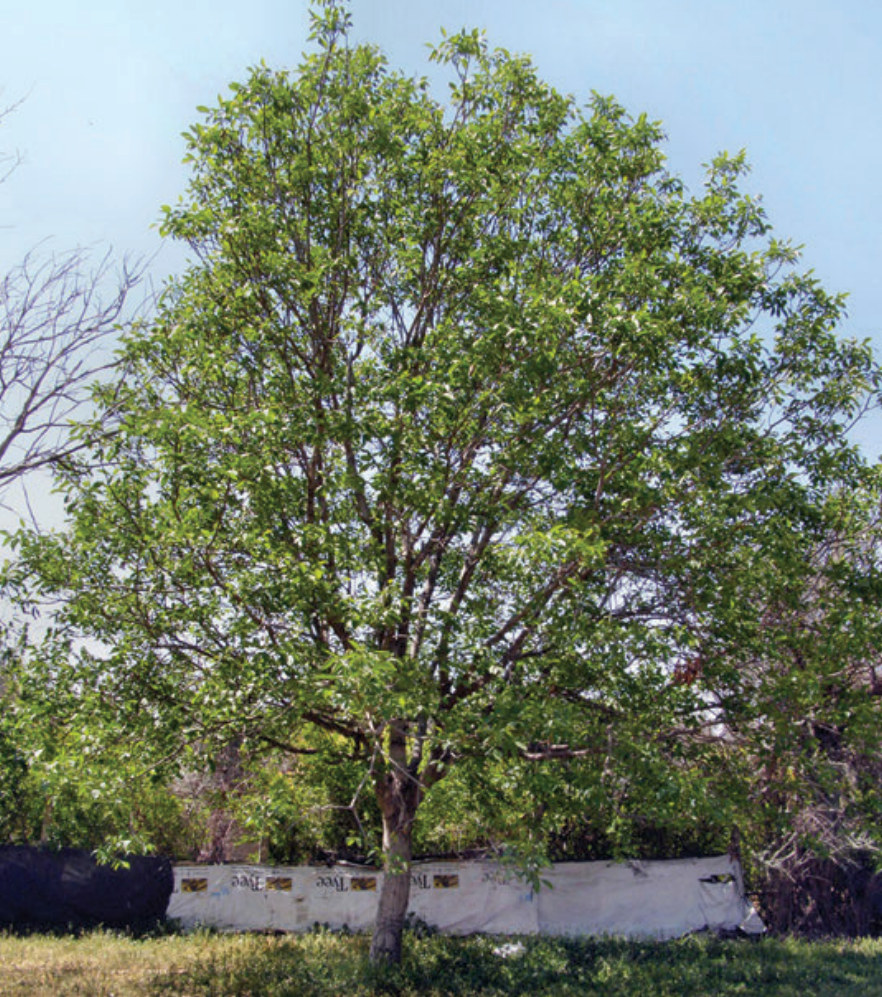
Plant name
Walnuts
Latin name
Juglans regia L
Common names
Walnuts
foreign names
Eng. Walnut, Fr. Noyer
The group
walnut
Habitat and Geographic Distribution
Iran, the South Caucasus and the Middle East, and today it is cultivated in many regions, particularly in southeastern Europe, Asia Minor, Syria, northern India, China and North Africa.
Botanical description
Its scales are smooth and pale gray.
The leaves are compound, pinnate, and lanceolate, initially reddish, then 25-3 cm long, forming pairs of leaflets, entire, elliptical, leathery, and 9-3 cm long, becoming green, about 25 cm long, and somewhat fleshy.
The male flowers are gathered in green, oblong, terminal, or lateral catkins, about 3 cm long, bearing several four-hundred scales at their bases, and appear on the previous year's branches.
The female inflorescences are pinnate, composed of flowers, and appear on the current year's branches.
The fruit is a drupe with a transparent outer membrane, a hairy middle that turns brown, and a woody, hard kernel that opens.
The seed is divided into four lobes, with two cotyledons that are sulfurous, hairy, and wrinkled. Flowering occurs from April to May.
Used part
Leaves, fleshy pericarp, seeds, stem bark
chemical components
Ellagitannins and gallylglucose: % of which the leaves and fruit contain: tannins that hydrolyze to give hydrojuglon, which is quickly converted to juglon when the leaves or fruit are exposed to light or during drying.
Naphtoquinone derivatives readily polymerize into yellow or brown components (causing skin discoloration), and thus we hardly recognize juglon within the plant.
A volatile oil rich in mono- and polycyclic compounds.
Phenolic acids, hyperoside, quercitrin: the most important of which are 3.4% flavonoids.
Fatty substances (40-60%).
The seeds contain 0.85-1% (C).
The leaves also contain significant amounts of vitamin C (walnut oil) and many amino acids.
Properties and medical uses
Walnut leaves and husks possess astringent (tannins) and antifungal (juglone and essential oil) properties.
Research has indicated that both the bark and leaves have shown high efficacy against tuberculosis bacteria.
A study conducted on mice demonstrated that the alcoholic extract of walnut leaves significantly reduces blood sugar levels, restoring them to near-normal levels, while simultaneously increasing insulin levels and decreasing glycosylated hemoglobin (HbA1c) levels.
Hemoglobin.
Research indicates that consuming the fruit improves the function of the blood vessel lining in patients with high cholesterol, restores the vessels' natural elasticity in cases of hardening, and reduces the risk of cardiovascular disease and coronary artery disease.
A decoction of the leaves is used traditionally to treat mild diarrhea, symptoms of chronic peripheral venous insufficiency (such as a feeling of heaviness in the legs), gastroenteritis, and to expel tapeworms.
It is also used to treat pain.
Stomach ailments, arthritis, asthma and cough, skin disorders, diabetes, loss of appetite, thyroid dysfunction, cancer, infectious diseases, and reducing symptoms associated with age-related neurological disorders.
Externally, a decoction of walnut leaves and husks is used topically (baths, compresses, washes, and enemas) to treat skin inflammations, sores, burns, and excessive sweating of the feet.
It is also used as an enemas to reduce vaginal discharges associated with fungal or bacterial infections, and as a gargle and wash to treat [unspecified condition].
Walnuts are used to treat conjunctivitis, laryngitis, and sinusitis, and are also used as a hair wash for hair loss.
The health-promoting benefits of walnut consumption are attributed to their fatty acid content, particularly high levels of polyunsaturated fatty acids.
The polyphenols and other phytochemicals in walnuts help neutralize free radicals.
Studies have shown that ethyl acetate extract from walnuts significantly reduces the number of inflammatory cells.
It is found in both the blood and bronchial phlegm.
Precautions for use: There are no health risks if the plant is used in known therapeutic doses.
Some consider the compound juglone dangerous due to its mutagenic properties, and topical application of the stem bark has been linked to leukoplakia (cancer of the tongue).
Side effects and precautions
There are no health risks if the plant is used in known therapeutic doses.
Some consider the compound juglone dangerous due to its mutagenic properties, and topical application of the stem bark has been linked to leukoplakia (cancer of the tongue).
Other uses
A multi-purpose tree, cultivated for its edible fruit, from which high-value oil is extracted, and from whose bark tanning materials are obtained, in addition to its good wood for furniture.
the environment
25.
The walnut tree is a species that thrives in moderate heat and light.
The fruit requires a temperature of 150°C to fully ripen.
Spring frost is one of the tree's greatest enemies, as it destroys the current year's crop.
The vegetative and fruit buds, flowers, and young fruits are all severely damaged by frost.
When the temperature drops below 15°C, the fruit suffers from sunscald, resulting in empty fruit.
High temperatures, especially late summer, can also cause the kernel to blacken.
The tree prefers areas with little wind, as it is susceptible to strong winds.
It also prefers a moderately warm, slightly dry summer climate.
Intense sunlight can cause black burns on the fruit.
Walnuts grow in various soil types but prefer deep, fertile, moist, and well-drained soils. One type is tolerant of lime but sensitive to salinity.
Agriculture and productivity
Walnut trees are propagated using ripe, healthy walnut fruits.
Seedlings are produced from these fruits and are later grafted.
The seeds undergo stratification for 30-35 days at a temperature of 2-3°C with misting irrigation.
The seedlings grow within a year, and grafting is carried out in the spring and summer to obtain seedlings of known variety and characteristics.
These are then transplanted to their permanent location and planted at intervals of 10-12 meters between trees.
Walnut trees require special care during their first five years of growth.
Before fruiting begins, the tree is pruned to give it the appropriate structure.
Once fruiting starts, pruning is limited to removing overlaps and replacing some main branches if necessary.
Continuous fertilization and weeding are carried out in walnut orchards, along with the removal of suckers growing near the root collar.
It is essential to irrigate the trees during the summer dry season, taking care to avoid direct contact between the irrigation water and the tree trunk, as this can lead to crown rot.
The number, quantity, and timing of irrigations vary depending on climatic and soil conditions, as well as the age of the trees.
Drip irrigation using a suitable irrigation system is considered one of the most economical methods for walnut trees.
Walnut trees begin bearing fruit at 5-8 years of age after planting in the orchard.
The productivity of a single tree varies according to environmental conditions, care provided, and age.
The fruit is harvested only when fully ripe.
A medium-sized tree can yield 10-25 kg of seeds annually.
Ajuga chamaepitys (L.) Schreber, Teucrium chamaepitys L., Chamaepitys trifida Dumort., Bugula chamaepithys (L.) Scop., Chamaepitys vulgaris Link, Bulga chamaepitys (L.) Kuntze., Ajuga chamaepitys subsp. Chamaepitys
History and Heritage
The scientific name for the genus Juglans is derived from the Latin "Jovis Glans," meaning "fruit of Jupiter." The species name regia means "royal," referring to the tree's distinctive shape.
It is also called Persian walnut, after its origin.
The name "walnut" is an Arabicized form of the Persian word, and some connect it to the tree's fruiting habit, as walnut trees often bear two or three kernels.
Medical note
This information is for educational purposes only and does not constitute medical advice.
Poisonous or potent plants should only be used under the supervision of a qualified physician or pharmacist.
Related images


