Sycamore | A medicinal plant in the Akhdar encyclopedia
Research has confirmed the antiseptic properties of the milky sap, and it is used topically to treat wounds and some skin diseases such as ulcers and psoriasis. Fresh figs are used as a laxative in cases of constipation, a stimulant for the stomach and intestines, an antiseptic for gastritis, and a…
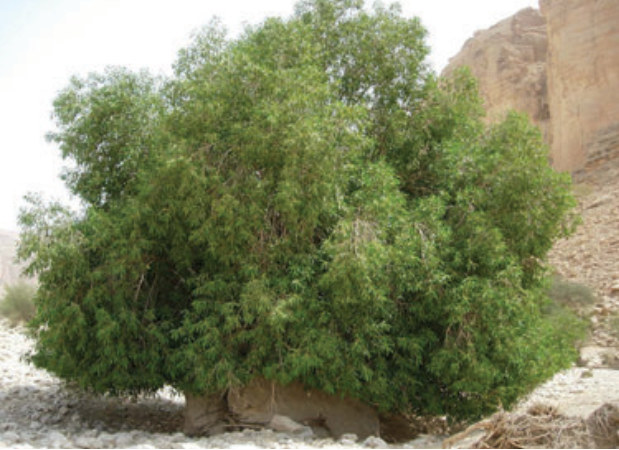
Plant name
Sycamore
Latin name
Ficus sycamores L
Common names
Sycamore fig
foreign names
Eng. Malberry fig, Sycamore fig, Sycamore, Fr. Sycamore fig
The group
mulberry
Habitat and Geographic Distribution
It originated in southern Arabia, Egypt, and Sudan, and was transported long ago to the Levant, spreading to many countries, particularly in temperate and hot climates.
Botanical description
An evergreen tree, its wood is remarkably strong, especially when submerged in water.
Its leaves are oval-shaped and rough to the touch.
The fruit resembles a fig, but is much thinner.
Unlike figs, it contains seeds.
It has a sweet taste and is yellowish-red in color.
The plant exudes a copious milky sap when any part of it is cut. The tree begins to bear fruit several years after planting.
Used part
The fruit, leaves, and milky sap. Latin name: Ficus sycamores L.
chemical components
The fruit of the sycamore fig contains plant pulp, sugars, flavonoids, and vitamins...psoralen, bergapten: The milky sap contains enzymes, mucilage, and furanocoumarin compounds, the most important of which are
Properties and medical uses
Research has confirmed the antiseptic properties of the milky sap, which is used topically to treat wounds and some skin diseases such as ulcers and psoriasis.
Fresh fig fruit is used as a laxative for constipation, a stimulant for the stomach and intestines, an antiseptic for gastritis, and a carminative. A decoction of the leaves is used as a gargle to treat gingivitis.
Side effects and precautions
Allergic reactions or drug interactions may occur; self-use should be avoided by pregnant and breastfeeding women, children, and patients with chronic diseases.
the environment
A species sensitive to drought and fond of light, this plant prefers fertile, well-drained soil and can live in or near arid regions. It is cultivated along riverbanks and in gardens.
Agriculture and productivity
A multi-purpose tree, mainly cultivated for its sugary fruit, which resembles a fig.
It is mainly propagated by cuttings in the spring, and begins to bear fruit after 5 years of planting.
The fruit is a fig that does not ripen until a type of insect, Sycophaga cressipes, lays its eggs in the ovaries of the female flowers.
Therefore, a slit must be made in the fruit to facilitate insect entry; this process is called grafting.
The slit turns black as the fruit ripens.
The fruit is found on the tree almost year-round.
(Morus nigra L., Morus cretica Raf., Morus laciniata Mill., Morus petiolaris Raf., Morus siciliana Mill.)
History and Heritage
Its origin is Sycomorus, the descriptive term for the species Sukon.
"Sukomoros" comes from the Greek words meaning mulberry and "moros," meaning fig.
This tree has been known since ancient times, even to the pharaohs, who considered it one of their most sacred trees.
They used its milky sap in medicinal recipes for certain skin diseases and to treat scorpion stings and snake bites.
The sycamore fig was also included in pharaonic prescriptions as a laxative, and its juice was used to treat liver diseases, intestinal infections, and scurvy.
It is said that the oldest tree of this type still exists in the Matariya area near Cairo, and it is called the Tree of the Virgin Mary.
It is said that the Virgin Mary rested in its shade during her famous journey to Marsa Matariya.
Medical note
This information is for educational purposes only and does not constitute medical advice.
Poisonous or potent plants should only be used under the supervision of a qualified physician or pharmacist.
Related images


